Ecommerce Configurator Explained: Examples, Benefits, and Must-Have Features
Written by The Kickflip Team
January 23rd, 2026

Table Of Contents
- What Is an Ecommerce Configurator?
- Real-World Examples of Ecommerce Configurators
- Key Benefits of an Ecommerce Configurator
- Essential Features of a Modern Ecommerce Configurator
- Challenges, Limitations, and How to Avoid Common Pitfalls
- How to Choose the Right Ecommerce Configurator for Your Store
- Transform Your Ecommerce Store with Professional Configuration Solutions
Selling customizable products online comes with real challenges. When customers face endless dropdowns and confusing interfaces, they abandon their carts. And businesses relying on manual processes waste countless hours managing back-and-forth emails with customers just to clarify what they want. These pain points hit both D2C brands and B2B sellers hard. You know your products can drive growth, but your current order process can't keep up.
An ecommerce configurator is a digital tool embedded in your online store that lets shoppers customize, visualize, and price products in real time while enforcing valid options. Instead of separate quoting spreadsheets or PDF catalogs, configurators give your customers a seamless user experience.
This guide is for ecommerce managers, marketers, founders, and product teams who want to understand how configurators work, see real-world examples, and learn what features actually matter. We'll cover basic definitions, implementation strategies, advanced features, and how platforms like Kickflip help brands streamline their customization workflows.
What Is an Ecommerce Configurator?
An ecommerce configurator is a digital tool embedded in your online store that lets shoppers customize and visualize products in real time while enforcing valid options. This interactive solution combines three core elements: personalization capabilities that let customers modify products to their specifications, visualization features that show exactly how changes affect the final product, and rule-based validation that prevents impossible or unprofitable combinations. The core logic of these systems has been a focus of academic study for decades, with foundational research exploring their technical and business implications, as detailed by Hansen & Scheer (2004).
Modern ecommerce configurators handle everything from simple customizations like color changes and text engraving to complex modular configurations with multiple interdependent components. They integrate with your existing ecommerce platform, whether you're running Shopify, WooCommerce, Wix, or another system.
How an Ecommerce Configurator Works
The typical customer journey through an ecommerce configurator follows these steps:
Choose a base product - Customers start with a foundational item or template.
Select customization options - They modify colors, materials, add engravings, select modules, or upload personal content.
See live visual previews - The product image updates instantly to reflect their choices.
Watch dynamic pricing updates - Costs adjust automatically as options change.
Validate configuration - Business rules ensure the combination is technically feasible and profitable.
Add to cart - Configuration data flows through checkout and into fulfillment systems.
This process is carefully designed to guide users through what could otherwise be a confusing set of choices. For those interested in the technical build process, guides like this one from Commerce-UI detail the necessary steps.
Types of Ecommerce Configurators
Ecommerce configurators typically fall into several categories based on their visual approach and target market:
2D configurators use layered images that update dynamically as customers make selections. They’re ideal for products where customers need to see color, pattern, or text changes clearly — without requiring complex 3D modeling. They also deliver ultra-fast loading times, photo-realistic results, and are typically much cheaper to implement than 3D.
3D configurators let customers view products from every angle. They’re ideal for complex products where shape, depth, and components matter, but they can load slower on mobile devices or weaker connections, which is a real risk in e-commerce where every second counts.
B2C visual configurators focus on emotional engagement and visual appeal, helping customers instantly picture their personalized product through compelling visuals and an intuitive interface, then adding it to the cart so they can purchase right away.
B2B and CPQ-style configurators don’t follow a simple add-to-cart checkout like B2C. The experience usually ends with a quote request, connected to pricing approvals, manufacturing constraints, and production workflows.
Real-World Examples of Ecommerce Configurators
Great configurators can be found across many industries.
Fashion, Footwear, and Accessories
Fashion brands use configurators to let customers personalize apparel with custom fabrics, patterns, size bundles, and monograms. Their configurator updates pricing in real-time as customers experiment with different material combinations and personalization options.
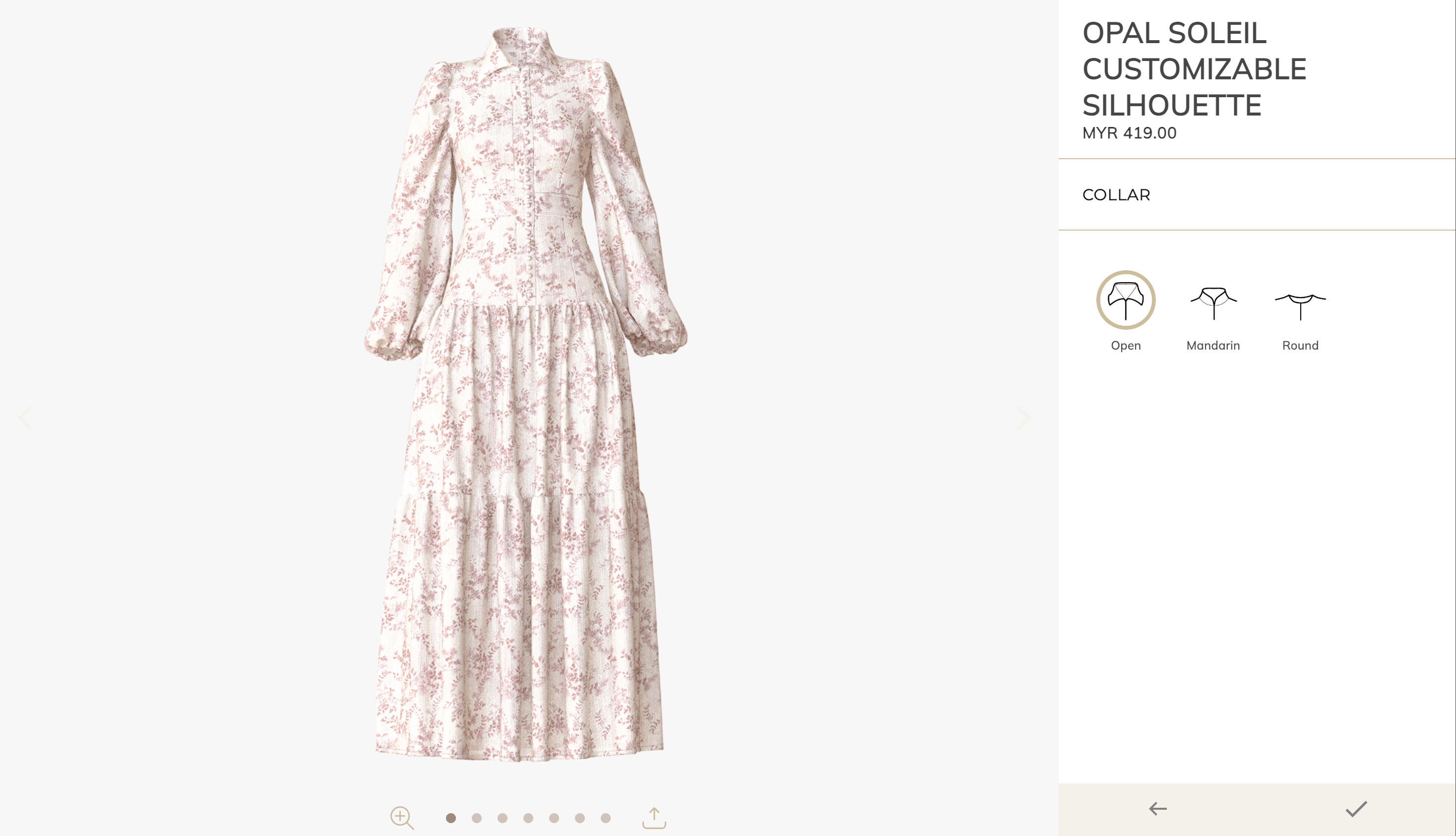
Accessory brands use configurators for bags and small leather goods, allowing customers to select hardware finishes, choose embroidery styles, and apply custom prints. The live preview functionality eliminates guesswork. Customers see exactly how their uploaded logo will look on a specific bag style before purchasing.
Sporting Goods and Performance Equipment
Sporting goods configurators excel at handling team-specific customization requirements. Brands like Ice Shaker offer "Custom Shop" experiences where customers configure colors, add logos, and personalize player names and numbers on drinkware. Baseball bat configurators allow customers to choose wood types, select colors, specify length and weight preferences, and engrave personal information.
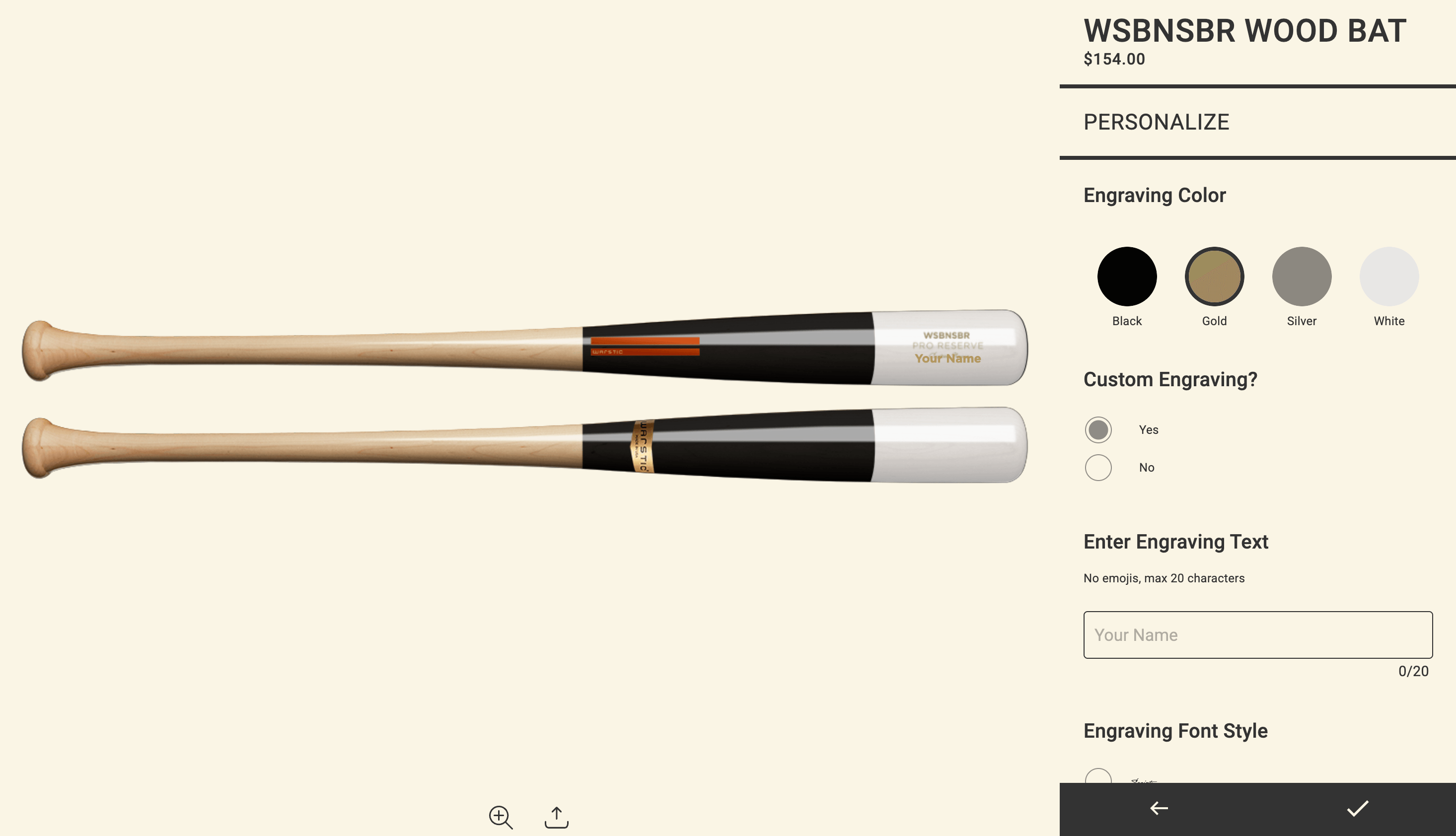
For team orders, bulk customization features enable coaches to order multiple items like 15 personalized jerseys for an entire team each with individual player specifications while maintaining consistent team branding.
Jewelry, Gifts, and Home Decor
Jewelry configurators let customers select metals, choose gemstones, and design custom engraving layouts with real-time visual feedback. These tools often include text formatting options, font selection, and placement controls that show exactly how personalized elements will appear on the final piece.
Home decor configurators handle fabric selection, finish options, size variations, and pattern choices for items like custom cushions, wall art, and storage solutions. Gift-oriented configurators frequently incorporate photo upload capabilities, letting customers add personal images to products like photo books, custom prints, or personalized accessories.
Key Benefits of an Ecommerce Configurator
Better Customer Experience and Higher Conversion Rates
Real-time visualization eliminates the guesswork that traditionally plagued online customization. When customers can see their exact product configuration before purchasing, anxiety about whether the final result will match their expectations drops significantly. This enhanced confidence translates directly into improved conversion rates.
Customers consistently show higher willingness to pay for products they've personally configured. The visualization and interaction create emotional investment in the final result. This psychological ownership effect, combined with reduced purchase hesitation, drives both conversion improvements and revenue growth.
Fewer Returns and Post-Purchase Disappointments
Accurate previews dramatically reduce "this isn't what I expected" returns that plague customizable product businesses. When customers can see exactly how their color choices, text placement, or material selections will look, the gap between expectation and reality shrinks substantially.
Configuration rules also prevent impossible or incorrect orders from entering your fulfillment pipeline. By validating combinations upfront, you avoid producing items that don't meet specifications or can't be manufactured as configured. This proactive approach reduces operational costs and customer support workload while maintaining higher satisfaction levels.
Increased Average Order Value and Margins
Configurators naturally encourage upsells by making premium materials, add-on features, and bundle options visible and appealing during the customization process. Dynamic pricing shows the cost impact of upgrades immediately, helping customers understand value propositions while they explore options.
Brands using advanced configurators report up to 50% higher profit margins on configured products compared to standard offerings. The combination of premium pricing for customization, reduced return processing costs, and operational efficiency gains from automated workflows contributes to these improved margins.
Sales and Operations Efficiency
Configurators eliminate the manual back-and-forth of emails, spec sheets, mockups, and custom quoting. Instead of endless clarifications, customers complete their full product specification on their own, reducing support workload and speeding up order processing.
Essential Features of a Modern Ecommerce Configurator
Real-time Visualization
Instant visual feedback forms the foundation of effective configuration experiences. Whether using 2D layered images or 3D models, customers need to see their changes reflected immediately as they make selections. The best configurators handle image uploads smoothly, display text overlays accurately, and provide layout tools that let customers control placement and sizing of personalized elements. As academic research from CEUR-WS highlights, the quality of real-time visualization is a critical factor in user experience.
This real-time visualization capability connects directly to broader visual configuration software trends that emphasize reducing cognitive load and purchase anxiety through clear, immediate feedback.
Dynamic Pricing and Flexible Business Rules
Automatic price recalculation as customers modify options, quantities, and add-ons creates transparency and enables informed decision-making. Modern configurators support tiered pricing structures, volume discounts, and even complex pricing equations while maintaining accurate real-time calculations.
Rule-based logic capabilities ensure that configurators enforce compatibility requirements, hide inappropriate options based on previous selections, and prevent unprofitable or technically impossible configurations. These rules should be easily adjustable without developer involvement, allowing merchandise teams to refine offerings based on market feedback and operational constraints.
Seamless Ecommerce Integration
Native or straightforward integrations with platforms like Shopify, WooCommerce, and Wix eliminate technical friction during implementation. Configuration data must flow cleanly through cart and checkout processes, then into order management and production systems without manual intervention.
No-code Configuration Management
No-code editors enable ecommerce teams to create, modify, and test configuration options without needing developer support for day-to-day changes. This independence lets fast-moving brands iterate quickly on product offerings, launch new customization options, and react to market opportunities in days, not weeks.
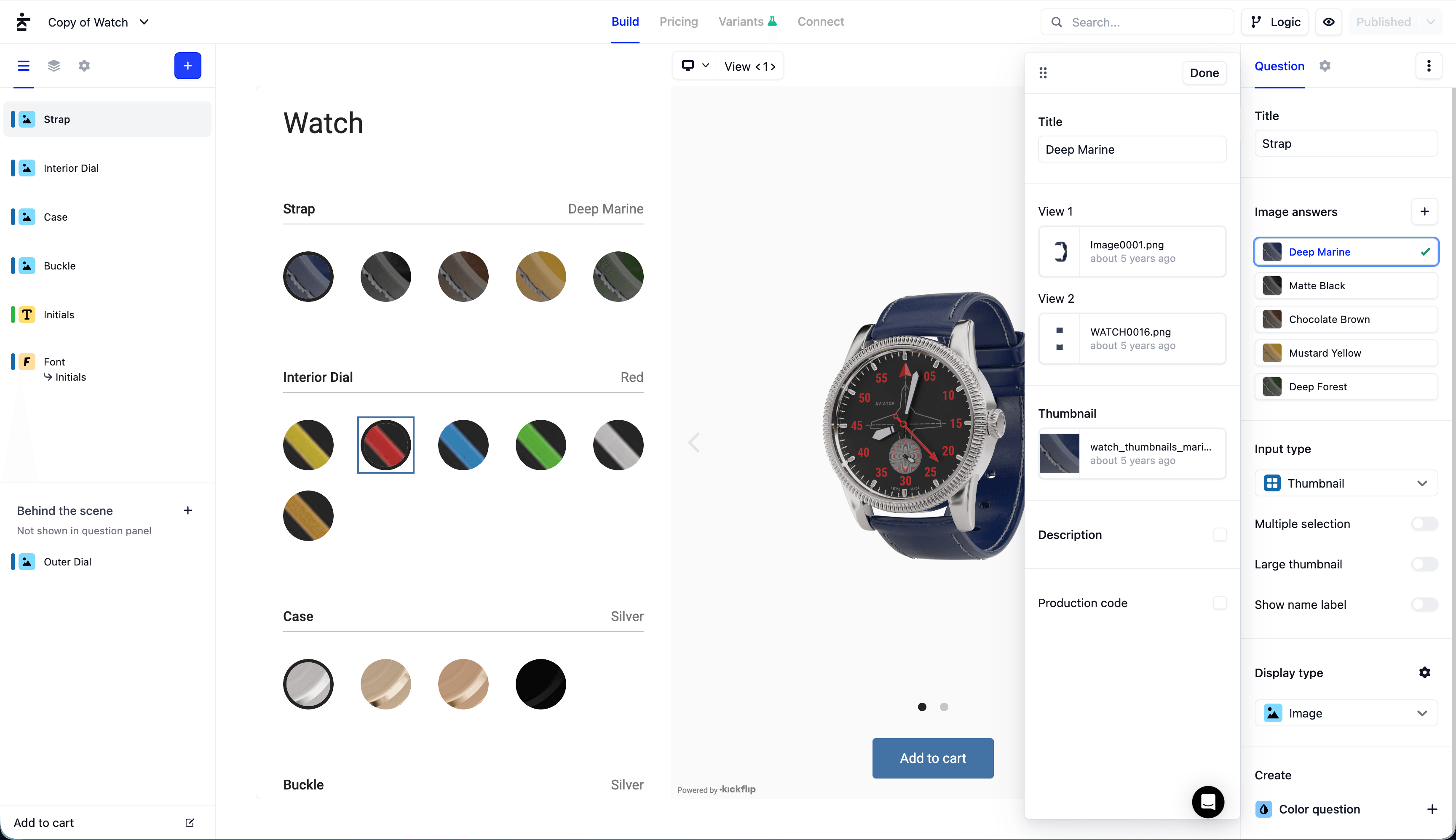
Versioning and testing features also allow teams to experiment with different flows, presets, and default configurations while measuring performance before rolling changes out to everyone.
And honestly, we can’t overstate how important this is. Without a true no-code configuration manager, you’re completely dependent on your agency or your configurator provider for every small update. It has to be easy to use, otherwise “no-code” is just a label, and you’re back to waiting in line for changes.
Production-ready Outputs and Backend Workflows
Automation of production file generation eliminates manual translation steps between online configuration and offline manufacturing. The best configurators automatically create print-ready files, detailed technical specifications, and clean configuration data formatted for manufacturing partners or in-house production teams.
With API access, this data can flow directly into ERPs, CRMs, order management systems, and production workflows, reducing human error, accelerating fulfillment timelines, and ensuring consistency between what customers configure and what gets produced.
UX Best Practices and Accessibility
Simple, guided steps prevent customers from feeling overwhelmed by too many simultaneous choices. Mobile-optimized layouts ensure consistent functionality across devices, while accessibility considerations support inclusive shopping experiences. Following actionable design advice, like the best practices outlined by Nebulab, is essential.
UX quality directly impacts configurator performance. Poorly designed interfaces can actually reduce conversion rates compared to standard product pages, making thoughtful design essential for success.
Challenges, Limitations, and How to Avoid Common Pitfalls
Implementation Complexity and Technical Debt
Modeling complex products with intricate rule sets presents significant challenges, especially when integrating with existing ecommerce platforms and backend systems. Building custom configurators in-house often leads to technical debt as requirements evolve and maintenance demands increase over time.
Specialized configurator platforms like Kickflip offer advantages over custom development by providing pre-built functionality, ongoing updates, and proven integration patterns.
UX Problems That Reduce Conversions
Overly complex interfaces with too many simultaneous choices can overwhelm customers and actually hurt conversion rates compared to simpler product pages. Lack of visual feedback or delayed preview updates can break the psychological flow that makes configuration engaging. Regular usability testing with actual customers helps identify and resolve these issues before they impact broader performance.
Device Compatibility and Accessibility Gaps
Heavy 3D experiences that perform poorly on older devices or slower internet connections exclude potential customers and can damage brand perception. Missing accessibility features create barriers for users with disabilities.
Selecting configurator technology that balances visual appeal with broad device compatibility ensures the widest possible audience can engage with your customization experience. Performance testing across device types and connection speeds should be part of any configurator evaluation process.
How to Choose the Right Ecommerce Configurator for Your Store
When evaluating configurator platforms, prioritize must-have capabilities over nice-to-have features that might not impact your specific use case. Essential questions include:
Platform Integration Questions:
Does the configurator integrate with my ecommerce store natively or require custom development?
How does configuration data flow through checkout, order management, and fulfillment systems?
What happens to site performance and page load times?
Performance and Reliability Questions:
How quickly do visual previews update when customers make changes?
What mobile device performance can I expect?
What uptime guarantees and support response times are offered?
Support and Onboarding Questions:
What implementation support is provided during setup?
How much technical knowledge is required for ongoing management?
Are training resources and documentation comprehensive?
Customization and Scalability Questions:
Can I modify configuration flows without developer involvement?
How easily can I add new products or customization options?
Will the platform scale with my business growth?
Build vs Buy: When a Specialized Platform Makes Sense
Building a custom configurator from scratch offers complete control but requires significant development resources, ongoing maintenance, and continuous feature updates to remain competitive. Most brands lack the resources to build and maintain sophisticated configurator functionality while focusing on their core business.
SaaS configurator platforms like Kickflip provide faster time to market, continuous improvements based on industry best practices, and no-code control for merchandising and marketing teams. The total cost of ownership often favors specialized platforms when considering development time, maintenance requirements, and opportunity costs.
Kickflip: an excellent choice for fast-moving teams that need full control
Kickflip exemplifies a modern, no-code ecommerce configurator platform designed specifically for brands selling customizable products. The platform combines live preview capabilities with dynamic pricing, conditional logic, and rule-based configuration management that prevents invalid combinations.
Key Kickflip capabilities include automatic generation of print-ready files and production specifications, comprehensive integrations with major ecommerce platforms (Shopify, WooCommerce, Wix), and support for diverse use cases spanning sporting goods, apparel, jewelry, and home decor brands globally.
Customers consistently highlight Kickflip's combination of powerful functionality and ease of use. As one G2 review notes: "Kickflip made implementing product customization incredibly straightforward. What would have taken months of development was launched in weeks." Another Shopify App Store review emphasizes: "The support team is fantastic and the platform handles complex configurations that we couldn't achieve with other tools."
This versatility across industries and positive customer feedback demonstrates how specialized configurator platforms can address varied customization needs while maintaining simplicity for business users.
Transform Your Ecommerce Store with Professional Configuration Solutions
Ecommerce configurators have evolved from nice-to-have features into essential tools for brands selling customizable products. The combination of improved customer experience, reduced returns, higher average order values, and operational efficiency makes configurators a high-impact investment for forward-thinking ecommerce businesses. According to recent statistics, brands that offer product customization see measurably higher conversion rates and customer lifetime value.
If you're ready to implement a configurator for your store, consider starting with a proven platform that offers the flexibility to grow with your business. Kickflip provides a comprehensive no-code solution designed specifically for ecommerce brands, with powerful features that don't require technical expertise to manage.
Start your free 14-day trial with Kickflip today to experience how professional product configuration can transform your online store.
Beyond the technology, Kickflip has a real team behind the products. Our help center is packed with step-by-step guides and comprehensive video tutorials that make implementation straightforward. Whether you need technical assistance or strategic guidance on optimizing your configuration flows, our support team is just an email or live chat away. You didn't have to worry about setup anxiety because we're here to help.
Frequently Asked Questions
What is an ecommerce configurator?
An ecommerce configurator is a digital tool embedded in your online store that lets shoppers customize, visualize, and price products in real time while enforcing valid options. It gives customers a seamless user experience by integrating directly with your ecommerce platform.
How does an ecommerce configurator work in an online store?
Customers start with a base product, select customization options like colors or materials, see live visual previews that update instantly, watch prices adjust dynamically, have their configuration validated against business rules, then add the customized product to their cart. All configuration data flows through to fulfillment.
What types of products benefit most from an ecommerce configurator?
Products with multiple customization options benefit most: apparel and accessories, sporting goods with personalization, jewelry with engraving options, home decor items, and B2B modular or technical products. Any product where customers need to see their customization choices visualized before purchasing is an ideal candidate.
What features should I look for in an ecommerce configurator?
Essential features include real-time visual previews, dynamic pricing, rule-based option validation, seamless ecommerce platform integration, no-code configuration management, production-ready file outputs, mobile optimization, and comprehensive analytics for optimization.
Is it better to build my own ecommerce configurator or use a no-code platform?
For most ecommerce brands, specialized platforms offer faster implementation, lower total cost of ownership, continuous updates, and proven integrations. Custom development requires significant resources and ongoing maintenance that distract from core business focus.
What is the best ecommerce configurator for Shopify?
The best Shopify product configurator depends on your specific needs, but look for platforms with native Shopify integration, strong visual capabilities, flexible rule engines, and positive merchant reviews. Kickflip offers comprehensive Shopify integration specifically designed for customizable product businesses.
Future reading
3D Product Configurator - Everything You Need to Know
WooCommerce Product Configurators: Top 5 Apps to Look Into
How to Build a Product Configurator
Share This article

Written by The Kickflip Team
January 23rd, 2026
The Kickflip team is made up of ecommerce specialists, product experts, and engineers behind Kickflip, a product configurator platform for Shopify, WooCommerce, and Wix. Since 2010, we’ve helped thousands of brands scale personalized product experiences, from startups to Fortune 500 companies. On our blog, we share practical insights to help you improve the buying experience and grow your business with product customization.


Maarten Luyckx
Osaka World
The user-friendly interface of Kickflip, combined with excellent customer service, ensured that this project was brought to a successful and beautiful conclusion.
Shopify App Store
May 20, 2021

Marie-Laetitia Rossazza
My Dust Bag
It took me a long time to find the perfect customizer app, and I’m so happy to say that I finally did! Kickflip is truly the best app on the market. The front end and back end are excellent, and the team behind it is incredibly kind and helpful!
Shopify App Store
September 1, 2023

Brad Jurga
All-Star Sporting Goods
Kickflip made everything easy, from designing the builder all the way through launch. We’re designing truly custom equipment for elite baseball players and this platform allows us to have better engagement and excitement around our brand. We’re seeing an instant return.
Shopify App Store
June 16, 2025

Kasper Taylor
CodedInk
My experience with both the product and the support team has been fantastic. The user interface and user experience are excellent. The features are powerful, and the WooCommerce integration is seamless and easy to set up.
G2.com
June 16, 2025

Saber Naceur
Vinylacy
By far, and I truly mean it, the best customizer available on Shopify. It’s easy to understand and manage, offers options for all types of products, and works extremely well. On top of that, it looks beautiful and feels premium. Highly recommended.
Shopify App Store
December 17, 2022

Jesus Guillermo de León Pérez
Dismo
Kickflip is a fantastic tool. It’s super intuitive, easy to use, and packed with capabilities. You don’t have to be an expert or have experience with other products to get started. The support team is also great and very responsive.
Shopify App Store
July 10, 2024

Frieder Urban
Era of Arc
We were looking for an uncomplicated configurator that was quick and easy to set up, offered plenty of design options, and worked reliably with fast loading times. We tested many configurators on the market, and with Kickflip, we found exactly what we needed.
Shopify App Store
October 10, 2024

John Taggart
Jack Harry and Ollie
What a great addition to our business Kickflip has been. It’s been fantastic to offer our customers the ability to personalize their orders. The support has been excellent, and we especially love that the pricing is tied to our success as customers make purchases.
Shopify App Store
May 7, 2021

TJ Garske
The Net Return
Kickflip saves our team a ton of time by eliminating the need to create custom mockups for customers. Customers can build their product themselves and place an order instantly, without any back-and-forth.
G2.com
January 26, 2026

Amin Hasani
CURVD
After extensive research into product customizer tools, we chose Kickflip for many reasons. We don’t like complicating simple tasks for customers, and Kickflip helped us simplify the process and create a seamless customer experience.
Shopify App Store
July 29, 2025