Best Ecommerce Tools for 2026: The Essential Stack For Growth
Written by The Kickflip Team
February 19th, 2026

Table Of Contents
- The 5 Big Ecommerce Trends Shaping Tool Choices in 2026
- Quick Comparison: Core Ecommerce Tool Categories for 2026
- 1. Product Customizers: The Backbone of Experiential Ecommerce
- 2. Conversational Interfaces and Shopping Assistants
- 3. Analytics and Marketing Tools That Actually Move the Needle
- 4. Operational Tools: Recommendations, Inventory, and Pricing
- 5. Composable Ecommerce Platforms and Integrations
- 6. Social Commerce and Channel Management Tools
- How to Choose the Right Ecommerce Tools for Your Brand
- Ready to Transform Your Ecommerce Experience?
- Frequently Asked Questions
Discover the best ecommerce tools of 2026 for growth. Enhance marketing, automation, and personalization to elevate your store's success.
Looking to build an ecommerce stack that actually drives growth in 2026?
You're in the right place.
The ecommerce landscape is shifting faster than ever, and the tools that worked in 2023 won't cut it anymore. Customer acquisition costs are skyrocketing, expectations are higher, and standing out in crowded marketplaces requires more than competitive pricing.
The brands winning in 2026 will be those that transform their stores from static catalogs into interactive creation studios where customers co-create products, get personalized guidance, and enjoy seamless experiences across every touchpoint.
This isn't about having the most tools. It's about having the right ones that work together to create something truly differentiated.
In this guide, I'm breaking down the essential ecommerce tool categories that will separate the winners from the also-rans in 2026, from product customizer software that lets customers design their perfect product to marketing automation that turns every interaction into revenue.
The 5 Big Ecommerce Trends Shaping Tool Choices in 2026
1. The Shift from Catalog to Creation Studio
Here's what most ecommerce brands still don't get: customers don't want to buy your products anymore.
They want to create them with you.
This shift from passive browsing to active co-creation is reshaping everything about how successful stores operate.
Think about it. When was the last time you bought something exactly as it appeared on a product page without wishing you could change the color, size, or add a personal touch?
The brands crushing it in 2026 understand that shoppers increasingly expect to customize, configure, and personalize products before they buy.
This trend spans every category from apparel and sporting goods to furniture and B2B equipment. The tools you choose need to support this fundamental shift toward experiential commerce.
2. Assisted Shopping Through Conversational Interfaces
Browsing through endless product pages is becoming a thing of the past.
Smart shoppers expect guided experiences where they can ask questions, compare options, and get recommendations through natural conversation.
Whether it's a chat widget that helps someone find the perfect gift or a voice assistant that walks them through complex product configurations, conversational interfaces are becoming the new storefront.
This trend is a key part of the move toward AI conversational interfaces. This means your tool stack needs clean product data, robust search capabilities, and seamless integration with messaging platforms.
3. Smarter Decisions with Real-Time Analytics and Automation
The days of flying blind are over. Modern ecommerce teams need unified visibility into marketing performance, merchandising effectiveness, and inventory levels, all in real time.
But here's the key: these insights need to automatically translate into action.
The best tools don't just show you what happened. They help you respond instantly with automated campaigns, dynamic pricing adjustments, and personalized product recommendations.
According to Yotpo's ecommerce trends analysis for 2026, both marketing automation and AI-driven commerce will be critical for efficiency and growth. Small teams are doing more than ever, and automation is the only way to scale without losing the personal touch.
4. Composable Stacks Instead of One-Size-Fits-All Platforms
The era of monolithic platforms is ending. Forward-thinking brands are building composable stacks where they choose the best tool for each job and connect them through APIs. T
his approach future-proofs your business because you can swap out individual components as better solutions emerge without rebuilding everything from scratch. Forward-looking analysis highlights composable architectures as a key trend shaping the future of ecommerce.
When evaluating tools for 2026, prioritize those with robust APIs, native integrations with major platforms, and strong partner ecosystems.
5. Social Commerce and Distributed Shopping
Your customers aren't just shopping on your website anymore. They're discovering products on TikTok, comparing options on Instagram, and making purchases without ever visiting your domain.
This distributed commerce landscape requires tools that keep your product catalogs synchronized across channels, maintain consistent experiences everywhere your customers shop, and turn social content into revenue-driving touchpoints.
Data on global ecommerce sales shows that this trend is a major driver of online retail growth.
Quick Comparison: Core Ecommerce Tool Categories for 2026
Snapshot: The Essential Categories
1.Product Customizers
Best For: Brands selling configurable products
Key Benefits: Higher AOV, fewer returns, differentiation
Example Tools: Kickflip, Zakeke, Customily
2.Conversational Commerce
Best For: Complex products, high-touch sales
Key Benefits: Guided discovery, reduced support load
Example Tools: Gorgias, Intercom, Drift
3.Marketing Automation
Best For: Personalized campaigns and journeys
Key Benefits: Higher LTV, better segmentation
Example Tools: Klaviyo, Omnisend, Attentive
4.Analytics & BI
Best For: Data-driven decision making
Key Benefits: Real-time insights, attribution clarity
Example Tools: Triple Whale, Northbeam, Glew
5.Inventory Management
Best For: Multi-channel operations
Key Benefits: Fewer stockouts, optimized cash flow
Example Tools: Cin7, TradeGecko, Skubana
6.Social Commerce
Best For: Social media sales
Key Benefits: Expanded reach, native shopping
Example Tools: Shopify Social, Later Influence
This breakdown gives you the lay of the land, but choosing the right mix depends on your specific business model and growth stage.
How to Decide Which Categories Matter Most
Not every business needs every tool category. Here's how to prioritize:
If you're competing on experience over price: Focus on product customizers, conversational commerce, and personalization tools. These create differentiated experiences that justify premium pricing.
If you sell configurable or customizable products: Product configurators aren't optional. They're essential. The benefits of personalization in ecommerce are too significant to ignore.
If your customer journey is complex: Invest heavily in conversational interfaces and marketing automation. These tools guide customers through complexity and nurture relationships over time.
The key is matching your tool investment to your primary growth lever, not trying to optimize everything at once.
1. Product Customizers: The Backbone of Experiential Ecommerce
What Product Customizers Actually Do
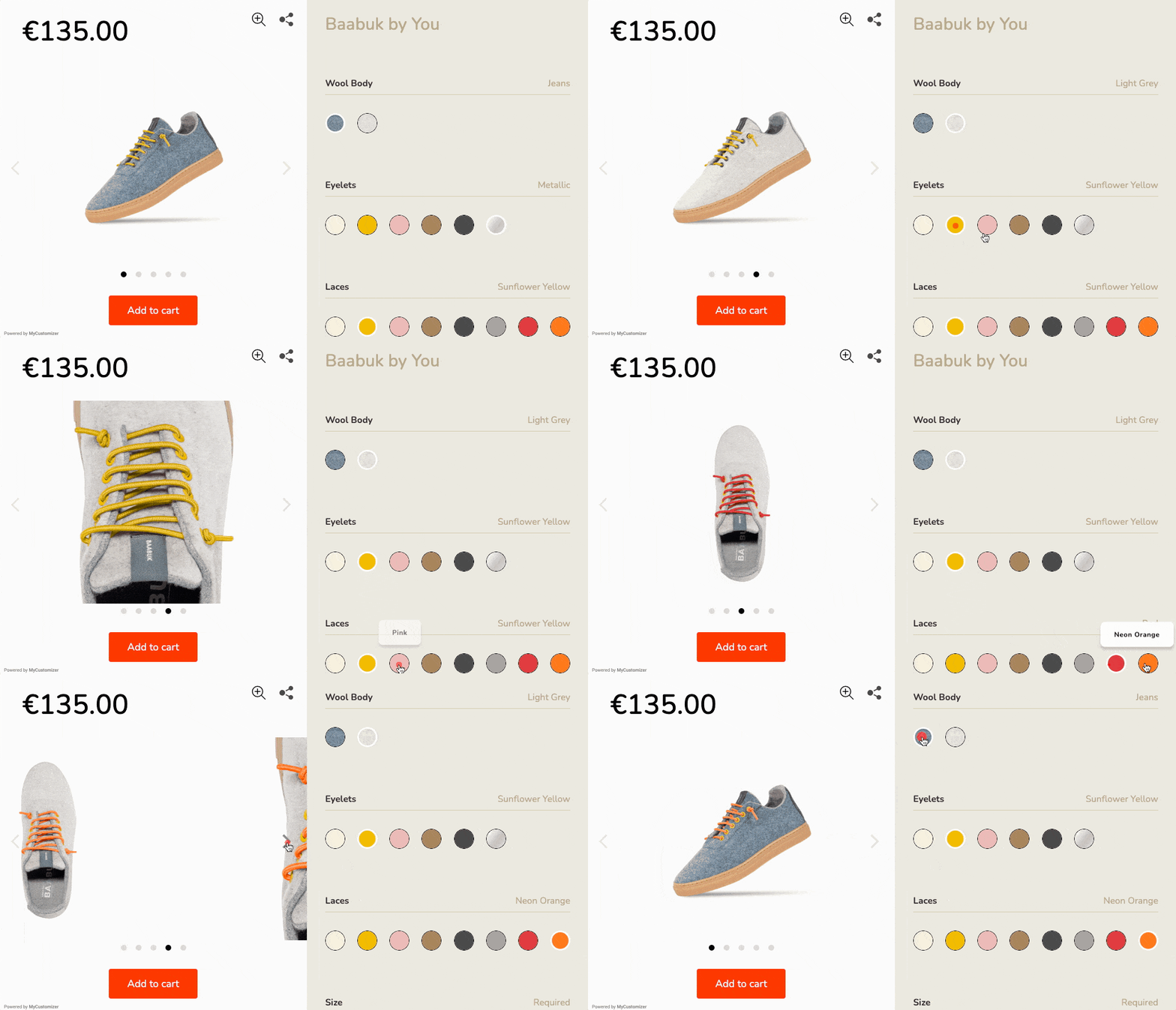
A product customizer transforms your static product pages into interactive design studios where customers build their perfect product in real-time. Instead of choosing from fixed options, shoppers select colors, materials, add personalization, and see exactly what they're buying before they buy it. The impact goes beyond just user experience. Brands using product configurator software consistently report higher conversion rates, increased average order values, and significantly fewer returns because customers know exactly what they're getting.
Essential Features for 2026
Not all product customizers are created equal. Here's what separates the winners from the wannabes:
Live Visual Previews: Customers need to see their changes instantly. Static mockups don't cut it anymore. The configurator should render realistic previews that match the final product.
No-Code Setup: Your marketing team should be able to launch new customizable products without waiting for developers. Look for tools that let non-technical users manage options, pricing rules, and configurations.
Flexible Logic: Complex products need conditional fields where certain options unlock or hide others. The tool should handle sophisticated product logic without breaking.
Dynamic Pricing: Prices should update automatically as customers add premium materials or features. This transparency builds trust and maximizes revenue per order. Check out some of the key features of a configurator, like dynamic pricing and integrations.
Platform Integration: Seamless connection with Shopify, WooCommerce, Wix, and custom platforms through APIs ensures the configurator feels native to your store.
Mobile Performance: Most customization happens on mobile devices. With mobile commerce expected to account for a significant portion of sales, as highlighted by ecommerce statistics, the tool needs to be fast and intuitive on small screens.
How Kickflip Powers Modern Customization
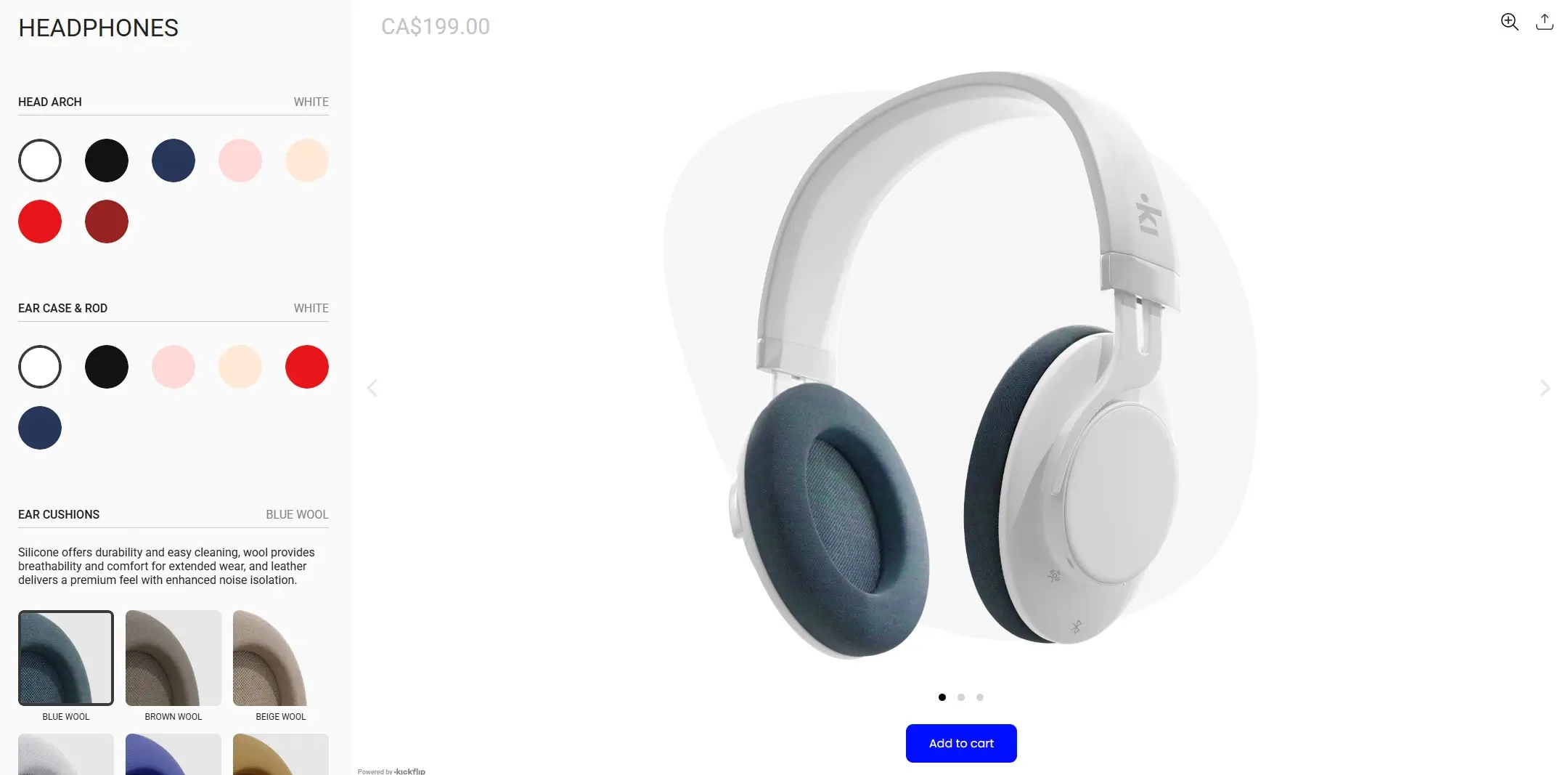
Kickflip stands out as a no-code, visual product configurator built specifically for ecommerce brands who want to offer personalized products without technical complexity. It integrates natively with Shopify, WooCommerce, and Wix, while also supporting custom implementations through its robust API.
The platform excels in several key areas:
Apparel and Footwear: Design custom jerseys, personalized shoes, and branded merchandise with live previews that show exactly how the final product will look.
Sporting Goods: Configure equipment with size, material, and design options that update pricing dynamically based on selections.
Jewelry and Accessories: Create personalized pieces with engravings, material choices, and custom elements that customers can visualize before ordering.
B2B Products: Handle complex configuration workflows for business customers who need specific combinations of features and materials.
Check out product customizer examples to see these use cases in action.
2. Conversational Interfaces and Shopping Assistants
The New Face of Ecommerce Guidance
Conversational commerce isn't just about answering customer service questions anymore. Modern shoppers expect to discover products, compare options, and even complete purchases through natural conversation. Whether it's a chat widget that helps someone find the perfect gift or a voice interface that guides them through complex configurations, these tools are becoming the new sales floor. AI tools for ecommerce are at the forefront of this shift, powering impactful customer support and personalization.
The shift is dramatic. Instead of browsing through categories and filtering endless results, customers simply ask: "What's the best running shoe for someone with flat feet?" or "Help me design a custom gift box for my mom's birthday." The right conversational tools turn these questions into guided shopping experiences that drive higher conversion rates and larger order values.
Core Tool Types Winning in 2026
On-Site Chat Tools: These integrate directly with your product catalog to provide intelligent recommendations based on customer questions and browsing behavior. The best ones feel like talking to your most knowledgeable salesperson.
Automated Shopping Assistants: These live in messaging apps and social platforms, meeting customers where they already spend time. They can browse your catalog, compare products, and even initiate checkout flows.
Voice-Based Interfaces: While still emerging, voice shopping is growing rapidly for reorder scenarios and simple product discovery. These tools need deep integration with your inventory and customer data.
What Separates Good from Great
The difference between a helpful assistant and an annoying chatbot comes down to these capabilities:
Deep Catalog Integration: The tool needs real-time access to your product data, inventory levels, and pricing. Recommendations should be accurate and available for immediate purchase.
Smart Escalation: When conversations get complex or emotional, the system should seamlessly hand off to human support without losing context.
Revenue Analytics: You need clear visibility into which conversations drive sales and which interactions need improvement.
Brand Customization: The conversation flows and responses should match your brand voice and product expertise, not feel like a generic bot.
How Conversational Tools Amplify Customization
Here's where it gets really powerful: combining conversational interfaces with product configurators creates an unstoppable experience. A chatbot can guide customers to the right customizable product, then seamlessly transition them into the configuration experience.
Example flows that work:
"Help me build a custom gift box" leads to a guided configuration experience
"Recommend a personalized jersey for my team" routes to team customization options
"What's the best way to engrave this ring?" opens the jewelry customizer with relevant options pre-selected
This combination reduces friction while increasing personalization, leading to higher conversion rates and happier customers.
3. Analytics and Marketing Tools That Actually Move the Needle
Unified Analytics for Smarter Decisions
The biggest mistake ecommerce brands make is treating analytics like a report card instead of a dashboard. You don't need to know what happened last month. You need to know what's happening right now so you can act on it. The best analytics tools give you a unified view of performance across all channels, with attribution that actually makes sense.
According to DataHawk's analysis of ecommerce analytics software, modern unified analytics platforms integrate sales, marketing, inventory, and finance data to support better decision-making across the entire business.
Key capabilities that matter:
Real-Time Dashboards: See how campaigns, products, and channels are performing as it happens, not after the damage is done.
Cohort Analysis: Understand how customer behavior changes over time, especially for personalized and customized products that often have different purchase patterns.
Platform Integration: Direct connections to your ecommerce platform, ad accounts, and email tools eliminate data silos and give you the complete picture.
The goal isn't more data. It's faster, better decisions based on complete information.
Marketing Automation Built for Personalization
Generic email blasts are dead. Modern marketing automation platforms excel at creating personalized journeys based on actual customer behavior and preferences. The most effective tools integrate deeply with your ecommerce platform to trigger campaigns based on browsing, purchasing, and configuration data delivering CRM automation benefits like streamlined customer retention and higher lifetime value. Insights on AI tools for ecommerce businesses highlight the power of AI in automating marketing for better efficiency.
Platforms like Klaviyo lead this space by powering email and SMS campaigns that feel personal because they are personal. They can trigger flows based on:
Cart abandonment with custom product images
Browse behavior for specific product categories
Customization activity that doesn't convert
Post-purchase follow-ups with personalized recommendations
The key is segmentation that goes beyond basic demographics to include product preferences, customization history, and behavioral patterns.
Closing the Loop from Experience to Revenue
Here's where analytics and personalization tools really shine: data from tools that provide high-quality product visualization feeds into better segments and more relevant campaigns.
For example:
Customers who configured but didn't buy red shoes get targeted campaigns featuring red athletic wear
People who personalize jerseys with specific team colors receive lookbook emails featuring complementary fan gear
B2B customers who configure complex products get educational content about related accessories and upgrades
This creates a feedback loop where better experiences generate better data, which powers better marketing, which drives more revenue and customer lifetime value.
4. Operational Tools: Recommendations, Inventory, and Pricing
Smarter Product Recommendations That Actually Convert
Recommendation engines have evolved far beyond "customers who bought this also bought that." Modern systems use real-time behavior, inventory levels, and margin data to suggest products that customers actually want while optimizing for business outcomes.
The best recommendation tools are context-aware. They know if someone is browsing for gifts versus personal use, understand seasonal preferences, and factor in what's actually available to ship. For brands using customization, recommendations get even more powerful because they can suggest complementary customizable products or popular configuration options.
Key features that drive results:
Behavioral Targeting: Recommendations based on real-time browsing and purchase patterns
Inventory Intelligence: Never recommend out-of-stock items or push slow-moving inventory strategically
Margin Optimization: Surface higher-margin products and bundles when appropriate
Cross-Channel Consistency: Same smart recommendations across web, mobile, email, and social channels
Inventory Forecasting for Fewer Stockouts
As selling channels multiply and customer expectations for fast shipping increase, accurate inventory forecasting becomes critical. Modern inventory tools use historical data, seasonal patterns, and channel-specific demand to predict what you'll need and when you'll need it.
This is especially important for customizable products where you need to maintain adequate stock of base materials, components, and packaging across multiple SKU variations. The best tools integrate with your configurator data to understand which customization options are trending and adjust forecasts accordingly.
Look for capabilities like:
Multi-Channel Demand Planning: Unified inventory across web, retail, and marketplace channels
Automated Reordering: Smart purchase suggestions based on lead times and demand patterns
Variant Management: Handle complex SKU structures created by product customization
Dynamic Pricing Done Right
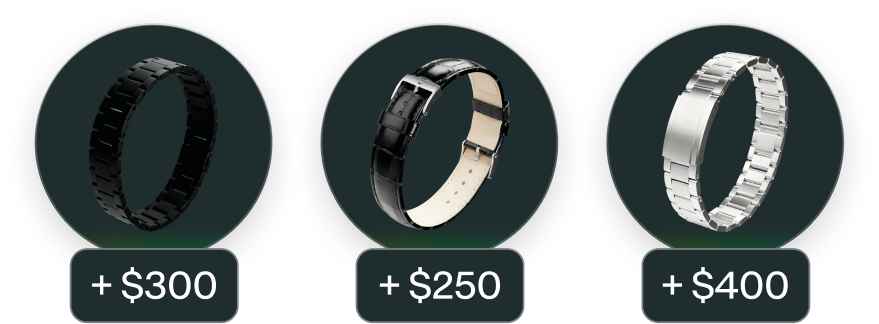
Dynamic pricing can be powerful when implemented thoughtfully, but it can also backfire if customers feel manipulated. The key is transparency and fairness while optimizing for business outcomes. AI has become a game-changer here, with AI tools for inventory and pricing driving significant efficiency.
Effective use cases include:
Demand-Based Adjustments: Slight price increases during peak seasons or for popular customization options
Inventory Optimization: Discounting slow-moving items or configurations
Personalization Premiums: Fair pricing for custom work that reflects actual value added
The best dynamic pricing tools integrate with your configurator to understand the true cost and complexity of different customization options, ensuring pricing accurately reflects value while remaining competitive.
5. Composable Ecommerce Platforms and Integrations
Why Composable Architectures Are Winning
The future belongs to composable ecommerce stacks where brands choose best-in-class tools for each function and connect them through APIs. This approach beats monolithic platforms because you can optimize each piece of the customer experience without being limited by a single vendor's capabilities. A thorough review of ecommerce platforms often highlights the flexibility of composable commerce for businesses of different sizes.
Industry analysts consistently point to composable architectures as the key to future-proofing ecommerce operations. The reason is simple: business needs evolve faster than any single platform can adapt. With a composable approach, you can swap out individual components as better solutions emerge without rebuilding your entire stack.
What This Means for Tool Selection
When evaluating any ecommerce tool for 2026, prioritize these integration capabilities:
Native Platform Integrations: Direct connections with Shopify, WooCommerce, Wix, and other major platforms that don't require custom development.
Robust APIs: Well-documented, reliable APIs that enable custom integrations and headless implementations.
Partner Ecosystems: Active marketplaces and integration libraries that reduce setup time and ongoing maintenance.
Webhook Support: Real-time data synchronization between tools so changes propagate instantly across your stack.
Kickflip's Composable Approach
Kickflip exemplifies how modern ecommerce tools should work in composable stacks. The platform offers multiple integration paths depending on your needs:
Direct Platform Integration: Native apps for Shopify, WooCommerce, and Wix that install in minutes and require no technical expertise.
Headless Implementation: Full API access for custom builds or headless commerce setups where you need maximum flexibility.
Custom Integration: Dedicated support for enterprise implementations that require specific workflows or data handling.
This flexibility means you can start with a simple integration and evolve toward more sophisticated implementations as your business grows, without switching platforms or losing your investment in customization setup.
The Kickflip features page details these integration options and shows how the platform adapts to different technical architectures.
6. Social Commerce and Channel Management Tools
Social Commerce as the New Default
Social platforms aren't just marketing channels anymore. They're sales channels. TikTok Shop, Instagram Shopping, and similar platforms let customers discover, compare, and purchase products without leaving the social app. This shift requires tools that keep your product catalogs synchronized across channels and maintain consistent experiences everywhere customers interact with your brand.
According to Shopify's global ecommerce sales analysis, social commerce represents the fastest-growing segment of online retail, particularly among younger demographics who expect seamless social shopping experiences.
The growth is undeniable. Social commerce represents the fastest-growing segment of online retail, and brands that ignore this trend risk losing touch with younger demographics who expect seamless social shopping experiences.
Essential Social Commerce Capabilities
Product Feed Management: Tools that automatically sync your catalog across multiple social platforms, maintaining accurate pricing, inventory, and product descriptions.
Social Commerce Platform Integration: Direct connections to TikTok Shop, Instagram Shopping, Pinterest Shopping, and emerging platforms that let you manage everything from one dashboard.
User-Generated Content Tools: Systems that collect, curate, and distribute customer photos, reviews, and videos across your social channels and product pages.
Social Proof Integration: Reviews, ratings, and social mentions that appear on product pages and in social feeds to build trust and drive conversions.
Making Custom Experiences Work Socially
Customizable products present unique opportunities in social commerce. Visual content performs exceptionally well on social platforms, and customization naturally creates shareable moments.
Effective approaches include:
Configuration Showcase Videos: Short clips demonstrating the customization process that drive traffic to your configurator
User-Generated Custom Content: Customers sharing their personalized products creates authentic social proof
Social-to-Configurator Flows: Social ads and posts that drive users directly to customization experiences
Influencer Customization: Creators designing products live or showing their custom orders
The key is making the path from social discovery to customization as smooth as possible, while capturing the shareable moments that social platforms reward with increased reach.
How to Choose the Right Ecommerce Tools for Your Brand
Map Tools to Your Business Model
Not every business needs every tool category. Here's a simple framework to prioritize your investments:
Step 1: Identify Your Primary Growth Lever
Experience Differentiation: Focus on product customizers, personalization, and conversational commerce
Operational Excellence: Prioritize inventory management, analytics, and automation
Channel Expansion: Invest in social commerce and multi-channel management tools
Content and Community: Emphasize social proof, UGC, and influencer tools
Step 2: Separate Must-Have from Nice-to-Have
Must-haves directly support your primary growth lever and have clear ROI. Nice-to-haves can wait until you've maximized the impact of your core tools.
Step 3: Prioritize Based on Impact vs. Effort
Some tools deliver immediate results with minimal setup. Others require significant implementation but provide long-term competitive advantages. Balance quick wins with strategic investments.
Your Tool Evaluation Checklist
Use this framework to evaluate any ecommerce tool:
Integration Fit
Does it work natively with your current platform?
What's required for setup and ongoing maintenance?
How does it handle data synchronization?
Team Usability
Can your current team manage it without additional hiring?
What's the learning curve for non-technical users?
How intuitive are the everyday workflows?
Support Quality
What kind of onboarding do they provide?
How responsive is customer support?
Do they have documentation, tutorials, and community resources?
Proven Results
Can they provide case studies from similar businesses?
What do current customers say in reviews and references?
Do they offer trial periods or pilot programs?
Future-Proofing Questions for Every Vendor
Before committing to any tool, ask these strategic questions:
Scalability: How does pricing and functionality change as we grow?
Roadmap Alignment: What new features are planned and how do they match our needs?
Integration Evolution: How will this tool adapt as we add new channels and capabilities?
Data Portability: If we ever need to switch, how easy is it to export our data and configurations?
The best tools grow with your business rather than constraining it.
Ready to Transform Your Ecommerce Experience?
The ecommerce tools that win in 2026 won't just help you sell products. They'll help customers create experiences they can't get anywhere else. Product customization sits at the heart of this transformation, turning every purchase into a collaborative creation process that builds deeper connections and drives higher values.
If you're ready to move beyond static catalogs toward interactive experiences, Kickflip's product configurator software offers the perfect starting point. With native integrations for Shopify, WooCommerce, and Wix, plus flexible API options for custom implementations, you can launch customizable products without technical complexity.
Explore real-world product customizer examples of brands already winning with customization, discover the platform's comprehensive feature set, or see how personalization drives measurable business results. The future of ecommerce is interactive, personalized, and profitable, and it starts with giving customers the tools to create exactly what they want.
Frequently Asked Questions
What are the most important ecommerce tools to have in 2026?
The essential categories include product customizers for experiential commerce, conversational interfaces for guided shopping, marketing automation for personalized campaigns, real-time analytics for data-driven decisions, inventory management for multi-channel operations, and social commerce tools for distributed selling. The specific tools you need depend on your business model and growth priorities.
Which ecommerce tools help increase conversion rates and average order value?
Product customizers and visual configurators consistently deliver the highest impact on both metrics. When customers can personalize products and see exactly what they're buying, conversion rates increase significantly and average order values often double due to premium customization options. Marketing automation and smart recommendation engines also drive meaningful improvements.
How do I choose the right ecommerce tools for my business size and model?
Start by identifying your primary growth lever: experience differentiation, operational excellence, or channel expansion. Then prioritize tool categories that directly support that lever. Small businesses should focus on tools with low setup complexity and immediate ROI, while larger operations can invest in more sophisticated platforms that require longer implementation periods.
What is a product customizer and when should I use one?
A product customizer is software that transforms static product pages into interactive design studios where customers can modify colors, materials, add personalization, and see live previews of their changes. Use one if you sell any configurable products, want to differentiate on experience rather than price, or serve customers who value personalization in categories like apparel, sporting goods, jewelry, or B2B equipment.
How can I make sure my ecommerce tools work well together?
Prioritize tools with native integrations for your ecommerce platform and robust APIs for custom connections. Look for platforms that participate in partner ecosystems and have proven integration track records. Start with a core platform and add complementary tools gradually rather than trying to implement everything at once. Test integrations thoroughly before going live.
Future reading
The 2026 Ecommerce Customization and Personalization Guide
eCommerce Product Configuration: Complete Guide & Examples
5 powerful product visualization ecommerce examples
Share This article

Written by The Kickflip Team
February 19th, 2026
The Kickflip team is made up of ecommerce specialists, product experts, and engineers behind Kickflip, a product configurator platform for Shopify, WooCommerce, and Wix. Since 2010, we’ve helped thousands of brands scale personalized product experiences, from startups to Fortune 500 companies. On our blog, we share practical insights to help you improve the buying experience and grow your business with product customization.


Maarten Luyckx
Osaka World
The user-friendly interface of Kickflip, combined with excellent customer service, ensured that this project was brought to a successful and beautiful conclusion.
Shopify App Store
May 20, 2021

Marie-Laetitia Rossazza
My Dust Bag
It took me a long time to find the perfect customizer app, and I’m so happy to say that I finally did! Kickflip is truly the best app on the market. The front end and back end are excellent, and the team behind it is incredibly kind and helpful!
Shopify App Store
September 1, 2023

Brad Jurga
All-Star Sporting Goods
Kickflip made everything easy, from designing the builder all the way through launch. We’re designing truly custom equipment for elite baseball players and this platform allows us to have better engagement and excitement around our brand. We’re seeing an instant return.
Shopify App Store
June 16, 2025

Kasper Taylor
CodedInk
My experience with both the product and the support team has been fantastic. The user interface and user experience are excellent. The features are powerful, and the WooCommerce integration is seamless and easy to set up.
G2.com
June 16, 2025

Saber Naceur
Vinylacy
By far, and I truly mean it, the best customizer available on Shopify. It’s easy to understand and manage, offers options for all types of products, and works extremely well. On top of that, it looks beautiful and feels premium. Highly recommended.
Shopify App Store
December 17, 2022

Jesus Guillermo de León Pérez
Dismo
Kickflip is a fantastic tool. It’s super intuitive, easy to use, and packed with capabilities. You don’t have to be an expert or have experience with other products to get started. The support team is also great and very responsive.
Shopify App Store
July 10, 2024

Frieder Urban
Era of Arc
We were looking for an uncomplicated configurator that was quick and easy to set up, offered plenty of design options, and worked reliably with fast loading times. We tested many configurators on the market, and with Kickflip, we found exactly what we needed.
Shopify App Store
October 10, 2024

John Taggart
Jack Harry and Ollie
What a great addition to our business Kickflip has been. It’s been fantastic to offer our customers the ability to personalize their orders. The support has been excellent, and we especially love that the pricing is tied to our success as customers make purchases.
Shopify App Store
May 7, 2021

TJ Garske
The Net Return
Kickflip saves our team a ton of time by eliminating the need to create custom mockups for customers. Customers can build their product themselves and place an order instantly, without any back-and-forth.
G2.com
January 26, 2026

Amin Hasani
CURVD
After extensive research into product customizer tools, we chose Kickflip for many reasons. We don’t like complicating simple tasks for customers, and Kickflip helped us simplify the process and create a seamless customer experience.
Shopify App Store
July 29, 2025