What Is BigCommerce? Complete Ecommerce Guide for 2026
Written by Édouard Grondin-Fortin
September 13th, 2025

Table Of Contents
- What Is BigCommerce, Exactly?
- Who Uses BigCommerce and Which Industries It Fits Best
- Core Features and Capabilities
- How BigCommerce Works: Technology, Architecture, and Security
- Integrations and Extensibility
- Pricing, Plans, and Total Cost of Ownership
- BigCommerce vs Other Ecommerce Platforms
- BigCommerce, Personalization, and the Future of Ecommerce
- How to Decide if BigCommerce Is Right for Your Business
- Making the Strategic Platform Decision
- Frequently Asked Questions
Choosing the right ecommerce platform in 2026 has become a strategic decision that can make or break your online business success. As ecommerce continues to evolve with trends like omnichannel selling, headless commerce architectures, and hyper-personalization, the platform you select needs to support both your current needs and future growth ambitions.
BigCommerce stands out in the modern ecommerce platform landscape as an Open SaaS solution that bridges the gap between easy-to-use hosted platforms and highly customizable enterprise systems. BigCommerce is a cloud-based ecommerce platform that lets businesses build, run, and scale online stores without maintaining their own ecommerce infrastructure. It provides hosted storefronts, secure checkout, payment processing, and comprehensive tools for managing products, orders, and multichannel sales.
This complete guide will walk you through everything you need to know about BigCommerce in 2026. You'll learn who uses this platform and which industries it serves best, its core features and pricing structure, how it compares to other major ecommerce platforms, and where advanced product customization capabilities fit into your overall ecommerce strategy.
What Is BigCommerce, Exactly?
Definition and Core Purpose
BigCommerce is a cloud-based Software-as-a-Service (SaaS) ecommerce platform designed for businesses to create, manage, and scale professional online stores. Unlike open-source platforms that require hosting and technical maintenance, or marketplace-only approaches that limit brand control, BigCommerce provides a fully hosted solution with the flexibility to customize and extend functionality. Since its founding in 2009, the company has grown into a major publicly traded entity, cementing its place in the market.
The platform serves as the foundational technology that powers your online store. It handles everything from product catalog management to secure payment processing, while giving you the freedom to customize your storefront and integrate with third-party tools.
What BigCommerce Does
BigCommerce provides comprehensive ecommerce capabilities out of the box:
Catalog Management: Create and organize product listings with variants, bundles, and digital products
Storefront Design: Build responsive online stores using themes and customization tools
Checkout and Payments: Process orders through secure, optimized checkout flows with multiple payment gateways
Order Management: Handle fulfillment, shipping, and customer service workflows
Marketing Tools: Run promotions, discounts, and email campaigns to drive sales
Multichannel Selling: Sync inventory and orders across marketplaces, social media, and physical stores
The platform supports both B2C and B2B use cases, from simple product catalogs to complex pricing structures with customer groups and quote management.
What BigCommerce Is Used For
Businesses typically choose BigCommerce for several key scenarios:
Launching Professional Online Stores: First-time ecommerce businesses that need enterprise-grade features without technical complexity
Replatforming from Legacy Systems: Companies migrating from outdated platforms or custom-built solutions
Multi-Brand Operations: Organizations managing multiple storefronts under unified backend systems
B2B Ecommerce: Manufacturers and wholesalers implementing customer-specific pricing, quotes, and account management
Omnichannel Expansion: Retailers connecting online stores with marketplace and social selling channels
Who Uses BigCommerce and Which Industries It Fits Best
Who Uses BigCommerce: Company Sizes and Models
BigCommerce serves a diverse range of businesses, from growing startups to established enterprises.
Small and Medium Businesses choose BigCommerce for its balance of ease-of-use and scalability. These companies need professional ecommerce capabilities without the overhead of managing hosting, security updates, or technical infrastructure.
Mid-Market and Enterprise Brands leverage BigCommerce's APIs, performance capabilities, and integration ecosystem. These organizations often have complex requirements for ERP connections, custom workflows, and high-volume transaction processing, as noted in independent reviews.
B2C, D2C, and B2B Models all find value in BigCommerce's flexible architecture. Direct-to-consumer brands appreciate the marketing tools and multichannel capabilities, while B2B companies utilize customer groups, custom pricing, and quote management features. B2B in particular has seen significant growth, with statistics showing a strong adoption rate among wholesalers and manufacturers.
Some of BigCommerce's notable customers include established brands across various sectors, from fashion retailers and electronics companies to automotive parts suppliers and food and beverage distributors.
Industries Where BigCommerce Excels
Certain industries particularly benefit from BigCommerce's feature set:
Fashion and apparel companies benefit from BigCommerce's ability to handle complex product variants (sizes, colors, materials) and seasonal catalog management, plus robust B2B features for wholesale operations.
Electronics retailers appreciate the platform's capacity for detailed product specifications, comparison tools, and seamless marketplace integrations that expand reach across multiple selling channels.
Home and garden businesses leverage BigCommerce's scalability for large product catalogs, local delivery management, and seasonal inventory fluctuations.
Automotive parts suppliers use the platform's B2B capabilities for technical specifications, customer account hierarchies, and complex pricing structures.
Food and beverage brands take advantage of subscription product features, compliance tools, and multi-location selling capabilities.
Health and beauty companies benefit from age verification, subscription billing, and personalized product recommendation features.
When BigCommerce May Not Be the Best Fit
BigCommerce isn't ideal for every situation:
Extreme Custom Backend Requirements: Businesses needing complete control over backend architecture may prefer open-source solutions
Simple Website Builders: Companies with basic product catalogs who prioritize all-in-one website creation over ecommerce-specific features
Niche Open-Source Stacks: Organizations heavily invested in specific content management systems or custom development frameworks
While powerful, some critics point to potential scalability challenges and intense competition as factors to consider. The key is evaluating your technical resources, budget constraints, and long-term growth plans to determine if BigCommerce's Open SaaS approach aligns with your business strategy.
Core Features and Capabilities
Storefront and Catalog Management
BigCommerce provides comprehensive tools for creating and managing your online store.
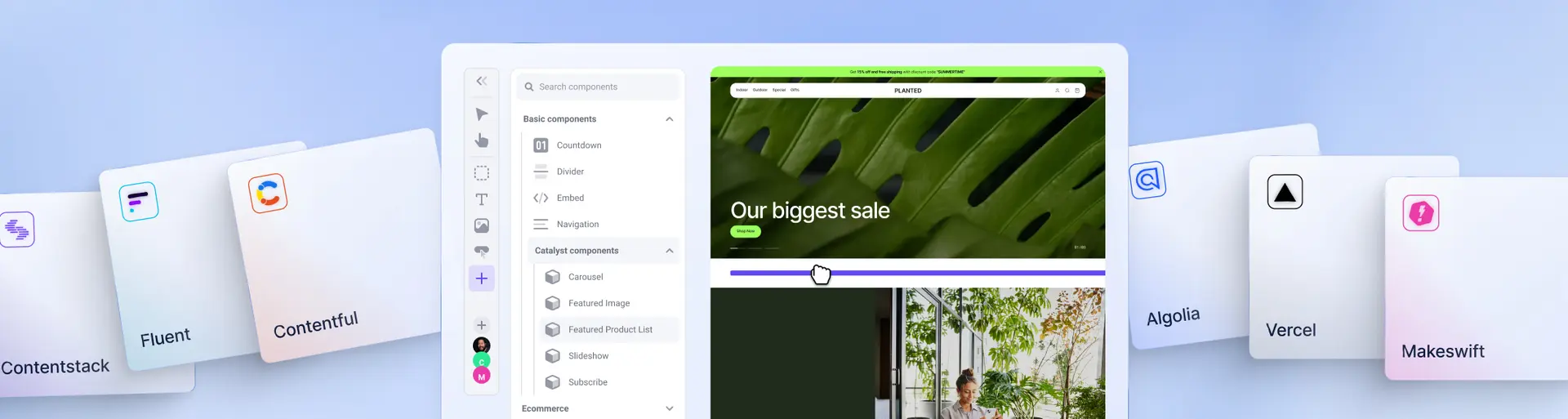
Design and Customization: The platform offers drag-and-drop page builders and a library of responsive themes that can be customized without coding knowledge. For businesses with specific design requirements, themes can be extensively modified using HTML, CSS, and the platform's templating system.
Product Management: Support for various product types including simple products, variants (size, color, material), product bundles, and digital downloads. The platform handles complex inventory scenarios with options for tracking stock levels, backorders, and low-stock alerts.
Search and Navigation: Built-in search functionality with filtering options helps customers find products quickly. Categories can be organized hierarchically, and faceted search allows filtering by multiple attributes simultaneously.
Selling, Payments, and Checkout
Checkout Optimization: BigCommerce provides a streamlined checkout process with options for guest checkout, account creation, and multiple shipping addresses. The checkout flow can be customized to match brand requirements while maintaining conversion optimization.
Payment Processing: Integration with over 65 payment gateways including PayPal, Stripe, Square, and regional payment providers. Support for digital wallets like Apple Pay and Google Pay, plus buy-now-pay-later options.
No Transaction Fees: Unlike some competitors, BigCommerce doesn't charge additional transaction fees on top of standard payment processing costs, which can significantly impact profit margins for high-volume stores.
Multichannel and Omnichannel Selling
Marketplace Integration: Native connections to major marketplaces including Amazon, eBay, Walmart, and social selling platforms like Facebook and Instagram. Inventory and pricing sync automatically across channels.
Unified Management: A single dashboard for managing orders, inventory, and customer data across all sales channels helps create a unified commerce experience, reducing complexity and preventing overselling.
Point of Sale: Integration options for physical retail locations, enabling true omnichannel experiences where online and offline inventory, customer profiles, and loyalty programs work together.
B2B and Advanced Selling Features
BigCommerce's B2B capabilities set it apart from basic ecommerce platforms.
Customer Groups and Pricing: Create different pricing tiers for various customer segments, with the ability to show or hide products based on customer type.
Quote Management: B2B customers can request quotes for large orders or custom pricing, with workflow tools for sales teams to manage the quote-to-order process.
Account Hierarchies: Support for complex organizational structures where parent accounts can manage multiple subsidiary accounts with shared or separate ordering permissions.
How BigCommerce Works: Technology, Architecture, and Security
Open SaaS and Multi-Tenant Architecture
BigCommerce operates on an Open SaaS model, combining the convenience of hosted software with the flexibility of customizable, API-driven architecture. This open SaaS approach gives you the benefits of cloud infrastructure without sacrificing the ability to customize and integrate.
Multi-Tenant Infrastructure means multiple stores share optimized server resources while maintaining data isolation and security. This shared model enables BigCommerce to:
Deliver automatic platform updates and security patches
Provide enterprise-grade scalability at accessible price points
Maintain 99.9% uptime through redundant systems
Implement new features across all customers simultaneously
Benefits of the Open SaaS Approach:
Reduced maintenance overhead compared to self-hosted solutions
Access to enterprise-grade infrastructure without massive upfront investments
Faster innovation cycles through shared development resources
Built-in scalability for traffic spikes and business growth
APIs, Headless Commerce, and Developer Experience
BigCommerce provides comprehensive APIs that enable advanced customization and integration.
REST APIs and GraphQL: Access to all platform data and functionality through modern API standards, allowing developers to build custom applications and integrations.
Headless Commerce Capabilities: Separate the frontend presentation layer from backend commerce functionality, enabling custom user experiences while leveraging BigCommerce's robust commerce engine.
Developer Tools: SDKs, webhooks, and development environments support complex customization projects. This flexibility allows businesses to create unique shopping experiences while maintaining the stability of a proven commerce platform.
Common Headless Use Cases:
Custom mobile app experiences
Integration with content management systems
Unique user interfaces for specific customer segments
Advanced personalization engines
Security, Compliance, and Reliability
Security is handled at multiple levels in BigCommerce's infrastructure.
Payment Security: PCI DSS Level 1 compliance ensures the highest standards for payment data protection. SSL certificates are included and automatically managed.
Infrastructure Security: Regular security audits, DDoS protection, and data encryption both in transit and at rest protect business and customer data.
Shared Responsibility Model: BigCommerce secures the platform infrastructure, while merchants manage their account security, app permissions, and data handling practices.
Automatic Updates: Security patches and platform improvements deploy automatically without requiring merchant intervention, reducing vulnerability windows.
Integrations and Extensibility
App Marketplace and Partner Ecosystem
BigCommerce's app marketplace contains hundreds of applications across key business functions.
Marketing and SEO: Email marketing automation, social media integration, review management, and advanced SEO tools extend the platform's native marketing capabilities.
Shipping and Fulfillment: Integrations with major carriers, third-party logistics providers, and shipping optimization tools streamline order fulfillment.
Business Operations: Connections to accounting software, tax calculation services, inventory management systems, and customer relationship management platforms.
Analytics and Reporting: Advanced reporting tools, conversion optimization platforms, and business intelligence integrations provide deeper insights into store performance.
Trade-offs of App-Heavy Architecture: While apps extend functionality, they can also introduce complexity, additional costs, and potential integration challenges. Planning your app ecosystem early helps avoid technical debt.
Connecting BigCommerce to Enterprise Systems
For larger organizations, BigCommerce integrates with enterprise-grade systems.
ERP Integration: Connect to systems like NetSuite, SAP, or Microsoft Dynamics for unified inventory, pricing, and customer management across business functions.
Product Information Management (PIM): Sync detailed product data from centralized PIM systems to maintain consistency across multiple sales channels.
Customer Relationship Management: Integration with Salesforce, HubSpot, and other CRM platforms ensures customer data flows between marketing, sales, and service functions.
APIs and Middleware: Robust API capabilities support complex integration scenarios, often implemented through middleware platforms that orchestrate data flow between multiple systems.
Product Customization and Configuration Limitations
While BigCommerce provides basic product options (dropdowns, checkboxes, text inputs), businesses with complex customization needs often require specialized solutions.
Native Product Option Limits: Standard product options work well for simple variations but may not support complex visual configuration, dynamic pricing calculations, or interactive customization experiences.
When to Consider Advanced Solutions: Companies selling customizable products like personalized apparel, configured equipment, or made-to-order items often need specialized configurators that can integrate with BigCommerce while providing sophisticated customization experiences.
Strategic Consideration: Even when choosing BigCommerce as your core platform, evaluating future needs for product personalization and configuration should be part of your platform selection process, as these capabilities increasingly drive competitive differentiation.
Pricing, Plans, and Total Cost of Ownership
BigCommerce Pricing Structure
BigCommerce offers tiered pricing based on business size and feature requirements, with detailed breakdowns available from independent sources like Wise.
Standard Plan: $39/month. Target audience: Small businesses. Key features: Core ecommerce features, unlimited products.
Plus Plan: $105/month. Target audience: Growing brands. Key features: Advanced features, abandoned cart recovery.
Pro Plan: $399/month. Target audience: High-volume stores. Key features: Advanced segmentation, Google Shopping.
Enterprise Plan: Custom pricing. Target audience: Large organizations. Key features: Advanced APIs, dedicated support, custom integrations.
Revenue-Based Upgrades: Plans automatically upgrade based on annual revenue thresholds, ensuring you have access to appropriate features as your business grows.
No Transaction Fees: Unlike some platforms that charge per-transaction fees, BigCommerce's pricing is subscription-based, which can result in significant savings for high-volume stores.
Understanding Total Cost of Ownership
Beyond subscription fees, consider these additional costs:
Payment Processing: Credit card processing fees typically range from 2.4% to 3.5% per transaction, depending on your payment processor and business model.
Apps and Integrations: Third-party apps can range from $5 to $500+ per month depending on functionality. Popular apps for email marketing, reviews, and advanced analytics add $50-200 monthly on average.
Design and Development: Theme customization, custom functionality, and integration development can range from $5,000 for basic customization to $50,000+ for complex enterprise implementations.
Ongoing Management: Factor in costs for content management, inventory updates, marketing campaigns, and technical maintenance.
Cost Comparison Considerations
When evaluating BigCommerce against alternatives:
No Transaction Fees Advantage: For stores processing significant volume, BigCommerce's lack of additional transaction fees can offset higher subscription costs compared to platforms that charge per transaction.
Built-in Features: Many capabilities that require paid apps on other platforms come standard with BigCommerce, potentially reducing total app costs.
Scalability Economics: The platform's ability to handle traffic spikes without additional infrastructure costs protects against unexpected scaling expenses.
ROI Factors: Consider how platform capabilities impact conversion rates, operational efficiency, and time-to-market for new features when calculating true return on investment.
BigCommerce vs Other Ecommerce Platforms
BigCommerce vs Major Competitors
BigCommerce vs Shopify: While both are hosted SaaS platforms, BigCommerce includes more built-in features and doesn't charge transaction fees. Shopify has a larger app ecosystem and generally easier setup, but BigCommerce offers better out-of-the-box B2B capabilities and API flexibility.
BigCommerce vs WooCommerce: WooCommerce provides complete customization control but requires hosting, security management, and technical maintenance. BigCommerce offers similar flexibility through APIs while eliminating infrastructure management responsibilities.
BigCommerce vs Adobe Commerce: Adobe Commerce (formerly Magento) provides enterprise-grade customization but requires significant technical resources and higher total cost of ownership. BigCommerce delivers many similar capabilities with lower complexity, as highlighted in many user-focused reviews.
Feature Comparison Summary:
Hosting: BigCommerce (Included), Shopify (Included), WooCommerce (Self-managed), Adobe Commerce (Self-managed)
Transaction Fees: BigCommerce (None), Shopify (0.5-2%), WooCommerce (None), Adobe Commerce (None)
B2B Features: BigCommerce (Built-in), Shopify (Apps required), WooCommerce (Extensions), Adobe Commerce (Built-in)
Customization: BigCommerce (API-driven), Shopify (Apps + themes), WooCommerce (Complete), Adobe Commerce (Complete)
Technical Requirements: BigCommerce (Low), Shopify (Low), WooCommerce (High), Adobe Commerce (Very High)
When BigCommerce Is the Better Choice
Open SaaS Benefits: Organizations wanting hosted convenience with extensive customization capabilities find BigCommerce's Open SaaS approach ideal.
Multichannel Strategy: Built-in marketplace and social selling integrations make BigCommerce strong for omnichannel strategies.
B2B Requirements: Native customer groups, pricing tiers, and quote management give BigCommerce advantages for B2B or hybrid business models.
API-First Architecture: Businesses planning headless implementations or complex integrations benefit from BigCommerce's modern API design.
No Transaction Fee Priority: High-volume stores can achieve better economics with BigCommerce's subscription-only pricing model.
When to Consider Alternatives
Content-Heavy Sites: Businesses prioritizing blog content and SEO over ecommerce might prefer WordPress-based solutions.
Maximum Customization Control: Companies needing complete backend control should consider open-source platforms despite increased complexity.
Ecosystem Lock-in: Organizations heavily invested in specific platform ecosystems (like Shopify's app marketplace) might find switching costs prohibitive.
Simple Store Requirements: Very basic stores with minimal customization needs might find simpler, all-in-one website builders more cost-effective.
Platform Selection Checklist
Evaluate these factors when comparing platforms:
Current and projected transaction volume
Required integrations with existing business systems
Internal technical resources and expertise
B2B vs B2C selling requirements
Multichannel and marketplace selling needs
Budget for platform, apps, and customization
Timeline for launch and future development plans
BigCommerce, Personalization, and the Future of Ecommerce
Key Trends Shaping Ecommerce in 2026
The ecommerce landscape continues evolving rapidly, with several trends reshaping how businesses approach online selling.
AI-Driven Merchandising: Machine learning algorithms increasingly power product recommendations, search results, and personalized pricing strategies. As detailed in industry trend reports, platforms that can integrate with AI tools while maintaining data control gain competitive advantages.
Product Personalization and Configuration: Customer expectations for customizable products continue rising across industries. From personalized apparel to configured industrial equipment, the ability to offer tailored products becomes a key differentiator.
Component-Based Commerce: API-first, headless architectures allow businesses to combine best-of-breed services rather than relying on monolithic platform solutions. This approach enables faster innovation and better customer experiences.
Omnichannel Complexity: Success requires integration across online stores, marketplaces, social media, and physical retail locations, with unified inventory and customer data management.
BigCommerce's Position in Modern Ecommerce
Built-in Personalization: BigCommerce provides native capabilities for customer segmentation, targeted promotions, and basic product recommendations. These features work well for standard personalization scenarios.
API-First Architecture: The platform's Open SaaS approach and comprehensive APIs position it well for the component-based commerce trend, allowing integration with specialized tools for advanced functionality.
Multichannel Foundation: Native marketplace and social selling integrations provide a solid foundation for omnichannel strategies, though complex scenarios may require additional middleware.
Customization Limitations: While BigCommerce handles basic product options effectively, businesses requiring advanced visual configuration, complex pricing rules, or interactive customization experiences typically need specialized solutions.
Strategic Considerations for Product Customization
Many businesses discover that choosing the right ecommerce platform for custom products is only part of building a successful customization strategy.
Platform Independence: Advanced product configurators often work across multiple ecommerce platforms, meaning your customization strategy can remain consistent even if you change core platforms.
Integration Planning: Whether using BigCommerce or alternatives, successful customization implementations require careful planning of data flow, user experience, and backend integration points.
Future-Proofing: As customer expectations for personalization continue rising, businesses benefit from evaluating both platform capabilities and specialized customization tools as part of their overall ecommerce strategy.
Expertise Matters: Successfully implementing advanced product customization requires understanding both ecommerce platforms and specialized configuration technologies, making expert guidance valuable regardless of platform choice.
How to Decide if BigCommerce Is Right for Your Business
Essential Questions for Platform Evaluation
Before committing to BigCommerce or any ecommerce platform, thoroughly assess your business requirements.
Business Model and Complexity:
Are you primarily B2C, B2B, or hybrid?
Do you need customer-specific pricing or account hierarchies?
How complex are your product catalogs and inventory management needs?
What are your projected growth rates and scaling requirements?
Technical Resources and Capabilities:
What development and IT resources do you have in-house?
Do you prefer managed hosting or want infrastructure control?
How important are API access and custom integrations to your strategy?
What's your tolerance for managing technical updates and security?
Channel and Integration Requirements:
Which sales channels (web, mobile, marketplaces, social, retail) do you need?
What existing business systems (ERP, CRM, PIM, accounting) require integration?
How critical are real-time data synchronization and automated workflows?
Do you need advanced customization capabilities for products or user experiences?
Practical Evaluation Framework
Use this systematic approach to compare BigCommerce against alternatives.
1. Requirements Mapping: List must-have vs nice-to-have features across categories:
Core ecommerce functionality (catalog, checkout, payments)
B2B capabilities (customer groups, pricing, quotes)
Integration requirements (APIs, third-party systems)
Customization needs (themes, apps, product configurators)
Operational requirements (reporting, inventory, multichannel)
2. Platform Scoring: Rate BigCommerce and 2-3 alternatives on:
Feature completeness (1-10 scale)
Ease of implementation (1-10 scale)
Total cost of ownership over 3 years
Scalability and future-proofing
Support and ecosystem strength
3. Future-State Planning: Consider needs beyond current requirements:
How might your product catalog evolve?
What new sales channels might you add?
How important will personalization and customization become?
What integration requirements might emerge as you grow?
Testing and Validation Process
Trial Strategy: Most platforms offer free trials or demos. Use this time effectively:
Set up a representative sample of your product catalog
Test key workflows like order management and customer service
Evaluate the admin interface and reporting capabilities
Test mobile responsiveness and checkout conversion
Assess integration possibilities with your existing tools
Stakeholder Input: Include perspectives from:
Marketing teams (campaigns, SEO, customer experience)
Operations (inventory, fulfillment, customer service)
IT/Development (integrations, customization, maintenance)
Finance (total cost modeling, ROI projections)
Executive leadership (strategic alignment, growth support)
Decision Timeline: Allow adequate time for thorough evaluation:
Week 1-2: Requirements gathering and initial platform research
Week 3-4: Hands-on testing of top 2-3 platforms
Week 5-6: Integration testing and cost modeling
Week 7-8: Stakeholder review and final decision
Remember that platform selection is a strategic decision with long-term implications. Taking time for proper evaluation prevents costly migrations and ensures your chosen platform supports both current operations and future growth plans.
Making the Strategic Platform Decision
BigCommerce in the Modern Ecommerce Ecosystem
BigCommerce represents a compelling option in the crowded ecommerce platform market, particularly for businesses seeking the convenience of hosted software combined with the flexibility of extensive customization capabilities. As an Open SaaS platform, it addresses many common pain points. It eliminates infrastructure management overhead while providing API access for complex integrations and custom functionality.
What BigCommerce Does: The platform provides comprehensive ecommerce functionality including product catalog management, secure checkout processing, multichannel selling capabilities, and robust B2B features, all delivered through cloud-based infrastructure that scales automatically with your business growth.
What BigCommerce Is Used For: Businesses across industries leverage BigCommerce for launching professional online stores, replatforming from legacy systems, managing multi-brand operations, and implementing sophisticated B2B ecommerce with customer-specific pricing and account management.
How BigCommerce Works: Operating on a multi-tenant SaaS architecture with comprehensive APIs, BigCommerce combines hosted convenience with extensibility, allowing businesses to customize and integrate while benefiting from automatic updates, enterprise-grade security, and built-in scalability.
Who Uses BigCommerce: The platform serves small businesses seeking room to grow, mid-market brands requiring advanced features, and enterprises needing API flexibility, across industries from fashion and electronics to automotive and B2B manufacturing, as confirmed by the company itself.
Strategic Ecommerce Planning for 2026
Successful ecommerce leaders increasingly view platform selection as part of a broader technology strategy rather than an isolated decision. The most effective approach involves evaluating how your core platform integrates with specialized tools for areas like personalization, analytics, and customer experience optimization.
Platform as Foundation: Your ecommerce platform provides the foundation, but competitive differentiation often comes from how well you integrate specialized capabilities. Whether you choose BigCommerce, Shopify, WooCommerce, or another platform, success depends on building a cohesive technology stack that serves your customers effectively.
Customization Strategy: As customer expectations for personalized shopping experiences continue rising, businesses benefit from planning their product customization and personalization strategy alongside platform selection. Advanced configurators and personalization tools can work across multiple platforms, making this capability somewhat independent of your core platform choice.
Expert Guidance for Ecommerce Success
Navigating the complex landscape of ecommerce platforms and customization technologies requires expertise across multiple domains. At Kickflip, we specialize in helping businesses implement sophisticated product customization and personalization capabilities that drive competitive differentiation and customer engagement.
Our real team understands how platforms like BigCommerce integrate with advanced configurators and personalization tools. This enables businesses to offer truly customized shopping experiences regardless of their core platform choice. Whether you're evaluating BigCommerce for its Open SaaS flexibility or considering alternatives, we can help you develop a comprehensive strategy that aligns your platform capabilities with your customization goals.
Explore our product personalization solutions and flexible pricing options to discover how advanced customization capabilities can enhance your ecommerce strategy. You'll create a premium experience that drives customer loyalty and business growth in 2026 and beyond.
This guide provides general information about BigCommerce and ecommerce platform selection. Pricing, features, and capabilities may change over time. Always verify current platform details and pricing directly with BigCommerce before making platform decisions. Individual results may vary based on business requirements, implementation approach, and market conditions.
Frequently Asked Questions
What is BigCommerce and how does it work?
BigCommerce is a cloud-based ecommerce platform that lets businesses build and manage online stores without handling hosting or technical infrastructure. It works as a Software-as-a-Service (SaaS) solution where you pay a monthly subscription to access comprehensive ecommerce features including product management, secure checkout, payment processing, and multichannel selling capabilities, all hosted on BigCommerce's scalable cloud infrastructure, according to its official company history.
Who uses BigCommerce and which industries is it best for?
BigCommerce serves businesses from small startups to large enterprises across diverse industries. It's particularly strong for fashion and apparel companies (complex variants, B2B wholesale), electronics retailers (detailed specifications, marketplace integration), automotive parts suppliers (B2B features, technical catalogs), and food and beverage brands (subscriptions, compliance). The platform works well for both B2C and B2B business models.
What is BigCommerce used for in ecommerce?
Businesses use BigCommerce for launching professional online stores, replatforming from outdated systems, managing multi-brand operations, implementing B2B ecommerce with customer-specific pricing, and expanding into omnichannel selling across marketplaces and social media. It's designed for companies that need more than basic ecommerce features but want the convenience of hosted software rather than managing their own infrastructure.
How much does BigCommerce cost compared to other platforms?
BigCommerce pricing starts at $39/month for the Standard plan, with Plus at $105/month, Pro at $399/month, and custom Enterprise pricing. Unlike some competitors, BigCommerce doesn't charge additional transaction fees, which can result in significant savings for high-volume stores. When comparing total cost of ownership, factor in payment processing fees (2.4-3.5%), required apps ($50-200/month average), and development costs for customization.
Is BigCommerce better than Shopify or WooCommerce for growing brands?
BigCommerce offers advantages for growing brands through its Open SaaS architecture, built-in B2B features, no transaction fees, and extensive API capabilities. Compared to Shopify, it includes more native features and better B2B functionality, though Shopify has a larger app ecosystem. Versus WooCommerce, BigCommerce provides similar customization flexibility without requiring hosting management or technical maintenance, making it ideal for businesses wanting growth capabilities without infrastructure complexity.
Future reading
Best BigCommerce Alternatives
What is Shopify Plus: Differences & When It’s Time To Upgrade
What is WooCommerce?
Share This article

Written by Édouard Grondin-Fortin
September 13th, 2025
Édouard is the Marketing Director at Kickflip, a product configurator for ecommerce brands. He works with merchants and agencies to implement product customization strategies that improve conversion rates and drive revenue growth. His expertise spans SaaS growth, ecommerce, and go-to-market strategy.


Maarten Luyckx
Osaka World
The user-friendly interface of Kickflip, combined with excellent customer service, ensured that this project was brought to a successful and beautiful conclusion.
Shopify App Store
May 20, 2021

Marie-Laetitia Rossazza
My Dust Bag
It took me a long time to find the perfect customizer app, and I’m so happy to say that I finally did! Kickflip is truly the best app on the market. The front end and back end are excellent, and the team behind it is incredibly kind and helpful!
Shopify App Store
September 1, 2023

Brad Jurga
All-Star Sporting Goods
Kickflip made everything easy, from designing the builder all the way through launch. We’re designing truly custom equipment for elite baseball players and this platform allows us to have better engagement and excitement around our brand. We’re seeing an instant return.
Shopify App Store
June 16, 2025

Kasper Taylor
CodedInk
My experience with both the product and the support team has been fantastic. The user interface and user experience are excellent. The features are powerful, and the WooCommerce integration is seamless and easy to set up.
G2.com
June 16, 2025

Saber Naceur
Vinylacy
By far, and I truly mean it, the best customizer available on Shopify. It’s easy to understand and manage, offers options for all types of products, and works extremely well. On top of that, it looks beautiful and feels premium. Highly recommended.
Shopify App Store
December 17, 2022

Jesus Guillermo de León Pérez
Dismo
Kickflip is a fantastic tool. It’s super intuitive, easy to use, and packed with capabilities. You don’t have to be an expert or have experience with other products to get started. The support team is also great and very responsive.
Shopify App Store
July 10, 2024

Frieder Urban
Era of Arc
We were looking for an uncomplicated configurator that was quick and easy to set up, offered plenty of design options, and worked reliably with fast loading times. We tested many configurators on the market, and with Kickflip, we found exactly what we needed.
Shopify App Store
October 10, 2024

John Taggart
Jack Harry and Ollie
What a great addition to our business Kickflip has been. It’s been fantastic to offer our customers the ability to personalize their orders. The support has been excellent, and we especially love that the pricing is tied to our success as customers make purchases.
Shopify App Store
May 7, 2021

TJ Garske
The Net Return
Kickflip saves our team a ton of time by eliminating the need to create custom mockups for customers. Customers can build their product themselves and place an order instantly, without any back-and-forth.
G2.com
January 26, 2026

Amin Hasani
CURVD
After extensive research into product customizer tools, we chose Kickflip for many reasons. We don’t like complicating simple tasks for customers, and Kickflip helped us simplify the process and create a seamless customer experience.
Shopify App Store
July 29, 2025