Tips for Selling Jewelry Online: Proven Strategies to Stand Out and Grow Sales
Written by The Kickflip Team
January 28th, 2026

Table Of Contents
- Understand What Makes Jewelry Sell Online
- Get Your Online Store Foundation Right
- Present Your Jewelry to Build Trust and Desire
- Use Product Personalization to Stand Out in a Crowded Market
- Selling Custom Jewelry Online with Kickflip + Your Ecommerce Platform
- Drive Traffic and Repeat Sales
- Operations, Fulfillment, and Aftercare
- What Matters Most When Selling Jewelry Online
- Frequently Asked Questions
Looking to build a successful online jewelry business?
You're in the right place.
Selling jewelry online successfully means focusing on five essentials:
Build trust with secure payments, clear policies, and real reviews.
Use high-quality photos and detailed descriptions so shoppers can inspect pieces virtually.
Design a fast, mobile-friendly store that makes browsing and checkout simple.
Offer personalization options like engraving and custom stones with live previews to increase value.
Support buyers with reliable shipping, easy returns, and responsive customer service.
The online jewelry market has exploded in recent years, creating unprecedented opportunities for jewelry brands and designers. However, this growth comes with intense competition and unique challenges, including common mistakes that can hinder sales.
Unlike other products, jewelry carries high perceived risk for buyers. They're investing in pieces they can't touch, often for significant life moments, and authenticity concerns run high, as noted in many seller experiences.
For jewelry brands building an e-commerce business, success requires more than beautiful pieces. Whether you're creating handcrafted designs, made-to-order pieces, or offering extensive customization options, standing out means mastering trust-building, exceptional product presentation, and interactive personalization that transforms browsers into loyal customers.
This guide covers proven strategies for selling jewelry online successfully. You'll discover how interactive product configurators and real-time personalization can differentiate your brand in a crowded marketplace, increase order value, and create the compelling shopping experiences that customers expect.
Understand What Makes Jewelry Sell Online
Trust and Reliability: The Number One Purchase Driver
Trust becomes completely crucial when selling jewelry online. An academic analysis from Bangkok University confirms that factors like trustworthiness and presentation heavily influence online jewelry purchases.
Customers are purchasing items they often can't return easily, frequently for emotionally significant occasions like engagements, anniversaries, or graduations. The combination of high prices, sentimental value, and inability to physically inspect pieces creates a perfect storm of buyer anxiety.
Key trust signals include:
Secure payment processing with recognizable providers
Crystal-clear return and exchange policies prominently displayed
Certificates of authenticity and material quality guarantees, as recommended by consumer watchdogs
Easily accessible customer support channels
Reviews and testimonials carry exceptional weight in jewelry sales. Industry statistics show that customers rely heavily on others' experiences with quality, sizing, and service.
Social proof through customer photos wearing your pieces, detailed testimonials about special occasions, and third-party certifications can dramatically reduce perceived risk and increase conversion rates.
Why Visuals and Product Information Carry So Much Weight
Research consistently shows imagery and detailed product information as the top influencers of online jewelry purchases. One consumer study found that strong legitimacy signals are primary factors in buying decisions.
Since customers can't hold pieces, rotate them in natural light, or test clasps and weight, your visual presentation must recreate that in-store inspection experience.
Non-negotiable visual elements include:
Multiple high-resolution images from various angles
Detailed close-ups showing texture and finish quality
Lifestyle shots demonstrating scale and wearability
Consistent lighting that accurately represents colors
Consider 3D renderings for complex pieces or customizable items. While they require an upfront investment, they allow customers to explore every angle, visualize variations more clearly, and experience a consistent, flawless presentation that’s hard to achieve with photography alone.
Accurate, specific descriptions covering materials, dimensions, weight, clasp types, and care instructions build confidence in your expertise and attention to detail. This information directly impacts perceived value and reduces post-purchase disappointment.
Customer Experience Across the Whole Journey
The customer journey for jewelry extends far beyond the purchase moment.
From initial discovery through years of wear, each touchpoint either strengthens or weakens the relationship with your brand.
Navigation in your website should be intuitive, allowing browsing by jewelry type, materials, price ranges, occasions, and customization options. Mobile experience deserves special attention. Many jewelry purchases begin with mobile browsing, even if completion happens on desktop, and a poor mobile UX is a major factor in lost sales, according to industry analysis.
Site speed directly impacts trust perception. Slow-loading product images or checkout processes signal unprofessionalism.
Personalization opportunities, responsive customer service, and thoughtful follow-up communication create emotional connections that drive repeat purchases and referrals.
Remember, jewelry often celebrates relationships and milestones. Your brand can become part of those meaningful moments through exceptional service.
Get Your Online Store Foundation Right
Choose and Set Up the Right E-commerce Platform
Selecting the right platform forms the backbone of your jewelry business.
Popular options each offer distinct advantages:
Shopify provides robust jewelry-specific themes and apps with excellent mobile optimization and integrated payment processing.
WooCommerce is a cost-effective option built on WordPress, often chosen by brands looking to keep platform costs low.
Wix delivers user-friendly design tools perfect for smaller brands prioritizing visual appeal over complex features.Essential features for jewelry sellers include a secure checkout with multiple payment options, support for variants like metals and sizes, access to apps for product personalization, and flexible themes that showcase high-quality imagery effectively.
For a deeper comparison, see our guide on choosing between Shopify, WooCommerce, or Wix for selling custom products.
Policies That Build Confidence
Transparent policies reduce cart abandonment and post-purchase anxiety.
Essential policies include:
Detailed return procedures with reasonable timeframes
Sizing guides and free resizing options
Warranty coverage for craftsmanship defects
Realistic shipping expectations with tracking information
Surface these policies prominently on product pages and during checkout. Consider offering extended return periods for gift purchases or special occasion items.
Clear policies demonstrate professionalism and reduce the perceived risk of online jewelry purchases.
Present Your Jewelry to Build Trust and Desire
High-Impact Product Imagery
Product photography makes or breaks online jewelry sales.
High-resolution images with consistent dimensions across your catalog create a professional, cohesive appearance. Shoot multiple angles: front, back, side views, and close-ups of details like clasps, settings, and engravings.
Lifestyle shots showing pieces being worn provide crucial context for scale and styling. Include images on different skin tones and in various lighting conditions to represent how pieces truly appear.
Consistent backgrounds, lighting, and composition create brand cohesion while allowing the jewelry to remain the focus.
3D renderings offer unique advantages for jewelry brands, especially those offering customization. They allow customers to visualize options that don't physically exist yet: different stone colors, metal combinations, or engraving placements. While requiring initial investment, 3D visuals enable infinite product variations without physical inventory. Companies like Pandora and James Allen have successfully implemented 3D visualization, a trend that market reports note is growing.
Detailed, Conversion-Focused Product Descriptions
Product descriptions must balance emotional appeal with technical specifications.
Include complete material information: gold karat, silver purity, stone grades, and finish types. Specify dimensions, weight, and sizing details to set accurate expectations.
Write for both emotion and clarity. Describe the story behind pieces, their symbolism, or occasions they commemorate, while providing specs that demonstrate quality and value. When relevant, highlight ethical sourcing, handcrafted elements, or unique design processes that differentiate your pieces.
Care instructions build long-term customer satisfaction. Customers who know how to maintain their pieces properly will enjoy them longer and associate positive experiences with your brand.
Social Proof and Credibility on Product Pages
Reviews, star ratings, and customer photos dramatically impact conversion rates for jewelry.
Customer photos showing pieces being worn provide authentic social proof that studio photography cannot replicate. According to WordStream research, user-generated content can increase conversion rates by up to 161%.
Video testimonials about proposals, anniversaries, or special occasions create emotional connections.
Include relevant certifications: GIA grading reports for diamonds, hallmarks for precious metals, or authenticity guarantees for designer pieces. Use strategic labels like "bestseller," "perfect for engagements," or "most gifted" to guide decision-making and create urgency.
Display recent purchases or "customers also viewed" sections to demonstrate popularity and provide alternative options if customers don't find exactly what they want.
Use Product Personalization to Stand Out in a Crowded Market
Why Personalized and Custom Jewelry Converts Better
Personalization transforms jewelry from products into meaningful possessions.
Research consistently shows that customizable products command higher prices, generate stronger emotional attachments, and create more satisfied customers. Effective internet marketing strategies for online fashion, including personalization, are key to growth. Personalized pieces, whether through engraving, birthstone selection, or custom design elements, become unique to each customer.
Customization also increases order value. When customers can add engravings, upgrade stones, or select premium metals, they often choose higher-value options they wouldn't have considered in fixed products. The ability to create something unique justifies premium pricing and reduces price comparison shopping.
Move Beyond Basic Text Fields: Live Engraving Previews
Traditional text input fields for engravings create uncertainty.
Customers wonder: "Will this look good?" "How will the font appear?" "Will it fit properly?"
Live engraving previews eliminate these concerns by showing exactly how personalized text will appear on the finished piece.
Real-time preview technology allows customers to see their names, dates, or messages rendered on products with accurate fonts, sizing, and placement. This visualization reduces support questions, minimizes returns due to unmet expectations, and increases confidence in personalized purchases.
For detailed insights on product customization and engraving, explore various engraving techniques and their applications.
Visual Stone and Metal Swapping
Interactive customization that allows real-time metal and stone swapping provides customers with unprecedented control over their purchase decisions.
Customers can instantly switch between white gold, yellow gold, and rose gold options while seeing how each choice affects the piece's appearance and price.
Stone selection becomes more engaging when customers can visually compare options. Switching between diamond clarity grades, different birthstones, or colored gemstone alternatives helps customers understand value differences and make informed decisions without leaving the product page.
Build-Your-Own Experiences
Charm bracelets, layered necklaces, ring stacks, and mix-and-match earrings represent perfect opportunities for guided customization experiences.
Rather than overwhelming customers with endless options, structured "build-your-own" flows guide them step-by-step through creating personalized combinations.
For charm bracelets, start with bracelet selection, then guide customers through charm categories: birthstones, symbols, letters, or themed collections. Ring stacks can begin with a statement piece, then suggest complementary bands in matching or contrasting metals.
These guided experiences naturally encourage upsells while creating unique, personalized pieces.
Dynamic Pricing That Makes Upgrades Feel Transparent
Dynamic pricing that updates in real-time as customers make customization choices builds trust through transparency.
When customers see prices adjust immediately as they select premium stones or upgrade metals, there are no surprises at checkout.
Side-by-side pricing comparisons for standard versus premium options help customers understand value differences. Showing "upgrade for $X more" pricing nudges customers toward higher-value choices while maintaining transparency about costs.
Selling Custom Jewelry Online with Kickflip + Your Ecommerce Platform
What Kickflip Is and How It Helps Jewelry Brands
Kickflip's no-code customization platform enables jewelry brands to offer sophisticated customization experiences without requiring technical expertise or custom development.
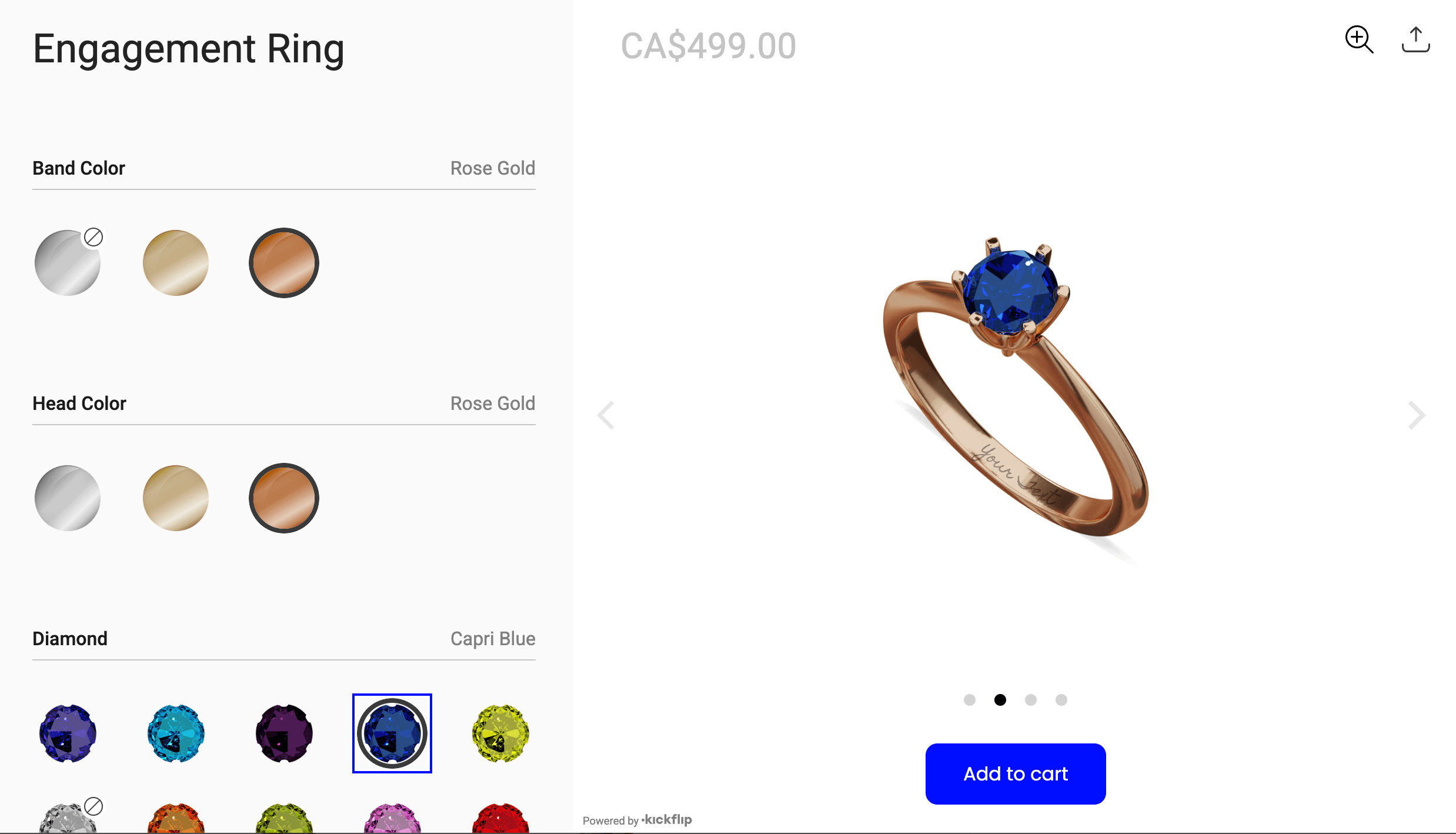
The platform integrates seamlessly with major ecommerce systems including Shopify, WooCommerce, and Wix, making advanced personalization accessible to businesses of all sizes.
Key features specifically beneficial for jewelry include:
Live engraving previews with adjustable depth and lighting effects
Real-time metal and stone swapping with accurate color representation
Build-your-own experiences for charms, stacks, and sets
Dynamic pricing that updates automatically based on customer selections
The platform's no-code approach means jewelry designers can focus on creating beautiful pieces rather than managing technical complexity. Integration requires no programming knowledge, yet delivers professional-grade customization experiences that rival large luxury brands.
Examples of Brands Using Kickflip to Sell Custom Jewelry Online
Real jewelry brands are already leveraging Kickflip's capabilities to create engaging customization experiences.
Olive & Piper's "Design Your Earrings" configurator allows customers to mix and match different earring components, creating personalized combinations with live previews and dynamic pricing.
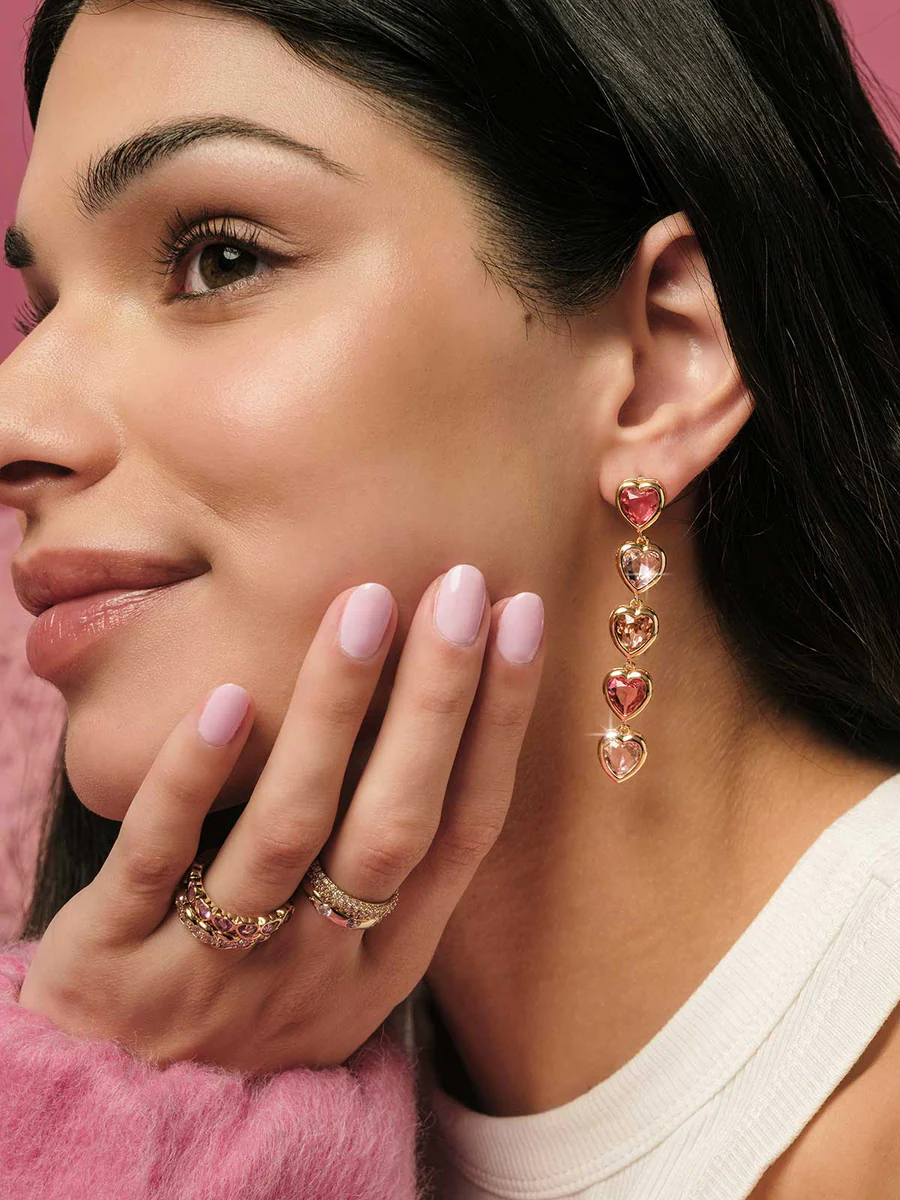
Camille Enrico's "Mon Bijou Sur Mesure" demonstrates sophisticated jewelry customization with multiple material options, stone selections, and real-time visualization of customer choices.
Giving Bracelets' Triple Wrap Bracelet showcases how bracelet customization can include color options, charm selections, and personalized elements while maintaining the brand's aesthetic.
These examples demonstrate how custom jewelry configurators can enhance customer engagement, increase order value, and create unique shopping experiences that differentiate brands in competitive markets.
Drive Traffic and Repeat Sales
SEO Basics for Selling Jewelry Online
Jewelry SEO (Search Engine Optimization) requires targeting diverse keyword angles that match how customers search.
Product-type keywords ("diamond engagement rings," "gold charm bracelets") capture high-intent shoppers. Material-focused terms ("sterling silver jewelry," "rose gold necklaces") attract customers with specific preferences.
Technical SEO fundamentals include descriptive URLs, detailed alt text for product images, and structured data markup that helps search engines understand your products. Rich snippets displaying ratings, prices, and availability can significantly improve click-through rates from search results.
Social Media Strategies Tailored to Jewelry
Jewelry's visual nature makes social media marketing particularly effective.
Instagram and Pinterest excel for showcasing product photography, styling inspiration, and behind-the-scenes content showing craftsmanship. Video content performing well includes time-lapse creation processes and customer unboxing experiences.
Influencer collaborations work best when focusing on authenticity over reach. Partner with micro-influencers whose audiences align with your brand values and aesthetic. Lifestyle bloggers, fashion enthusiasts, and occasion-specific influencers (wedding planners, graduation photographers) can provide targeted exposure.
User-generated content around proposals, anniversaries, graduations, and other milestones creates emotional connections while providing authentic social proof.
Email and Retention Tactics
Email marketing for jewelry requires understanding purchase cycles and gifting patterns.
Welcome series should educate new subscribers about your brand story, craftsmanship quality, and care instructions. Abandoned cart sequences work particularly well for jewelry due to the consideration time typically required for higher-value purchases.
Post-purchase care extends beyond the sale. Send care instruction reminders, styling suggestions for new pieces, and information about complementary items. Anniversary or birthday reminders can prompt gift purchases, especially for engagement or wedding jewelry customers.
Loyalty programs should recognize jewelry's gifting nature and longer purchase cycles. Consider programs that reward referrals, social shares, or care service usage rather than frequent purchases. Exclusive previews of new collections or customization options can make VIP customers feel valued.
Operations, Fulfillment, and Aftercare
Inventory and Production Planning for Custom vs Ready-to-Ship
Managing inventory for jewelry brands requires balancing ready-to-ship pieces with made-to-order customization capabilities.
Popular base designs in common sizes should maintain ready inventory for quick shipping, while customizable options can operate on made-to-order models that reduce inventory investment while offering personalization.
Forecasting becomes crucial for customizable components. Popular stones, metal types, and common engraving requests should have sufficient inventory to meet demand. Track customization data to identify trends and optimize component stocking.
Clear production timelines are essential, especially during gifting seasons. Customers purchasing for specific dates need accurate delivery estimates. Consider offering rush production for premium pricing during peak periods.
Shipping, Packaging, and Unboxing
Jewelry shipping requires balancing security, cost, and customer experience.
Partner with reliable carriers offering tracking, insurance, and signature confirmation for higher-value items. International shipping should include customs documentation and duty information.
Packaging serves multiple purposes: protection, brand reinforcement, and unboxing experience. Use protective materials that prevent scratching or tangling while creating memorable unboxing moments. Customer experience analysis shows that thoughtful presentation can be a key differentiator. Include care instruction cards, authenticity certificates, and thank-you notes that reinforce value.
Consider seasonal packaging for gift purchases. Holiday themes, graduation colors, or wedding-appropriate presentations can enhance the gifting experience without significant cost increases.
Aftercare, Repairs, and Lifetime Value
Exceptional aftercare service differentiates jewelry brands and drives long-term customer value.
Offer resizing services, cleaning instructions, and repair options for pieces purchased from your brand. Easy access to these services encourages customers to maintain pieces properly and creates additional touchpoints.
Follow-up sequences checking customer satisfaction and requesting reviews should balance being helpful without being intrusive. Share care tips, styling inspiration, or complementary product suggestions based on purchase history.
Strong aftercare relationships often generate the most valuable customers. Those who purchase multiple pieces over years, refer friends and family, and become brand advocates in their communities.
What Matters Most When Selling Jewelry Online
Selling jewelry online successfully comes down to trust, clarity, and experience. High-quality visuals, clear pricing, smooth checkout, and thoughtful product presentation all play a critical role in converting visitors into buyers.
As your store grows, allowing customers to customize a piece or preview variations, can add an extra layer of confidence and differentiation without complicating the buying process. Customization doesn’t need to be complex to be effective; when done right, it simply makes shopping feel more engaging and more personal. If you’re curious what this could look like for your own products, start a free Kickflip trial and see how easy it is to add interactive customization to your jewelry store.
Focus on getting the fundamentals right first, then look for opportunities to elevate the experience. In a crowded market, the brands that win are the ones that make buying jewelry online feel easy, reassuring, and memorable.
Frequently Asked Questions
What is the best way to start selling jewelry online as a brand?
Start by choosing the right e-commerce platform (Shopify, WooCommerce, or Wix), focusing on high-quality product photography, building trust through transparent policies, and offering exceptional customer service. Prioritize mobile optimization and consider adding customization options to differentiate from competitors.
How can I build trust with customers when selling jewelry online?
Build trust through secure payment processing, clear return policies, authentic customer reviews, professional product photography, detailed product descriptions, responsive customer service, and transparent pricing. Display certifications, guarantees, and social proof prominently throughout your store.
How do I sell custom jewelry online with live previews and engraving?
Use a product configurator like Kickflip that integrates with your e-commerce platform to offer real-time customization previews. This allows customers to see exactly how engravings, metal changes, and stone selections will appear on the finished piece, reducing uncertainty and increasing conversion rates.
Which platform is best for selling jewelry online (Shopify, WooCommerce, or Wix)?
Shopify offers excellent jewelry-specific themes and apps with strong mobile optimization. WooCommerce is a cost-effective option and Wix works well for visually driven brands. All three platforms are compatible with Kickflip, making it easy to sell personalized jewelry.
How can personalization and product configurators help me sell more jewelry online?
Personalization increases perceived value, reduces price comparison shopping, and creates emotional connections with customers. Product configurators allow real-time customization with live previews, increasing customer confidence while naturally encouraging upgrades and higher-value purchases through transparent dynamic pricing.
Future reading
14 Peaks is a must-watch for ecommerce entrepreneurs : The Determination of Nirmal Purja and What It Means For Your Business
10 Best Shopify Product Customizer Apps in 2026
12 Data-Driven Ways to Improve Ecommerce Customer Experience
Share This article

Written by The Kickflip Team
January 28th, 2026
The Kickflip team is made up of ecommerce specialists, product experts, and engineers behind Kickflip, a product configurator platform for Shopify, WooCommerce, and Wix. Since 2010, we’ve helped thousands of brands scale personalized product experiences, from startups to Fortune 500 companies. On our blog, we share practical insights to help you improve the buying experience and grow your business with product customization.


Maarten Luyckx
Osaka World
The user-friendly interface of Kickflip, combined with excellent customer service, ensured that this project was brought to a successful and beautiful conclusion.
Shopify App Store
May 20, 2021

Marie-Laetitia Rossazza
My Dust Bag
It took me a long time to find the perfect customizer app, and I’m so happy to say that I finally did! Kickflip is truly the best app on the market. The front end and back end are excellent, and the team behind it is incredibly kind and helpful!
Shopify App Store
September 1, 2023

Brad Jurga
All-Star Sporting Goods
Kickflip made everything easy, from designing the builder all the way through launch. We’re designing truly custom equipment for elite baseball players and this platform allows us to have better engagement and excitement around our brand. We’re seeing an instant return.
Shopify App Store
June 16, 2025

Kasper Taylor
CodedInk
My experience with both the product and the support team has been fantastic. The user interface and user experience are excellent. The features are powerful, and the WooCommerce integration is seamless and easy to set up.
G2.com
June 16, 2025

Saber Naceur
Vinylacy
By far, and I truly mean it, the best customizer available on Shopify. It’s easy to understand and manage, offers options for all types of products, and works extremely well. On top of that, it looks beautiful and feels premium. Highly recommended.
Shopify App Store
December 17, 2022

Jesus Guillermo de León Pérez
Dismo
Kickflip is a fantastic tool. It’s super intuitive, easy to use, and packed with capabilities. You don’t have to be an expert or have experience with other products to get started. The support team is also great and very responsive.
Shopify App Store
July 10, 2024

Frieder Urban
Era of Arc
We were looking for an uncomplicated configurator that was quick and easy to set up, offered plenty of design options, and worked reliably with fast loading times. We tested many configurators on the market, and with Kickflip, we found exactly what we needed.
Shopify App Store
October 10, 2024

John Taggart
Jack Harry and Ollie
What a great addition to our business Kickflip has been. It’s been fantastic to offer our customers the ability to personalize their orders. The support has been excellent, and we especially love that the pricing is tied to our success as customers make purchases.
Shopify App Store
May 7, 2021

TJ Garske
The Net Return
Kickflip saves our team a ton of time by eliminating the need to create custom mockups for customers. Customers can build their product themselves and place an order instantly, without any back-and-forth.
G2.com
January 26, 2026

Amin Hasani
CURVD
After extensive research into product customizer tools, we chose Kickflip for many reasons. We don’t like complicating simple tasks for customers, and Kickflip helped us simplify the process and create a seamless customer experience.
Shopify App Store
July 29, 2025