Custom Product Configurator Development: When It Makes Sense, and When It Doesn’t
Written by Renaud Teasdale
January 27th, 2026

Table Of Contents
- What a Custom Product Configurator Really Involves
- When Custom Product Configurator Development Becomes a Mistake
- When Custom Development Actually Makes Sense
- Smarter Alternatives: SaaS Product Configurators and Platforms
- Implementing a SaaS Configurator Like Kickflip
- Support and implementation options
- Future-proofing your configurator setup
- Partner with Experts Who Understand Customization
- Frequently Asked Questions
Every ecommerce founder dreams of offering truly personalized products. The appeal is obvious: higher margins, stronger customer loyalty, and a competitive edge that's hard to replicate. When you see brands successfully selling custom sneakers, personalized jewelry, or made-to-order furniture, the natural instinct is to try to build something similar for your own business.
A custom product configurator seems like the perfect solution. It's a tool that lets customers design their ideal product by choosing colors, materials, features, and add-ons while seeing real-time previews and pricing. For founders running businesses on Shopify, WooCommerce, or Wix, the question quickly becomes: should we build our own custom configurator or use an existing platform?
Here's the uncomfortable truth: custom product configurator development is usually a strategic mistake. Despite the allure of "owning" your technology and having complete control, the vast majority of custom configurator projects fail, go over budget, or deliver subpar results that hurt rather than help your business.
The evidence is compelling. Underestimated complexity, massive cost overruns, endless maintenance requirements, and integration nightmares plague most custom builds. Meanwhile, founders waste months or years on software development instead of focusing on what actually grows their business: marketing, operations, and customer experience.
This guide is written for ecommerce founders, heads of marketing, product leaders, and agencies who are wrestling with the build-versus-buy decision. We will show you when custom development makes sense (rarely) and what to do instead (usually a SaaS solution).
What a Custom Product Configurator Really Involves
Beyond "a nice UI": the full scope of a configurator
Most founders think a product configurator is just a nice interface where customers click options and see previews. The reality is far more complex, as foundational research frameworks illustrate. A functional configurator requires:
Rules Engine
Technical Complexity: High. Handles product constraints, compatibility logic.
Pricing Logic
Technical Complexity: High. Real-time calculations, promotions, complex pricing.
Visualization
Technical Complexity: Very High. 2D/3D rendering, performance optimization.
Platform Integration
Technical Complexity: High. Shopify/Wix/WooCommerce APIs, inventory sync.
Order Processing
Technical Complexity: Medium. Generating specs, print files, manufacturing data.
Each component alone represents months of development work. Gaps in any area result in broken customer experiences or internal operational disasters.
Integration and UX expectations in modern ecommerce
Your customers don't care about your technical limitations. They expect:
Instant visual previews that load in under 2 seconds
Mobile-optimized interfaces that work flawlessly on phones
Real-time pricing that updates as they make selections
Seamless checkout integration with their preferred payment methods
Empirical studies confirm these user expectations are critical for application success. Behind the scenes, your configurator needs to integrate with your ecommerce platform, inventory management system, ERP, fulfillment workflows, and often print-on-demand or manufacturing partners. Each integration point is a potential failure mode that can break the entire experience.
When Custom Product Configurator Development Becomes a Mistake
Red flag #1: Unclear or evolving scope
Most failed configurator projects start with fuzzy requirements. Founders say things like "we'll figure out the details as we go" or "let's start simple and add features later". This approach is almost guaranteed to fail.
Unclear scope leads to:
Endless revisions as stakeholders realize missing requirements
Scope creep that doubles or triples development time
Developer frustration and potential project abandonment
Budget overruns that can sink the entire initiative
Key insight: If you can't clearly define every product option, business rule, and integration requirement upfront, you're not ready for custom development.
Red flag #2: Underestimating complexity and timeline
Founders consistently underestimate configurator complexity. What seems like "a few months of development work" typically becomes 12-24 month projects with multiple phases, testing cycles, and integration challenges.
Consider this reality check:
Founder Assumption: "Simple product options"
Actual Reality: Complex rule interactions and edge cases
Founder Assumption: "Basic pricing logic"
Actual Reality: Dynamic pricing with promotions, bulk discounts, complex equations
Founder Assumption: "Quick Shopify integration"
Actual Reality: Variant limitations, inventory sync, order processing workflows
Founder Assumption: "We'll handle mobile later"
Actual Reality: Mobile-first design requirements from day one
Founder Assumption: "Basic testing"
Actual Reality: Extensive QA across devices, browsers, and user scenarios
Research shows that high complexity projects without domain expertise have failure rates exceeding 60%. The more ambitious your vision, the higher your risk.
Red flag #3: Resource and skills gaps
Building a production-ready configurator requires diverse skills:
Full-stack web development
UX/UI design expertise
DevOps and performance optimization
Product modeling and rules logic
QA testing and user research
Ecommerce platform integration expertise
Most companies, especially ecommerce brands, lack this complete skill set internally. Depending on one or two key developers or an external agency creates dangerous single points of failure. When that developer leaves or the agency relationship sours, your entire configurator capability can disappear overnight.
Red flag #4: Long-term maintenance and innovation burden
Custom software requires ongoing maintenance that many founders don't anticipate:
Adding new products and options
Updating business rules and pricing
Adapting to ecommerce platform updates
Keeping up with UX trends and customer expectations
Security patches and performance optimization
Every hour spent maintaining custom configurator code is an hour not spent on growth initiatives. The opportunity cost compounds over time as your team becomes trapped maintaining legacy software instead of driving revenue.
Red flag #5: UX friction and low adoption
Complex backend systems often create clunky user experiences. Slow load times, confusing interfaces, or limited mobile functionality lead to:
High cart abandonment rates
Decreased conversion compared to standard products
Customer support headaches
Brand damage from poor user experiences
A "good enough" internal tool is never good enough for paying customers who compare your experience to best-in-class ecommerce sites.
When Custom Development Actually Makes Sense
Narrow scenarios where custom can be justified
Custom product configurator development makes sense in extremely limited scenarios:
Highly specialized B2B workflows with unique industry requirements that no SaaS solution addresses
Enterprise companies with budgets exceeding $500K and 18+ month timelines
Companies where the configurator IS the product (software vendors, not ecommerce brands)
Situations requiring deep integration with proprietary manufacturing or ERP systems
In these cases, success requires dedicated engineering teams treating the configurator as a standalone product, not a side project.
A decision checklist for green-lighting custom builds
Before committing to custom development, honestly assess whether you meet ALL these criteria:
Clear Requirements
Stable product specifications for at least 12-24 months
Documented business rules and pricing logic
Defined integration requirements and API specifications
Internal Capacity
Dedicated engineering and design team (not outsourced contractors)
Budget of $500K+ with 50% contingency buffer
Product manager who can own the configurator roadmap
Strategic Justification
Configurator creates genuine competitive advantage
No existing SaaS solution meets 80%+ of requirements
Long-term tolerance for maintenance and innovation costs
Organizational Readiness
Executive commitment for 18+ month timeline
Acceptance that ROI won't materialize for 12+ months
Internal processes for ongoing product management
If you can't confidently check every box, custom development is likely a mistake.
Smarter Alternatives: SaaS Product Configurators and Platforms
Why SaaS beats custom builds for most ecommerce brands
SaaS product configurator software offers compelling advantages over custom development:
Time to Market
SaaS Solution: 2-8 weeks
Custom Build: 6-18 months
Upfront Cost
SaaS Solution: $50-500/month
Custom Build: $200K-500K+
Technical Risk
SaaS Solution: Low (proven platform)
Custom Build: High (unproven code)
Maintenance
SaaS Solution: Vendor responsibility
Custom Build: Your responsibility
Feature Updates
SaaS Solution: Automatic
Custom Build: Manual development
Scalability
SaaS Solution: Built-in
Custom Build: Custom engineering
Mobile Optimization
SaaS Solution: Included
Custom Build: Additional development
Integration Support
SaaS Solution: Pre-built connectors
Custom Build: Custom API work
Research consistently shows that SaaS solutions reduce project risk by 70%+ while delivering faster time-to-value. Vendor-neutral competitive research often validates these trade-offs. The subscription cost is predictable, while custom development costs are notoriously unpredictable.
What to look for in a modern SaaS product configurator
Not all configurator platforms are created equal. Essential capabilities include:
No-Code Setup and Management
Visual rule builder that non-technical users can operate
Easy product modeling without developer intervention
Self-service option updates and pricing changes
Advanced Visualization
Real-time 2D/3D previews with fast loading
Mobile-optimized visual interfaces
High-quality rendering that enhances perceived value
Dynamic Pricing Engine
Real-time price calculations with complex logic
Multi-currency and regional pricing support
Ecommerce Integration
Native Shopify, Wix and WooCommerce plugins
Clean checkout flow integration
Inventory and order management sync
Production Outputs
Generate detailed order specifications
Export print-ready files and manufacturing data
Integration with fulfillment and production workflows
Prioritize flexibility and scalability over custom code ownership. The goal is to enable product customization, not to own configurator software.
How Kickflip fits this landscape
Kickflip represents the modern approach to product customization. A no-code editor designed specifically for ecommerce brands who want sophisticated customization without engineering complexity.
Key Kickflip capabilities:
Visual product builder that lets non-technical teams configure products and rules
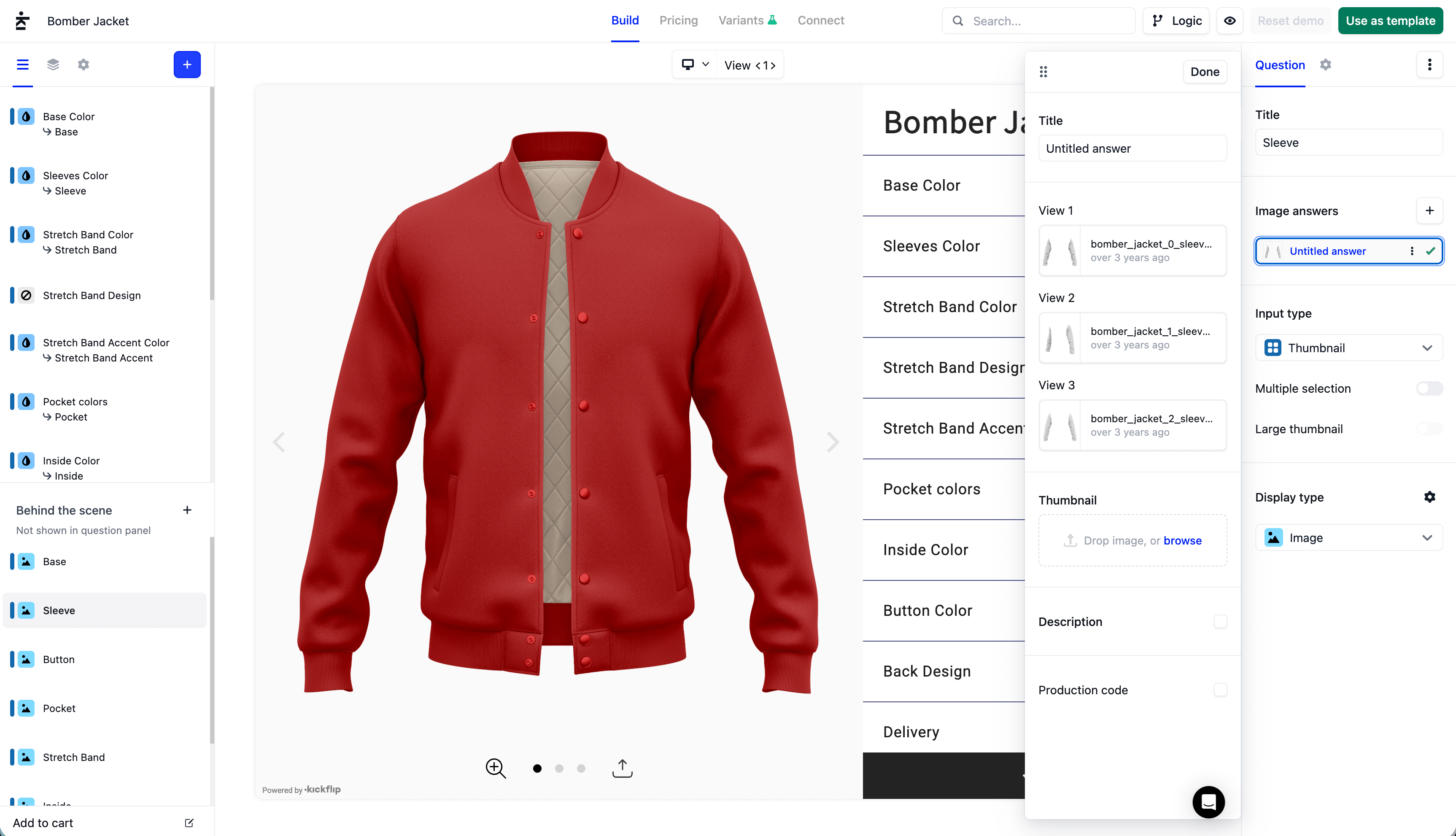
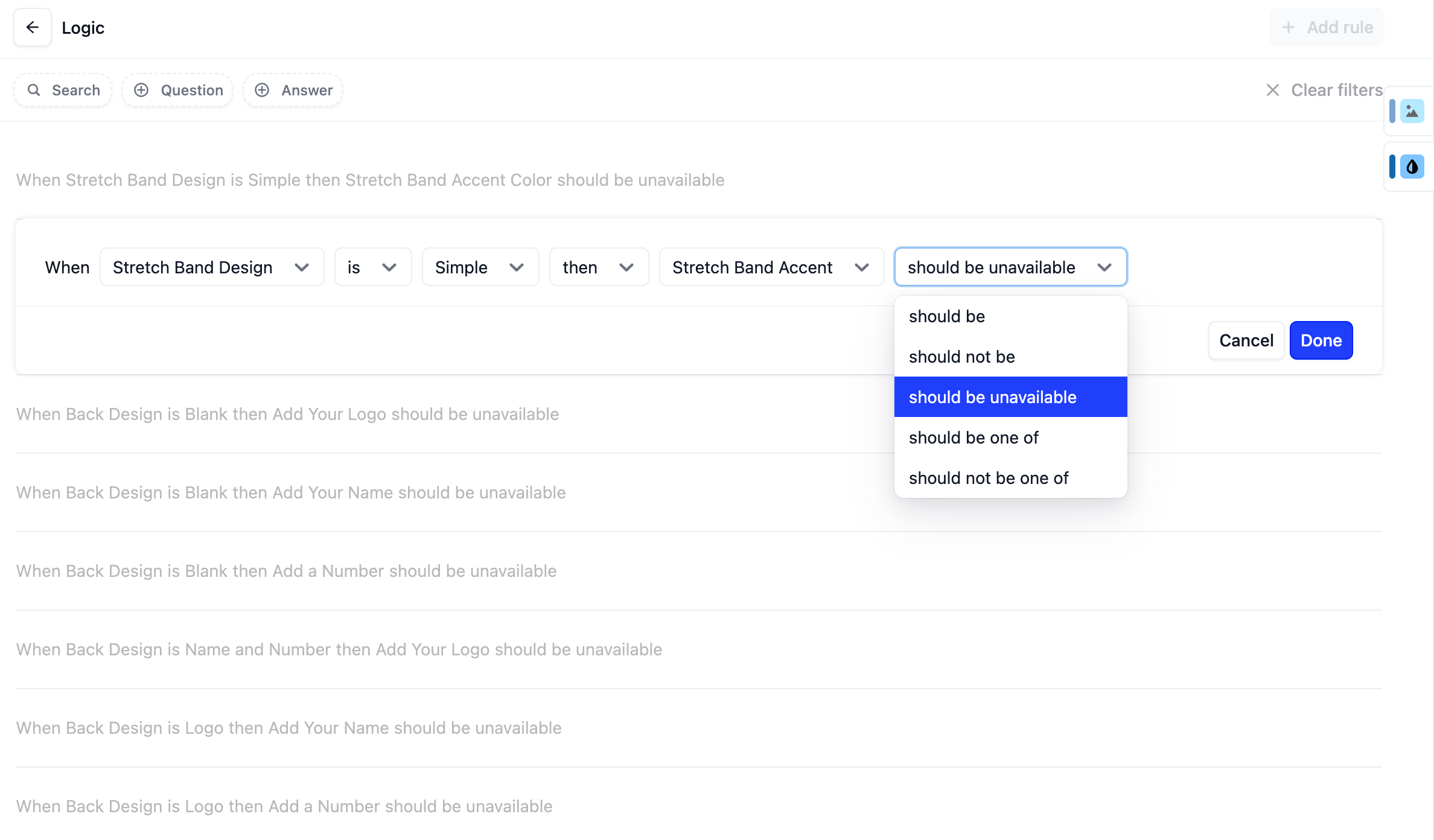
Real-time 3D/2D preview with optimized performance
Dynamic pricing engine that handles complex calculations and promotions
Native integrations with Shopify, WooCommerce, and custom ecommerce platforms
Production-ready outputs including order details, print files, and manufacturing specifications
Kickflip has already solved the hard engineering problems: rules modeling, visualization, pricing, and integrations. Merchants can focus on their products and customers instead of managing software development projects.
Our platform enables rapid experimentation with new product options and customization strategies, something that's nearly impossible with custom-built systems where every change requires developer involvement.
Implementing a SaaS Configurator Like Kickflip
What a typical implementation timeline looks like
Unlike custom development's 6-18 month timelines, SaaS configurator implementation follows a predictable, compressed schedule:
Week 1-2: Platform Setup
Connect Kickflip to your Shopify or WooCommerce store
Configure basic settings and branding
Set up user accounts and permissions
Week 3-4: Product Modeling
Model your first product line using the visual editor
Define customization options and business rules
Configure dynamic pricing logic
Week 5-6: Visualization Setup
Upload and optimize product images or 3D models
Configure preview settings and user interface
Test across devices and browsers
Week 7-8: Testing and Launch
Internal testing with stakeholders
Soft launch with limited customer group
Full launch
The key advantage: non-technical team members can own most of this work using Kickflip's no-code editor, eliminating dependency on scarce developer resources.
Support and implementation options
Kickflip is designed to be easy to launch and scale, even with a lean team. From day one, you have access to multiple support resources to help you move forward with confidence:
Live chat support with our team for real-time guidance
YouTube video tutorials covering setup, features, and best practices
A comprehensive Help Center with step-by-step documentation
Webinars and guided walkthroughs to help you unlock more advanced use cases
Many brands successfully launch on their own using these resources.
For teams that need more hands-on support, Kickflip also works with a network of certified partners. These partners are carefully selected agencies and specialists who know the Kickflip platform inside and out. They can support you at any stage of your project, from initial strategy and setup to advanced integrations, design, and optimization.
Working with a certified partner allows you to accelerate time to market, and keep your internal team focused, while experienced experts handle execution. Below are a few of our most trusted implementation partners.
Certified Kickflip implementation partners
Publicom – France
With extensive experience delivering Shopify projects, Publicom combines strong ecommerce execution with Kickflip product integration, making them a certified partner brands can rely on.
Lab Martis – Belgium
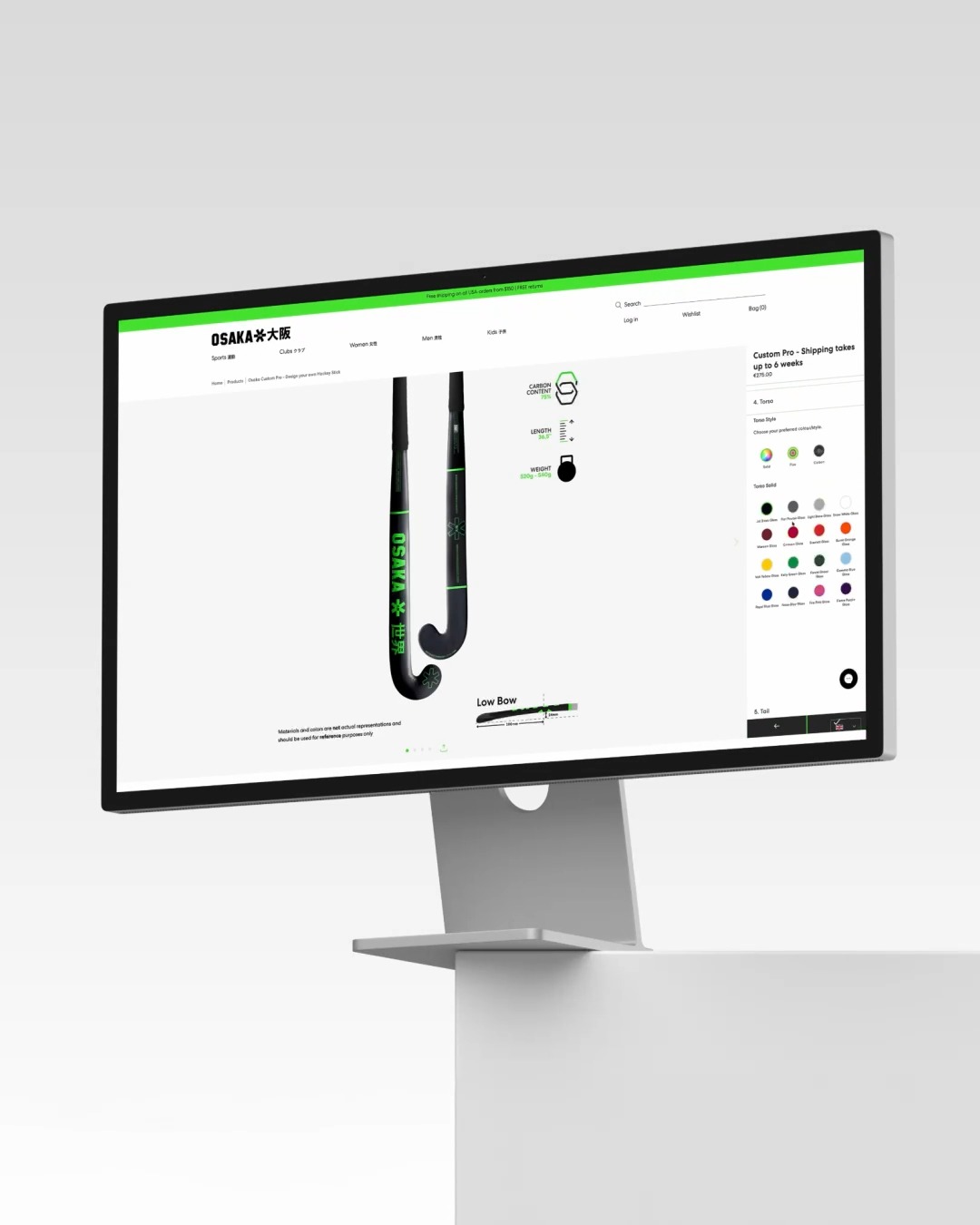
Lab Martis is led by a Belgian graphic and motion designer with deep experience in branding, product visualization, and building high-end Kickflip customizers for international brands.
Arctic Grey – USA
Arctic Grey is a Shopify Plus agency specializing in advanced Kickflip product configurators, custom storefront development, and performance optimization. They help brands scale complex customization experiences across DTC, B2B, and wholesale.
AcceleratiQ – GERMANY
AcceleratiQ is a Munich-based ecommerce agency with over 10 years of experience helping brands build and scale advanced online experiences.
Future-proofing your configurator setup
SaaS platforms like Kickflip continuously ship new features, performance improvements, and integrations. Benefits you receive automatically without additional development work. Recent Kickflip updates include:
Bulk-order support
Complex pricing equations
Inventory management
Configure-Price-Quote (CPQ)
This continuous innovation means your configurator capabilities improve over time without internal R&D investment. Compare this to custom builds, where every enhancement requires additional development cycles and budget allocation.
The configurator becomes a growth lever that expands with your business rather than technical debt that constrains your options.
Partner with Experts Who Understand Customization
Choosing the right approach to product customization can make or break your ecommerce growth strategy. While custom development promises control, it typically delivers complexity, delays, and unexpected costs that derail business objectives.
Smart ecommerce brands recognize that product configurator software should accelerate growth, not consume engineering resources. Kickflip offers the sophisticated customization capabilities your customers expect, delivered through a platform designed specifically for ecommerce success.
Ready to see the difference? Discover how Kickflip helps you deliver premium product personalization without the cost, risk, or complexity of custom development.
Start your free 14-day trial today.
Frequently Asked Questions
What is custom product configurator development, and how is it different from using a SaaS configurator?
Custom product configurator development involves building configurator software from scratch using internal or contracted developers. This includes creating the rules engine, visualization system, pricing logic, and ecommerce integrations. SaaS configurators like Kickflip provide pre-built, tested platforms that can be configured and deployed without coding, typically in weeks rather than months.
When is building a custom product configurator a mistake for an ecommerce brand?
Custom development becomes a mistake when you have unclear requirements, limited technical resources, tight timelines, or budget constraints under $500K. It's also problematic when your primary goal is product customization rather than owning software technology. Most ecommerce brands should focus on selling products, not building complex software systems.
In which situations does it actually make sense to build a configurator in-house?
Custom development makes sense for large enterprises with dedicated engineering teams, budgets exceeding $500K, and highly specialized B2B requirements that no existing solution addresses. It's also justified when the configurator technology itself creates significant competitive advantage and you have 18+ month timelines with tolerance for ongoing maintenance costs.
How do the costs and timelines of custom configurator development compare to a SaaS solution like Kickflip?
Custom development typically requires 12-24 months and 500K+ in upfront costs, plus ongoing maintenance. SaaS solutions like Kickflip can be implemented in 2-8 weeks with monthly costs starting around $59, making them 10-100x more cost-effective for most ecommerce applications. The predictable subscription model also eliminates budget risk.
Can a no-code configurator like Kickflip handle complex products, rules, and dynamic pricing?
Yes. Modern no-code platforms are surprisingly sophisticated. Kickflip handles complex product variations, intricate business rules, real-time pricing calculations, and multi-step customization workflows. The visual rule builder allows non-technical users to configure even complex products with hundreds of options and interdependent rules, often exceeding the capabilities of hastily-built custom solutions.
Future reading
Why You Shouldn't Hire Developers to Build a Product Configurator
How Much Does a Product Configurator Cost?
How to Build a Product Configurator
Share This article

Written by Renaud Teasdale
January 27th, 2026
Renaud Teasdale is the co-founder and CEO of Kickflip, a product customization platform for e-commerce brands. Since 2010, he’s been focused on helping merchants turn product personalization into a scalable, high-impact revenue channel.


Maarten Luyckx
Osaka World
The user-friendly interface of Kickflip, combined with excellent customer service, ensured that this project was brought to a successful and beautiful conclusion.
Shopify App Store
May 20, 2021

Marie-Laetitia Rossazza
My Dust Bag
It took me a long time to find the perfect customizer app, and I’m so happy to say that I finally did! Kickflip is truly the best app on the market. The front end and back end are excellent, and the team behind it is incredibly kind and helpful!
Shopify App Store
September 1, 2023

Brad Jurga
All-Star Sporting Goods
Kickflip made everything easy, from designing the builder all the way through launch. We’re designing truly custom equipment for elite baseball players and this platform allows us to have better engagement and excitement around our brand. We’re seeing an instant return.
Shopify App Store
June 16, 2025

Kasper Taylor
CodedInk
My experience with both the product and the support team has been fantastic. The user interface and user experience are excellent. The features are powerful, and the WooCommerce integration is seamless and easy to set up.
G2.com
June 16, 2025

Saber Naceur
Vinylacy
By far, and I truly mean it, the best customizer available on Shopify. It’s easy to understand and manage, offers options for all types of products, and works extremely well. On top of that, it looks beautiful and feels premium. Highly recommended.
Shopify App Store
December 17, 2022

Jesus Guillermo de León Pérez
Dismo
Kickflip is a fantastic tool. It’s super intuitive, easy to use, and packed with capabilities. You don’t have to be an expert or have experience with other products to get started. The support team is also great and very responsive.
Shopify App Store
July 10, 2024

Frieder Urban
Era of Arc
We were looking for an uncomplicated configurator that was quick and easy to set up, offered plenty of design options, and worked reliably with fast loading times. We tested many configurators on the market, and with Kickflip, we found exactly what we needed.
Shopify App Store
October 10, 2024

John Taggart
Jack Harry and Ollie
What a great addition to our business Kickflip has been. It’s been fantastic to offer our customers the ability to personalize their orders. The support has been excellent, and we especially love that the pricing is tied to our success as customers make purchases.
Shopify App Store
May 7, 2021

TJ Garske
The Net Return
Kickflip saves our team a ton of time by eliminating the need to create custom mockups for customers. Customers can build their product themselves and place an order instantly, without any back-and-forth.
G2.com
January 26, 2026

Amin Hasani
CURVD
After extensive research into product customizer tools, we chose Kickflip for many reasons. We don’t like complicating simple tasks for customers, and Kickflip helped us simplify the process and create a seamless customer experience.
Shopify App Store
July 29, 2025