Product Differentiation Explained: A Practical Guide for Modern Brands
Written by The Kickflip Team
January 3rd, 2026

Table Of Contents
- The Fundamentals of Product Differentiation
- Traditional Differentiation Strategies (and Their Limits)
- Product Personalization as the Next Frontier of Differentiation
- How to Build a Differentiation Strategy (Step-by-Step)
- Differentiation in Practice: Tactical Plays for Ecommerce Brands
- Common Differentiation Mistakes (and How to Avoid Them)
- Transform Your Product Strategy with Smart Customization
- Frequently Asked Questions
Every scroll through an online store reveals the same pattern: products are becoming increasingly similar. Smartphones, sneakers, sofas, the lines between competitors have blurred into near-identical offerings competing primarily on price. This commoditization trap doesn't just erode profit margins. It destroys brand equity and transforms loyal customers into bargain hunters.
Product differentiation is a marketing strategy where a brand makes its product meaningfully different from competitors in ways customers value. Most companies differentiate through quality, features, price, branding, or service. Today, leading brands also use product personalization and mass customization to create unique, higher-value experiences for each buyer.
The stakes have never been higher. Digital channels have given consumers endless choice and instant price comparison tools. This makes meaningful differentiation both more difficult and more essential. Traditional differentiation methods still matter, but they're no longer sufficient in a world where features can be copied overnight and brand stories blend together.
The future belongs to brands that can create truly personalized experiences that feel irreplaceable to each individual customer.
This guide will take you from the fundamentals of product differentiation to cutting-edge strategies like mass customization. You'll learn how to build a defensible competitive advantage that drives higher conversions, stronger customer loyalty, and premium pricing power.
The Fundamentals of Product Differentiation
Core Concept and Economic Roots
Product differentiation fundamentally shifts competition away from pure price wars toward value-based competition. When economist Edward Chamberlin introduced the concept of monopolistic competition, he revealed a crucial insight: companies that successfully differentiate their products can charge premium prices because they've created a mini-monopoly in their customer's mind.
This isn't about creating completely unique products. It's about positioning your offering so customers perceive it as uniquely valuable for their specific needs. Differentiation becomes the cornerstone of your marketing strategy, influencing everything from product development to customer communication.
Types of Product Differentiation
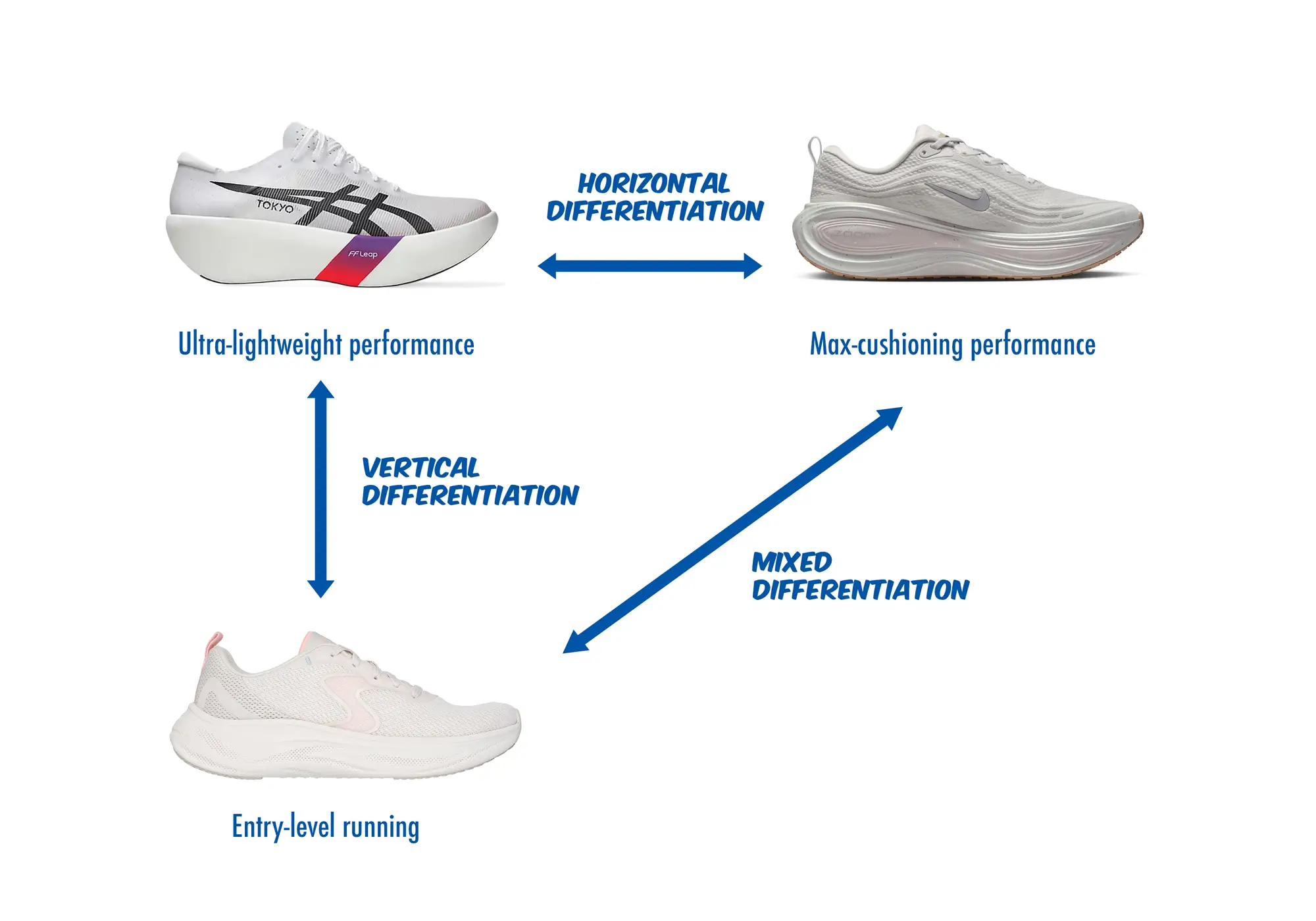
Vertical Differentiation occurs when products can be ranked objectively as better or worse. Think premium materials, superior performance metrics, or enhanced durability. A luxury watch with Swiss movement versus a standard quartz watch represents vertical differentiation. Most customers would agree one is objectively "better," even if they can't afford it.
Horizontal Differentiation caters to different tastes and preferences rather than quality hierarchies. Consider the choice between vanilla and chocolate ice cream, or iOS versus Android phones. Neither is objectively superior. They simply appeal to different customer preferences and use cases.
Mixed Differentiation combines both approaches, which describes most real-world scenarios. A high-end gaming laptop might offer superior performance (vertical) while also featuring unique design aesthetics and specialized gaming features (horizontal) that appeal specifically to gamers.
Classic Benefits of Strategic Differentiation
Successful differentiation delivers three core business advantages:
Premium pricing power allows you to charge more because customers perceive unique value they can't get elsewhere.
Increased customer loyalty develops when customers form strong preferences for your specific solution.
Higher switching costs emerge as customers become invested in your unique features, making them less likely to defect to competitors.
Traditional Differentiation Strategies (and Their Limits)
Feature and Quality-Based Differentiation
The most straightforward differentiation approach focuses on superior materials, enhanced performance, or exceptional craftsmanship. This strategy works well initially. Customers easily understand "better" and "premium."
But here's the deal: feature-based advantages face a critical vulnerability. They can be reverse-engineered and copied relatively quickly, especially in digital products where updates can be deployed overnight.
Brand, Story, and Customer Experience
Branding and storytelling create emotional differentiation that's harder to replicate than features. Companies like Patagonia don't just sell outdoor gear. They sell environmental consciousness and adventure lifestyle. Customer experience differentiation extends this approach through superior support, seamless onboarding, and memorable post-purchase interactions.
The distinction between emotional and functional differentiation matters here. Functional benefits solve practical problems, while emotional benefits address psychological and social needs. The strongest brands combine both, but emotional differentiation often proves more defensible.
Price, Packaging, and Distribution Differentiation
Pricing strategy itself becomes a differentiation tool. Premium pricing signals quality and exclusivity, while value pricing attracts cost-conscious segments. Packaging innovations create unboxing experiences that reinforce brand positioning. Unique distribution approaches like direct-to-consumer models or exclusive retail partnerships provide convenience and access advantages.
The Limits of Traditional Approaches
Traditional differentiation strategies face four critical limitations in today's market:
Imitability means competitors can quickly copy successful features or approaches.
Rising costs make it increasingly expensive to maintain advantages through R&D investment or service excellence.
Market saturation creates "me-too" products that blur competitive lines.
Over-differentiation risk can confuse customers with too many options or features they don't value.
These limitations don't make traditional differentiation worthless. They make it insufficient as a standalone strategy.
Product Personalization as the Next Frontier of Differentiation
From "Our Product is Better" to "This Product is Better for You"
Product personalization represents an evolution from segment-level marketing to individual-level customization. Instead of creating one "best" product for everyone, brands now create products that feel specifically designed for each customer. This approach leverages mass customization to deliver individual-level fit while maintaining production efficiency.
The psychological shift is profound. Customers move from choosing among existing options to actively participating in product creation. This participation creates stronger perceived uniqueness and lower substitutability, two key drivers of competitive advantage.
How Mass Customization Changes Differentiation
Enhanced Fit means products align precisely with individual needs and preferences rather than approximate segment averages. A custom-configured laptop includes exactly the features each user needs without paying for unwanted extras.
Perceived Uniqueness emerges when customers feel their product is one-of-a-kind, even when built from standardized components. The combination of options creates millions of possible variations, making each customer's choice feel special.
Psychological Ownership develops through the "I designed it myself" effect, where customers become emotionally invested in products they helped create. Research consistently shows this increases willingness to pay and reduces return rates.
Why Personalization Excels in Ecommerce
Digital channels amplify personalization benefits in three key ways:
Pre-purchase engagement increases as customers spend time configuring their ideal product, leading to higher emotional investment.
Conversion optimization occurs because customers see exactly what they want before purchasing, reducing uncertainty and hesitation.
Expectation alignment happens when customers clearly understand what they're buying, reducing returns and support costs.
The Role of the Customization System
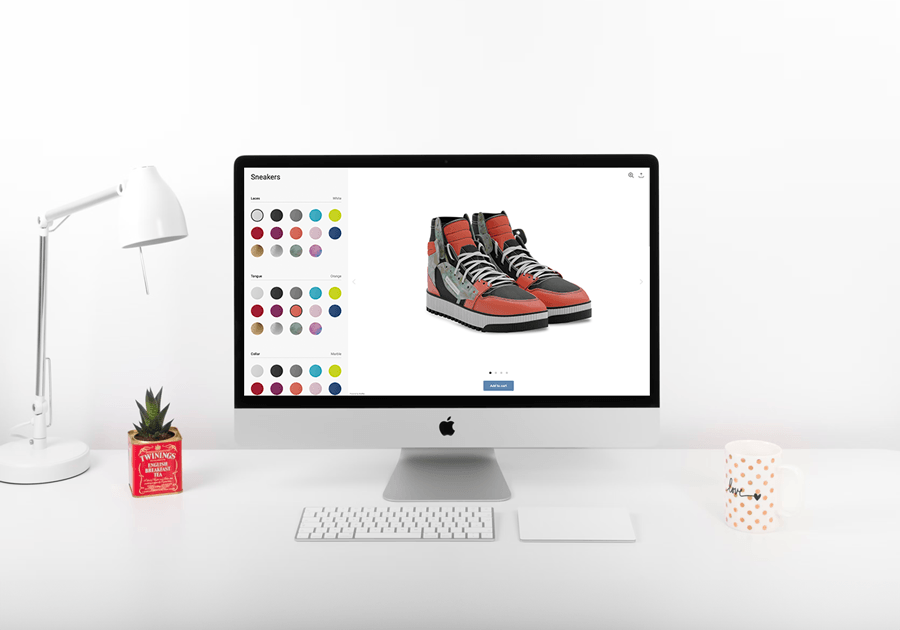
Successful personalization requires sophisticated systems to manage complexity. A product configurator provides the interface for customer choices, featuring live previews, dynamic pricing, and guided selection processes.
The user experience becomes critical for avoiding choice overload. Effective configurators use progressive disclosure, smart defaults, and visual feedback to guide customers through decisions without overwhelming them.
How to Build a Differentiation Strategy (Step-by-Step)
Step 1: Identify What Customers Actually Value
Effective differentiation starts with understanding genuine customer needs, not assumed preferences. Use the Jobs-to-be-Done framework to uncover what customers are truly "hiring" your product to accomplish. Analyze customer reviews, support tickets, and competitor gaps to identify unmet needs or frustration points.
Customer interviews reveal the difference between what people say they want and what they actually value in practice. Look for emotional language and outcome descriptions rather than feature requests.
Step 2: Choose Your Differentiation Axis
Select the primary dimension where you'll create distance from competitors:
Performance: Superior functionality or results. Best for technical products and B2B.
Design: Aesthetic appeal and user experience. Best for consumer products and lifestyle brands.
Convenience: Ease of use, access, or maintenance. Best for busy customers and complex products.
Identity: Status, values, or self-expression. Best for personal products and luxury goods.
Customization: Individual fit and personalization. Best for diverse needs and premium markets.
Speed: Faster delivery or time-to-value. Best for urgent needs and productivity tools.
Trust: Reliability, security, and guarantees. Best for high-risk purchases and sensitive data.
Step 3: Make It Defensible
Sustainable differentiation requires barriers to imitation. Build advantages through proprietary capabilities, intellectual property, exclusive supply relationships, customer data insights, community effects, or ecosystem lock-in. The goal is creating a competitive moat that deepens over time rather than erodes.
Consider how your differentiation strategy becomes stronger with scale, customer adoption, or time investment.
Differentiation in Practice: Tactical Plays for Ecommerce Brands
Merchandising Differentiation
Create unique product combinations that competitors can't easily replicate. Curated bundles solve complete customer problems rather than selling individual components. Starter kits reduce decision fatigue for new customers, while guided buying experiences help customers navigate complex product lines.
Consider seasonal collections, limited editions, or exclusive colorways that create urgency and uniqueness without requiring fundamental product changes.
Offer Differentiation
Differentiate through your complete value proposition beyond the core product. Extended warranties, satisfaction guarantees, free shipping thresholds, and hassle-free return policies reduce customer risk and anxiety. Some brands differentiate through faster shipping, while others focus on sustainable packaging or charitable giving programs.
Content Differentiation
Educational content, detailed comparisons, sizing tools, and comprehensive buyer guides help customers make confident decisions. Create content that addresses specific use cases, industry applications, or skill levels. This approach works particularly well for complex or technical products where customer education drives conversion.
Social Proof Differentiation
Move beyond generic five-star reviews to showcase social proof that reinforces your differentiation strategy. Feature reviews that specifically mention your unique benefits, user-generated content showing products in action, before-and-after galleries, and proof of results or outcomes.
Accessible Personalization Tactics
Not every brand needs full mass customization to benefit from personalization. Start with simple tactics like engraving, monogramming, color selection, or pre-configured style templates. These approaches provide personalization benefits with minimal operational complexity.
Progress toward more sophisticated customization as you build capabilities and understand customer preferences.
Common Differentiation Mistakes (and How to Avoid Them)
Differentiating on Irrelevant Features
The most common differentiation mistake involves emphasizing features customers don't actually value. Technical specifications might seem impressive, but they're meaningless if they don't solve real customer problems or address genuine pain points.
Copying Competitors
True differentiation requires choosing a different path, not following competitors more efficiently. "Me-too" positioning creates commoditization rather than competitive advantage. If your differentiation strategy sounds like every other company's messaging, start over.
Under-Delivering on Promises
Differentiation only works when execution matches positioning. Slow lead times, quality variance, or inconsistent customer experiences undermine differentiation efforts. Build operational capabilities before making bold promises.
Confusing Brand and Product Differentiation
Brand differentiation involves perception and emotional connection, while product differentiation focuses on functional or customization advantages. Both matter, but they require different strategies and metrics. Strong brands need differentiated products to maintain relevance.
Transform Your Product Strategy with Smart Customization
Product differentiation isn't just about standing out. It's about creating irreplaceable value for each customer. Traditional differentiation strategies focus on being "better" than competitors. Modern differentiation is about being "perfect" for individual customers.
Kickflip makes this evolution accessible for any ecommerce brand. Our visual product configurator transforms static product pages into interactive customization experiences that drive higher engagement, conversion rates, and customer satisfaction. Instead of choosing between pre-made options, your customers actively design their ideal product with real-time previews and dynamic pricing.
From custom apparel and personalized accessories to configured electronics and bespoke home goods, Kickflip integrates seamlessly with Shopify, WooCommerce, and Wix. You don't need technical expertise or massive upfront investment. Just the vision to give customers exactly what they want.
Frequently Asked Questions
What is product differentiation in marketing?
Product differentiation is a marketing strategy that makes your product meaningfully different from competitors in ways customers value. It involves creating unique features, experiences, or positioning that customers perceive as superior or better suited to their needs.
What are the main types of product differentiation?
The three main types are vertical differentiation (objectively better/worse products), horizontal differentiation (different products for different preferences), and mixed differentiation (combining both approaches). Most successful strategies use mixed differentiation.
Why is product differentiation important for ecommerce brands?
Differentiation helps ecommerce brands avoid price competition, increase customer loyalty, and command premium pricing. In digital marketplaces where customers can easily compare options, meaningful differentiation becomes essential for sustainable profitability.
How does product personalization help with product differentiation?
Personalization creates individual-level differentiation where each customer receives a product that feels uniquely designed for them. This approach builds stronger emotional connections, reduces substitutability, and increases willingness to pay compared to standard offerings.
What's the difference between product differentiation and brand differentiation?
Product differentiation focuses on functional features, quality, or customization options, while brand differentiation involves emotional positioning, values, and customer perception. Both are important, but they require different strategies and work together for maximum impact.
Future reading
Revolutionizing Ecommerce with Mass Customization: How Kickflip is Leading the Way
What is mass customization
What is the Goal for Mass Customization?
Share This article

Written by The Kickflip Team
January 3rd, 2026
The Kickflip team is made up of ecommerce specialists, product experts, and engineers behind Kickflip, a product configurator platform for Shopify, WooCommerce, and Wix. Since 2010, we’ve helped thousands of brands scale personalized product experiences, from startups to Fortune 500 companies. On our blog, we share practical insights to help you improve the buying experience and grow your business with product customization.


Maarten Luyckx
Osaka World
The user-friendly interface of Kickflip, combined with excellent customer service, ensured that this project was brought to a successful and beautiful conclusion.
Shopify App Store
May 20, 2021

Marie-Laetitia Rossazza
My Dust Bag
It took me a long time to find the perfect customizer app, and I’m so happy to say that I finally did! Kickflip is truly the best app on the market. The front end and back end are excellent, and the team behind it is incredibly kind and helpful!
Shopify App Store
September 1, 2023

Brad Jurga
All-Star Sporting Goods
Kickflip made everything easy, from designing the builder all the way through launch. We’re designing truly custom equipment for elite baseball players and this platform allows us to have better engagement and excitement around our brand. We’re seeing an instant return.
Shopify App Store
June 16, 2025

Kasper Taylor
CodedInk
My experience with both the product and the support team has been fantastic. The user interface and user experience are excellent. The features are powerful, and the WooCommerce integration is seamless and easy to set up.
G2.com
June 16, 2025

Saber Naceur
Vinylacy
By far, and I truly mean it, the best customizer available on Shopify. It’s easy to understand and manage, offers options for all types of products, and works extremely well. On top of that, it looks beautiful and feels premium. Highly recommended.
Shopify App Store
December 17, 2022

Jesus Guillermo de León Pérez
Dismo
Kickflip is a fantastic tool. It’s super intuitive, easy to use, and packed with capabilities. You don’t have to be an expert or have experience with other products to get started. The support team is also great and very responsive.
Shopify App Store
July 10, 2024

Frieder Urban
Era of Arc
We were looking for an uncomplicated configurator that was quick and easy to set up, offered plenty of design options, and worked reliably with fast loading times. We tested many configurators on the market, and with Kickflip, we found exactly what we needed.
Shopify App Store
October 10, 2024

John Taggart
Jack Harry and Ollie
What a great addition to our business Kickflip has been. It’s been fantastic to offer our customers the ability to personalize their orders. The support has been excellent, and we especially love that the pricing is tied to our success as customers make purchases.
Shopify App Store
May 7, 2021

TJ Garske
The Net Return
Kickflip saves our team a ton of time by eliminating the need to create custom mockups for customers. Customers can build their product themselves and place an order instantly, without any back-and-forth.
G2.com
January 26, 2026

Amin Hasani
CURVD
After extensive research into product customizer tools, we chose Kickflip for many reasons. We don’t like complicating simple tasks for customers, and Kickflip helped us simplify the process and create a seamless customer experience.
Shopify App Store
July 29, 2025