6 Best Visual Product Customization Software for E-Commerce (2026)
Written by Marie Lamonde
September 17th, 2026
Table Of Contents
- The Power of Visual Customization in E-Commerce
- What Is Visual Product Customization Software?
- Key Features to Look For in Customization Software
- The 6 Best Visual Product Customization Software for 2026
- How to Choose the Right Software for Your E-Commerce Store
- Frequently Asked Questions
- Conclusion and Next Steps
The Power of Visual Customization in E-Commerce
The Rise of Personalized Shopping Experiences
71% of consumers now expect companies to deliver personalized interactions, and static product pages with plain dropdown menus feel like a step backward. Brands that haven't adapted see it in their conversion numbers, as buyers head straight to competitors offering interactive tools.
There's a psychological reason this works so well: the more effort a customer invests in configuring a product, the more they value it before they've even paid for it, the same "endowment effect" behind IKEA furniture and build-your-own anything. That extra investment shows up in the data too: shoppers who design their own product give brands a 50% higher Net Promoter Score than those buying an off-the-shelf item.
The real question is how to offer this without creating operational chaos, manual design errors, or endless setup time, which is exactly what modern visual customization software solves.
Why Static Product Images Are No Longer Enough
Sell a shoe with four soles, five materials, eight colors, and three lace styles, and you've got 480 possible combinations, far too many to photograph. Static dropdowns force customers to guess what they'll actually receive, and guessing kills sales, especially on mobile, where most ecommerce traffic now lives: a one-second delay in page load time can cut conversions by 7%, according to Akamai research.
The fix isn't a better product description, it's replacing guessing with seeing: a real-time preview that updates the instant a shopper makes a choice.
How Visual Customization Software Drives Conversions and Reduces Returns
The business case is straightforward. Merchants using visual customization commonly see far higher conversion rates and profit margins than static product pages, Kickflip merchants, for example, report higher conversion rates and higher profit margins. When customers see exactly what they're ordering before they buy, they're also far less likely to be surprised at delivery: customized products see roughly a 40% drop in returns compared to standard products.
That's a rare combination for a single software investment: top-line growth and bottom-line cost reduction. On the operations side, the software does the heavy lifting too; auto-generating print-ready files or bills of materials the moment an order comes in, so the warehouse gets a production-ready file with no manual re-entry.
What Is Visual Product Customization Software?
Definition and 3D Configuration
Visual product customization software lets shoppers personalize products online with instant, live previews, they see their choices instead of reading a list of them. 3D configuration takes this further, letting users rotate, zoom, and interact with a digital twin of the product.
What's changed in recent years is the build experience: modern, no-code platforms let merchants assemble these visual flows themselves. That's what separates today's tools from the custom-built configurators that used to require months of developer time and constant maintenance.
Key Technologies: 2D Layered Previews, 3D Configurators, and AR
2D layered previews stack transparent PNGs on top of a base product image, swapping in a new layer per selection. It's lightweight, loads instantly on mobile, needs no 3D modeling, and can support 200+ options without a big budget.
3D configurators use WebGL to render real-time 3D visuals in the browser. Ideal for high-ticket, spatially complex products like custom furniture or industrial equipment, where a flat image can't communicate form.
Augmented reality (AR) projects the 3D model into the customer's physical space via their phone camera — seeing a configured sofa in your actual living room is a different experience than viewing it on a white studio background.
Choose based on your product: don't buy a slow, complex 3D tool if a fast 2D setup gives customers a better experience.
How It Differs from Traditional CPQ Software
CPQ (Configure, Price, Quote) software is built for internal B2B sales reps managing contracts, pricing tables, and ERP integrations, the end user is a sales rep, not a shopper. Visual customization software is built the opposite way: the consumer-facing experience comes first, and modern platforms can go live in days or weeks without enterprise consulting. If your goal is letting online shoppers design and buy without ever talking to a rep, CPQ is the wrong tool.
You can get a bit of both with a CPQ add-on on your product customization software, letting customers submit a quote, instead of adding the product directly to their cart.
Key Features to Look For in Customization Software
Real-time rendering and live preview. The preview should update in under 100 milliseconds — any lag introduces doubt. Look for multi-angle preview support (back, lining, sleeve detail, not just the front) and high-fidelity material textures; a rendering engine that can't show brushed metal or matte leather convincingly makes even a premium product look cheap.
Direct e-commerce integrations. A native Shopify product configurator app should pass configuration data — dynamic pricing, custom image URLs — straight into cart and checkout without custom API work. Inventory sync matters too: if a material goes out of stock, the configurator needs to disable that option in real time, or you'll sell configurations you can't fulfill.
A user-friendly admin interface. No-code builders let your team update options without a developer. Conditional logic ("if Material A, hide Color B") prevents physically impossible combinations, and a dynamic pricing engine that updates the displayed price live removes any post-purchase pricing friction.
Mobile responsiveness and AR support. Most sales happen on phones, so the customizer needs to load fast on cellular and use touch-friendly controls; web-based AR is a plus since it needs no app download. If you sell internationally, check that the platform respects GDPR and holds security certifications like ISO/IEC 27001 or SOC 2 Type 2.
The 6 Best Visual Product Customization Software for 2026
1. Kickflip: Best Overall Visual Customizer
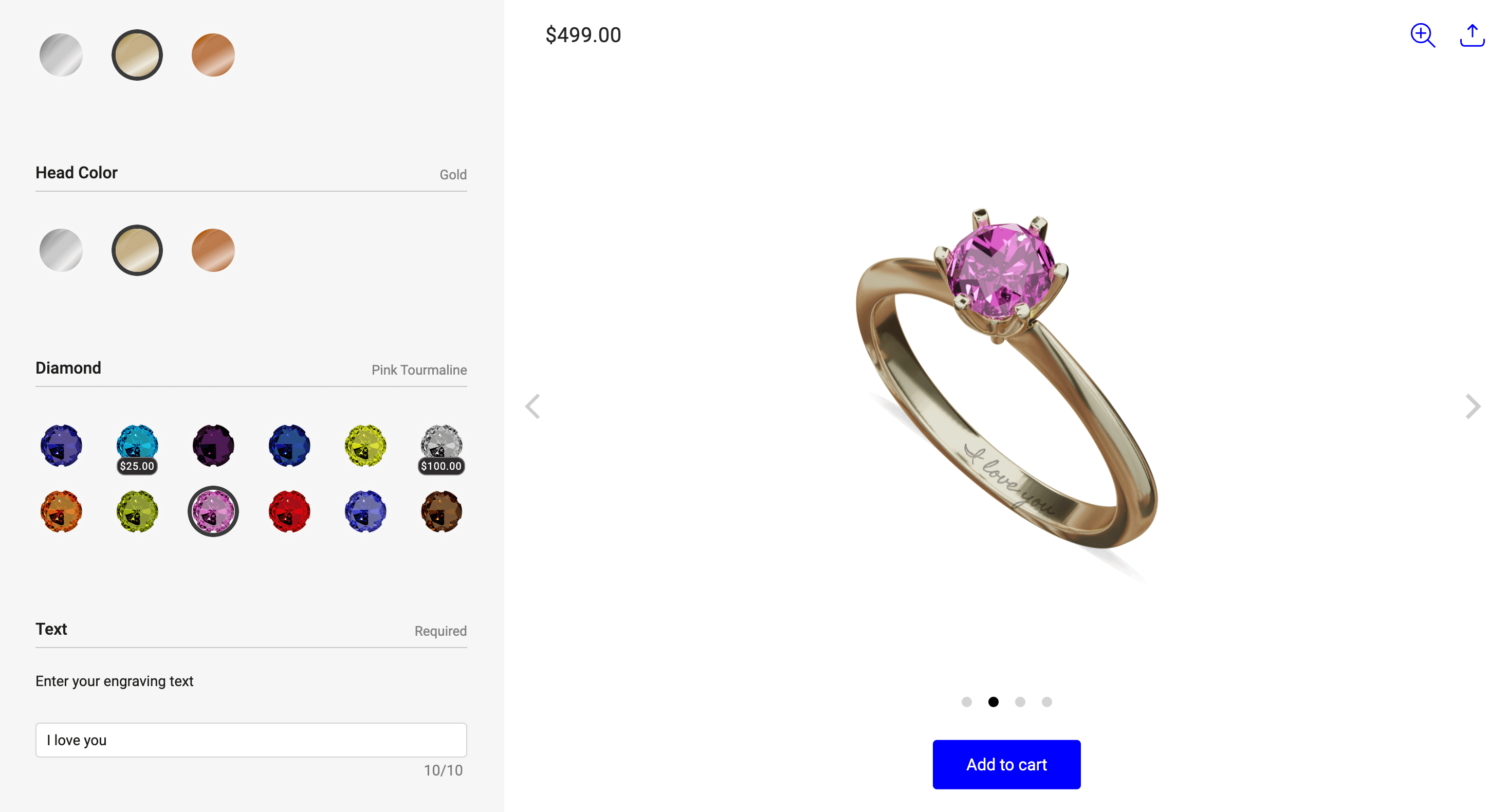 Kickflip is a no-code visual builder that lets you set up 200+ customization options quickly, handling multi-angle previews, dynamic pricing, and conditional logic with ease. Orders auto-generate print-ready PDFs. Kickflip has powered over $100M in custom sales for brands including Suunto and Dick's Sporting Goods.
Integrations: Native Shopify and WooCommerce apps, plus Wix and a custom API/iframe integration for any other site.
Pricing: $59/month, with a transaction fee that scales from 1.95% down to 0% as sales volume grows. A white-label add-on, CPQ add-on and enterprise plans are available.
Pros: Strong mobile performance, fast setup, seamless UX.
Cons: High-volume brands will eventually want to talk to sales about flat-rate enterprise pricing.
Best for: Scaling DTC brands and Shopify/WooCommerce merchants who want a premium, fast customization experience without a developer.
Not for: Web-to-print portals for commercial print shops, or B2B manufacturers needing spatial room-planning tools.
2. Threekit: Enterprise-Grade 3D and AR Configuration
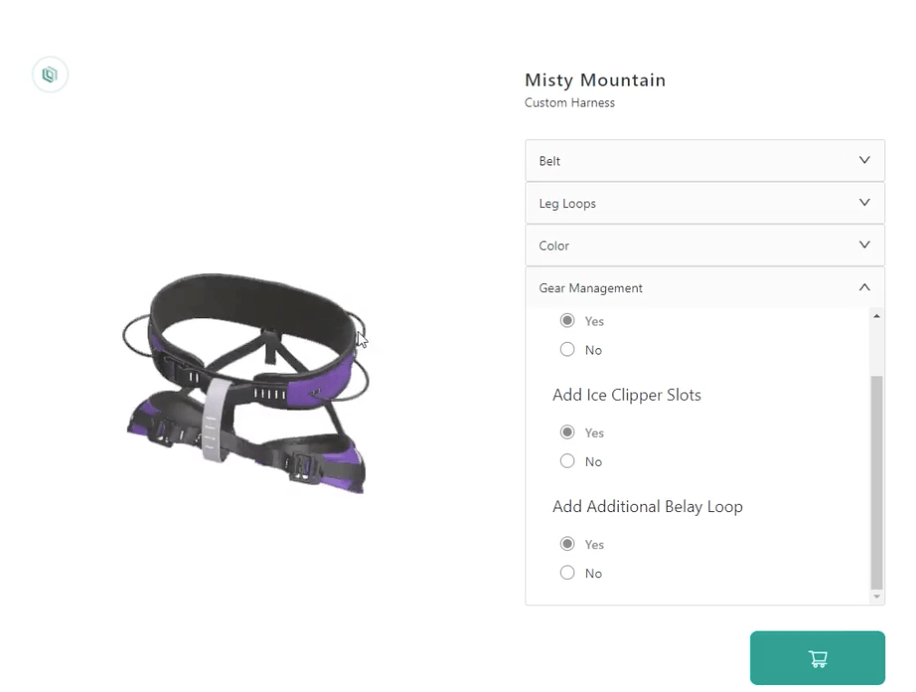 Threekit targets large enterprises with big catalogs and matching budgets, offering photorealistic 3D rendering and virtual photography, deep integrations with Salesforce, SAP, and Magento, and native AR.
Pricing: Custom enterprise quotes only; implementation costs are high.
Pros: Unmatched visual quality and spatial tools.
Cons: High total cost of ownership, long setup times, requires specialized developers to run.
Best for: Enterprise retailers and B2B manufacturers (furniture, automotive, luxury goods) with dedicated dev teams and large budgets.
Not for: Any DTC brand that needs to launch in weeks without a technical team.
3. Zakeke: Adaptable 3D/AR Personalization Engine
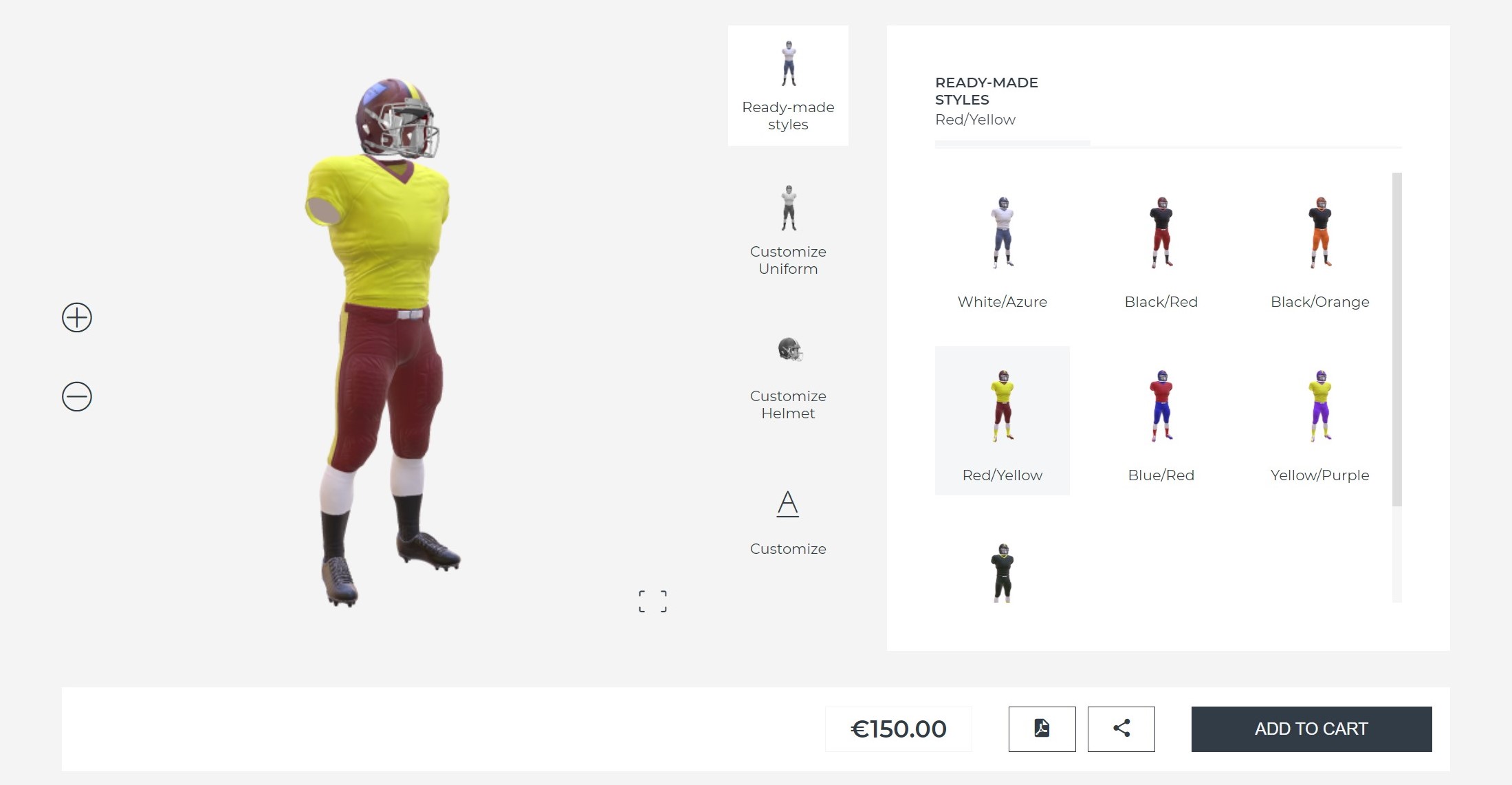 Zakeke offers 3D previews, virtual try-on, and automated production outputs across a wide range of e-commerce platforms.
Pricing: Starts at $69.90/month (Starter, capped at 10 products), scaling to $129.90/month (Grow, 50 products) and $299.90/month (Scale, 100 products), plus custom Enterprise pricing.
Pros: Strong virtual try-on and 3D rendering.
Cons: Backend interface is complex; setting up 3D assets is demanding; the entry plan's product cap is easy to outgrow.
Best for: Mid-market brands needing advanced 3D/AR or virtual try-on — especially eyewear, jewelry, and accessories that benefit from close-up inspection.
4. DesignNBuy: Web-to-Print and Packaging Specialist
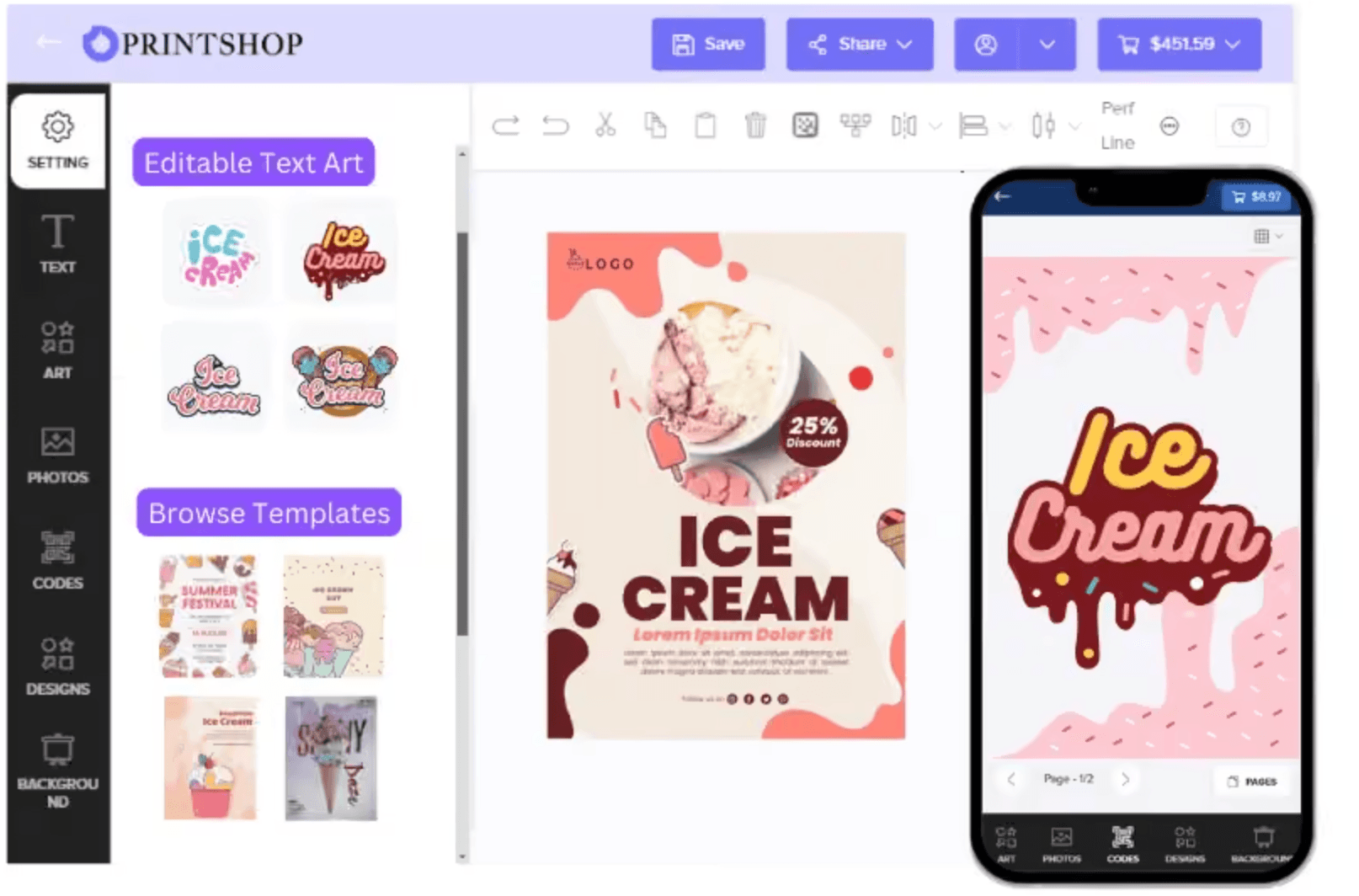 Built for print shops, packaging, and promotional products, DesignNBuy focuses on template-based design flows and print-ready vector files, with advanced text editing, clipart libraries, and dynamic pricing by print method and quantity.
Pricing: Subscription or one-time license, priced per platform edition (Shopify, Magento, or standalone).
Pros: Strong print-workflow automation and template management.
Cons: Dated interface; not built for complex 3D assembly.
Best for: Commercial print shops, packaging manufacturers, and promotional product distributors running high-volume daily operations.
5. Combeenation: High-End 3D Configuration for Complex Products
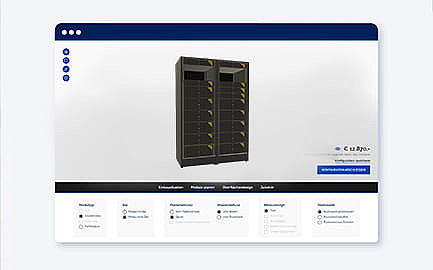 Combeenation handles complex, made-to-order products with engineering-level logic — think modular shelving or custom industrial equipment — with deep ERP/CRM integrations and polished output. Every configurator is built in partnership with their team; nothing about it is self-service.
Pricing: Bespoke, based on project scope and hosting requirements.
Pros: Handles genuinely complex product rules.
Cons: High setup costs; changes go through their team, which takes time.
Best for: Mid-to-large European manufacturers selling highly complex custom products where standard configurator logic falls short.
6. VividWorks: Visual CPQ and 3D Space Planning
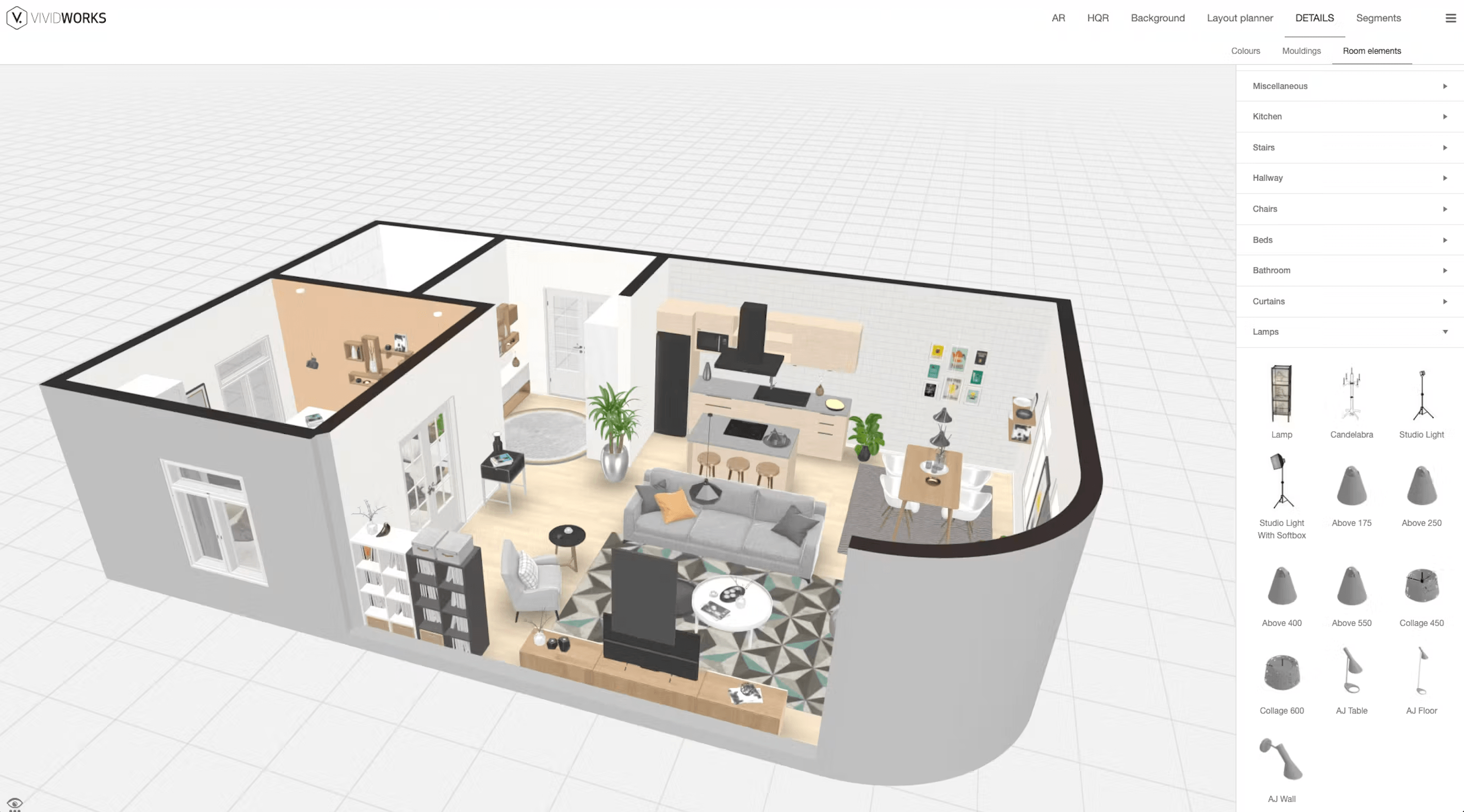 VividWorks is purpose-built for 3D room planning and spatial layouts, common in furniture and home-improvement retail, with visual CPQ logic and manufacturing-system integrations that make it a strong B2B sales-enablement tool.
Pricing: Custom enterprise pricing; no public entry-level plan.
Pros: Excellent for multi-product spatial planning.
Cons: Overkill (and cost) for standard DTC products like apparel or shoes.
Best for: Furniture manufacturers, home-improvement brands, and B2B companies closing high-ticket deals that hinge on room-scale configuration.
Budget-Friendly Alternatives
For very small shops, a few lighter tools are worth a look: Inkybay starts at $19.99/month with no sales commission, though the entry tier caps you at 5 products and 30 orders/month; Angle 3D starts at $39/month for up to 10 products and 250 variants; Teeinblue is $49/month with your first 100 orders free and a small per-order fee after that. All three trade away the advanced rendering and no-code logic builders that drive higher-volume sales.
How to Choose the Right Software for Your E-Commerce Store
Start with product complexity. Component-based products need a layered 2D or 3D configurator; simple text engraving just needs a basic widget. Don't jump to 3D unless you have to — 3D models are costly to build, and a well-designed 2D setup often delivers the same premium feel for far less. If you're a solopreneur selling basic custom t-shirts, enterprise 3D software will overcomplicate your operation without a matching return. Match the tool to your product, not to the most impressive demo you've seen.
Evaluate integration options carefully. Avoid custom API work where you can — it's expensive and breaks when platforms update. A native app that plugs directly into your store is worth more than it looks. Pay close attention to checkout and inventory sync: the configurator must pass precise, actionable data to fulfillment and disable out-of-stock components in real time, not after a customer has already ordered something you can't build.
Weigh the full cost against the ROI. Look past the monthly fee to asset creation, setup hours, and transaction fees. A $59/month platform that lifts conversion even slightly on a $50K/month store pays for itself fast — the real risk isn't the software cost, it's choosing a platform that needs $15,000 of 3D modeling before you can launch a single product.
Frequently Asked Questions
How do I add personalization to a Shopify product? Shopify's native admin caps you at 2,048 variants and 3 options — real customization needs a dedicated Shopify product configurator app. It bypasses those limits with unlimited options, live previews, and dynamic pricing; with Kickflip, you can be live without writing a line of code.
Is there an open-source 3D product configurator? Libraries like Three.js exist, but they're development frameworks, not ready-to-use software — building your own means hiring developers and building a backend from scratch, and custom development gets expensive fast. Unless your product logic is genuinely too unusual for any existing platform, a hosted SaaS platform is almost always the better build-vs-buy call.
What's the difference between product personalization and customization? Product personalization lets customers add a name or photo to a finished product. Customization means co-creating the product from scratch — choosing components, materials, and colors. Our ecommerce customization and personalization guide breaks this down in more detail: personalization modifies a finished product, while customization assembles a unique variant from interchangeable parts.
Conclusion and Next Steps
Kickflip is the best overall no-code choice; Threekit and Combeenation handle enterprise 3D and complex logic; Zakeke suits mid-market 3D/AR; DesignNBuy is built for print shops; and VividWorks is built for room planning.
The market is growing fast: the visual product configurator software market was valued at $1.2 billion in 2023 and is projected to reach $3.1 billion by 2031 (7.5% CAGR), while the broader product customization software market is expected to grow from $4.2 billion in 2025 to $9.1 billion by 2033 (9.2% CAGR). Static product pages are losing ground — now is the time to act.
Kickflip has powered over $100M in custom sales, with merchants averaging a 150% higher conversion rate and a 40% reduction in returns. Pricing starts at $59/month with transaction fees that drop as low as 0%, no developer required — you can build your configurator in Kickflip Studio and launch in days.
Ready to see how it works? Start Kickflip's 14-day free trial and build your first live preview today.
Future reading
The 2026 Ecommerce Customization and Personalization Guide
The Ultimate Guide to E-commerce Product Customization: Drive Conversions, Reduce Returns, and Scale Operations
Personalization vs Customization: What's the Difference in Ecommerce?
Share This article

Written by Marie Lamonde
September 17th, 2026
Marie Lamonde is a Content Marketing Manager at Kickflip with 8 years of experience writing about digital marketing, SaaS, and ecommerce. She specializes in creating clear, search-driven content that attracts, engages, and converts.


Maarten Luyckx
Osaka World
The user-friendly interface of Kickflip, combined with excellent customer service, ensured that this project was brought to a successful and beautiful conclusion.
Shopify App Store
May 20, 2021

Marie-Laetitia Rossazza
My Dust Bag
It took me a long time to find the perfect customizer app, and I’m so happy to say that I finally did! Kickflip is truly the best app on the market. The front end and back end are excellent, and the team behind it is incredibly kind and helpful!
Shopify App Store
September 1, 2023

Brad Jurga
All-Star Sporting Goods
Kickflip made everything easy, from designing the builder all the way through launch. We’re designing truly custom equipment for elite baseball players and this platform allows us to have better engagement and excitement around our brand. We’re seeing an instant return.
Shopify App Store
June 16, 2025

Kasper Taylor
CodedInk
My experience with both the product and the support team has been fantastic. The user interface and user experience are excellent. The features are powerful, and the WooCommerce integration is seamless and easy to set up.
G2.com
June 16, 2025

Saber Naceur
Vinylacy
By far, and I truly mean it, the best customizer available on Shopify. It’s easy to understand and manage, offers options for all types of products, and works extremely well. On top of that, it looks beautiful and feels premium. Highly recommended.
Shopify App Store
December 17, 2022

Jesus Guillermo de León Pérez
Dismo
Kickflip is a fantastic tool. It’s super intuitive, easy to use, and packed with capabilities. You don’t have to be an expert or have experience with other products to get started. The support team is also great and very responsive.
Shopify App Store
July 10, 2024

Frieder Urban
Era of Arc
We were looking for an uncomplicated configurator that was quick and easy to set up, offered plenty of design options, and worked reliably with fast loading times. We tested many configurators on the market, and with Kickflip, we found exactly what we needed.
Shopify App Store
October 10, 2024

John Taggart
Jack Harry and Ollie
What a great addition to our business Kickflip has been. It’s been fantastic to offer our customers the ability to personalize their orders. The support has been excellent, and we especially love that the pricing is tied to our success as customers make purchases.
Shopify App Store
May 7, 2021

TJ Garske
The Net Return
Kickflip saves our team a ton of time by eliminating the need to create custom mockups for customers. Customers can build their product themselves and place an order instantly, without any back-and-forth.
G2.com
January 26, 2026

Amin Hasani
CURVD
After extensive research into product customizer tools, we chose Kickflip for many reasons. We don’t like complicating simple tasks for customers, and Kickflip helped us simplify the process and create a seamless customer experience.
Shopify App Store
July 29, 2025