The Ultimate Guide to E-commerce Product Customization: Drive Conversions, Reduce Returns, and Scale Operations
Written by Marie Lamonde
August 28th, 2026
Table Of Contents
- What is mass customization vs. personalization
- Key benefits of product customization for ecommerce
- How to implement product customization online
- Essential features of an interactive product configurator
- Top product customization tools and software
- Overcoming challenges in ecommerce product customization
- Conclusion and FAQs
Introduction to ecommerce product customization
Defining product customization in modern retail
Giving customers a co-creation experience transforms the merchant-buyer relationship. Customers are no longer just looking for options; they want a sense of ownership that standard retail cannot provide.
Product customization enables shoppers to modify colors, materials, or components in real-time. Unlike traditional retail, which relies on fixed SKUs, customization turns the buyer into a collaborator, dismantling the passive browse-and-buy transaction.
This investment of effort triggers the "endowment effect," increasing the product's emotional and monetary value. Buyers who help build a product are more satisfied and far less likely to return it.
The growing relevance and market growth of customization
Market data from Market.us shows the global e-commerce personalization and customization software market was valued at USD 263.2 million in 2023 and is projected to reach USD 2.412 billion by 2033: a compound annual growth rate of 24.8%.
That is not a niche expanding quietly; it is a category accelerating fast enough to redefine how brands budget for technology.
Consumer demand is driving it.
Research from the Deloitte Consumer Review found that 36% of buyers express general interest in purchasing personalized products, a figure that climbs meaningfully higher in specific categories, reaching 48% for clothing and 53% for holidays and leisure travel. These are not aspirational preferences: they are purchasing signals. When close to half your target market in a given vertical expects a customization option, the absence of one is a competitive disadvantage, not a neutral omission.
One finding that often surprises merchants: in that same Deloitte research, 48% of consumers said they were willing to wait longer for a personalized product or service. The patience premium is real, and it matters operationally. Customization doesn't require you to compete on two-day shipping. It does mean the timelines you set need to be communicated clearly during the configuration process, since that's the piece within a merchant's control.
Framing customization as a trend undersells what is happening. According to insights from McKinsey, personalization is becoming less of a marketing capability and more of a core driver of how companies do business. It is a structural shift in how premium products are sold, and the margin implications are significant enough to treat it as a core business strategy rather than a feature experiment.
What is mass customization vs. personalization
Clarifying the definitions: Customization vs. personalization

Customization and personalization are often confused, but they serve different roles in the shopping journey.
User-driven customization is an active process where customers control design parameters like color and structure. Personalization is typically using identifiers like monograms or engraving to tailor a fixed product.
While a configurator can incorporate both, such as a custom bike with an engraved name, understanding the distinction is critical when selecting software infrastructure. True customization modifies the product; personalization identifies it.
Understanding mass customization in e-commerce
Mass customization solves a problem that once seemed unsolvable: how do you offer highly individualized products without destroying manufacturing efficiency? It bridges the gap. The answer, in practice, is modular production architecture combined with software-to-production pipelines that translate front-end selections directly into manufacturing instructions.
A customer building a custom bicycle online isn't triggering the production of a unique, one-off frame from scratch. They are selecting from a defined set of compatible components: frame geometry, color, drivetrain, handlebars: and the system assembles those selections into a specific, manufacturable configuration. The same logic applies to modular furniture, bespoke footwear, and configurable electronics. The base parts are finite; the permutations are effectively infinite.
For a deeper look at how this plays out technically, the mechanics of ecommerce product configuration cover the architecture in detail. The critical business implication of this modular approach is a dramatic reduction in inventory risk, allowing you to run a leaner operation without tying up capital in unsold goods. You are not stocking 10,000 SKUs hoping to predict demand. You are stocking components and assembling to order, which means dead stock becomes a much smaller problem: and the financial exposure that comes with it shrinks accordingly.
Key benefits of product customization for ecommerce
Conversion rate optimization (CRO) and the visual advantage
Purchase hesitation in e-commerce is almost always a confidence problem. Trust is hard to build. The buyer can't touch the product, can't see it in context, and can't be certain that what they are imagining matches what they will receive. A real-time visual configurator addresses that gap directly.
Shopify-based merchant case studies show that implementing a live visual product configurator can lift conversion rates on customizable products from 1.1% to 2.8%: a 154% increase in purchase probability. More broadly, research from Dynamic Yield (now part of Mastercard) confirms that personalized, interactive shopping experiences drive a substantial lift in conversion rates and revenue. The mechanism is straightforward: when a customer can see their exact configuration rendered in real time from every angle, the uncertainty that typically drives cart abandonment dissolves and is replaced by purchase confidence. They know what they are buying because they built it themselves.
The endowment effect strengthens this. Buyers who have invested creative effort in a product feel a sense of ownership before the transaction completes. That psychological attachment makes them more likely to follow through at checkout and less likely to second-guess the purchase afterward.
Boosting average order value (AOV) and premium pricing
Industry data aggregated from over 500 e-commerce stores shows a median AOV increase of 27% for merchants offering customizable options. The mechanism is not mysterious. When a customer is actively engaged in building a product, upsell opportunities feel like natural extensions of their creative process rather than interruptions. Offering a premium leather finish, a reinforced hardware upgrade, or a specialized color treatment directly inside the configurator interface converts at a fundamentally different rate than a generic, post-cart upsell popup that disrupts the checkout flow.
Customizable products also command structurally higher margins: often 40% to 50%: because the perceived value of a bespoke item is separated from the commodity pricing pressure that crushes margins on standard inventory. A customer who spent fifteen minutes designing their product isn't cross-shopping it against a cheaper alternative on another tab. The comparison set effectively disappears.
Dramatic reduction in product return rates
Returns are one of the most expensive operational realities in e-commerce, averaging 15% to 30% across standard retail. Reverse logistics, restocking labor, repackaging costs, and the customer support overhead that accompanies every return dispute add up fast. In high-shipping-cost regions like Australia and New Zealand, the per-unit cost of a return can erode the entire margin on a transaction.
Visual customization tools directly address the root cause of most returns: the gap between what the customer expected and what they received. When a buyer has seen their exact configuration rendered accurately before purchasing, that gap closes. Surprises disappear. Kickflip's own analysis of the research points to two reasons customized products see far fewer returns: customers learn what they actually want through the configuration process itself, and the effort they put into designing the product creates an attachment that makes them less likely to send it back. Companies offering customized products report a 40% decrease in returns as a result, a structural change in how much capital you are spending to undo completed transactions.
The financial case is particularly compelling for merchants in the apparel and footwear sectors, where return rates are notoriously high and the cost of processing each return is worsened by the difficulty of reselling a returned item as new inventory.
Operational error reduction and automated workflows
Manual order processing for custom items is where operational costs quietly accumulate. A customer selects a specific color combination and material finish, that selection gets copied into a production order by a human, and somewhere in that chain a mistake gets made. The reprint costs money. The delay costs customer trust. At low order volumes, it is manageable. At scale, it becomes a significant drag on margins.
Modern customization software eliminates the transcription step entirely. Front-end customer selections translate directly into production-ready assets: print-ready vector files in PDF or SVG format, structured bills of materials, or exact SKU configurations: without any manual intervention in between. Documented implementations show that transitioning from manual workflows to automated customization-to-fulfillment pipelines reduced production error rates from 8% to under 1%. The downstream effect on customer support is equally significant: inquiries related to personalization errors dropped by 45% in the same implementations, freeing internal teams to focus on growth rather than damage control.
How to implement product customization online
Step-by-step strategy: Choosing the right e-commerce platform
Platform selection is the decision that limits everything downstream. Get it right. The wrong choice creates integration friction that compounds over time; the right one makes the entire customization stack easier to build and maintain.
When evaluating options, the primary question is compatibility with advanced customization apps and API integrations. Shopify has the deepest ecosystem of customization-specific apps and the most mature infrastructure for connecting configurators to fulfillment workflows. WooCommerce offers more flexibility for merchants who need granular control over their tech stack and are comfortable managing a self-hosted environment. BigCommerce sits between the two: more opinionated than WooCommerce, more extensible than a closed platform. A detailed breakdown of how these platforms compare for custom product use cases is available in the guide to the best e-commerce platform for custom products.
The needs diverge meaningfully by merchant profile. A DTC founder launching a custom product line needs low-friction setup and a fast path to first sale: platform complexity is a liability at that stage. An enterprise marketing director managing a large, evolving catalog needs rock-solid reliability, predictable uptime, and the ability to push catalog changes without constant developer cycles. Platform choice should reflect which of those constraints is actually binding for your operation.
Step-by-step strategy: Designing the customization workflow
Mapping out the customization workflow before touching any software is the step most merchants skip: and the one they regret most. The configuration flow needs to be designed from two directions simultaneously: from the customer's perspective (what's the most intuitive path through the options?) and from the production team's perspective (does every combination the customer can build map to a manufacturable output?).
On the customer side, the primary design challenge is preventing analysis paralysis. A blank canvas with fifty simultaneous options overwhelms most buyers. Keep it simple. Step-by-step guided customization: where the customer makes one category of decision at a time, with subsequent options filtered based on prior selections: consistently outperforms open-ended interfaces. Each step should feel like a natural progression, not a form to fill out.
Pricing logic needs to be integrated in the workflow from the start, not bolted on afterward. Dynamic pricing rules that update the displayed total as the customer selects premium options accomplish two things: they make the cost of each upgrade transparent in real time, and they prevent sticker shock at checkout: which is one of the most reliable triggers for cart abandonment. Every layer, mask, and conditional logic rule you build into the configurator should have a corresponding production instruction attached to it. If the front end allows a combination that the back end can't fulfill, you've created a customer service problem at scale.
Step-by-step strategy: Integrating with production and fulfillment
The configurator is the customer-facing surface. The back end matters more. The integration layer is where the business runs. Connecting the front-end configuration to your manufacturing pipeline: whether that's in-house production, a print-on-demand partner, or a third-party manufacturer: requires deliberate architecture, not an afterthought.
For print-based products, the critical output is a production-ready file: a vector PDF or SVG that contains the exact specifications of the customer's configuration, formatted for the production equipment being used. That file should route automatically to the production floor without anyone manually reformatting it. For component-based products, the equivalent output is a structured bill of materials that specifies exactly which physical components need to be pulled and assembled.
Dynamic inventory management is the operational complexity that catches most merchants off guard. If a specific component goes out of stock, the configurator needs to reflect that in real time: hiding or disabling the option before a customer selects it, not after the order is placed. SKU explosion (the expansion of potential component combinations) is manageable with the right data architecture, but it requires intentional setup. Getting this layer right from the beginning is what separates a customization program that scales from one that creates operational chaos as order volume grows.
Essential features of an interactive product configurator
Real-time live preview
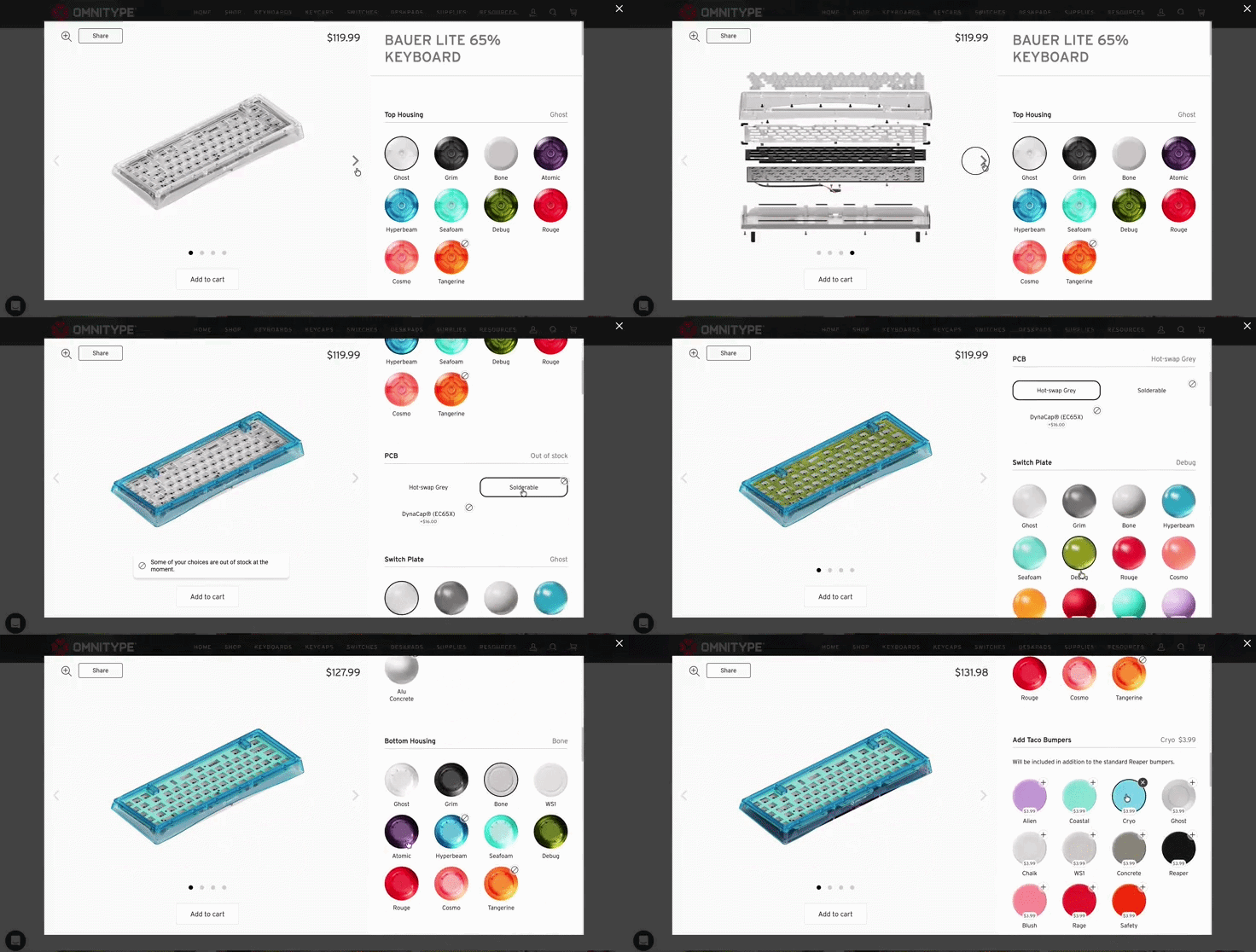
A live preview is the single most important feature in any product configurator. It drives the sale. Everything else, rule logic, pricing updates, mobile responsiveness, serves the primary goal of giving the customer accurate visual confidence in what they are about to buy. Without it, you are asking buyers to make a financial commitment based on imagination, which is precisely the confidence gap that drives hesitation and returns.
The question of whether that preview needs to be 3D is more nuanced than most software vendors will admit. For products where geometry, depth, and surface texture are central to the purchase decision: footwear, furniture, helmets, complex mechanical assemblies: a 3D rendering environment that allows rotation and zoom adds genuine decision-support value. For flat or print-based products like apparel graphics, stationery, or phone cases, a high-fidelity 2D preview is often faster to implement, faster to load, and equally effective at building buyer confidence. Choosing 3D because it sounds more impressive introduces latency and complexity without a proportional conversion payoff.
Website performance is the constraint that makes this decision significant. Real-time 3D rendering is computationally intensive, and a configurator that causes perceptible lag on a mid-range mobile device will cost you conversions regardless of how visually impressive it is. A well-built 2D engine, by contrast, can deliver rich, real-time visual feedback, accurate colors, materials, and layered customization rendered from a high-resolution image base, without the load times that 3D rendering introduces, which is part of why so many high-volume customization programs are built on 2D rather than 3D. The right architecture leverages global CDN infrastructure to ensure rendering performance is consistent across geographies: a requirement for merchants serving customers across North America, Europe, and the Asia-Pacific region simultaneously.
Responsive user interface and UX design
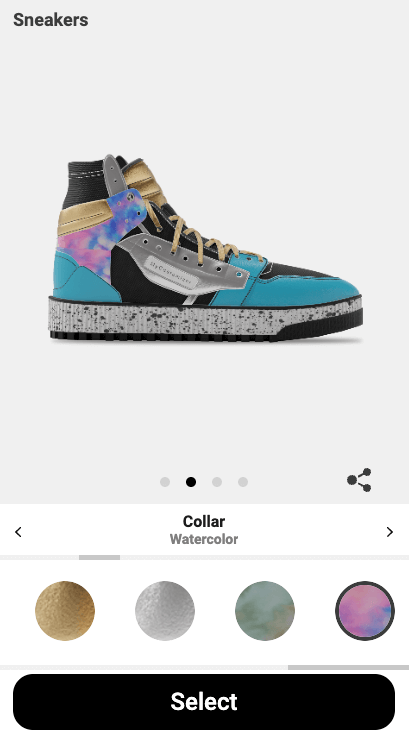
The majority of e-commerce traffic originates on mobile devices. Phones come first. A configurator that works beautifully on a desktop and degrades on a phone isn't a configurator: it's a desktop feature that most of your customers will never successfully use. Mobile-first design isn't a preference; it's a baseline requirement.
Good configurator UX is characterized by clean layouts, intuitive navigation, and clear step indicators that tell the customer where they are in the process and how much further they have to go. Cognitive load management is the underlying design principle: every unnecessary decision, every ambiguous label, every unclear progress state increases the probability of abandonment. The interface should feel effortless, not because the product is simple, but because the design has absorbed the complexity on the customer's behalf.
Accessibility is a legal and ethical requirement that configurator implementations frequently ignore. In the US, the Americans with Disabilities Act creates legal exposure for inaccessible web interfaces, and ADA.gov's own guidance confirms this applies to business websites, ecommerce included. In Europe, the European Accessibility Act sets equivalent standards for the accessibility of digital products and services. Compliance with standards like WCAG, the ISO-recognized benchmark for web accessibility, must be built into the configurator from day one. A clunky or inaccessible interface will drive bounce rates up regardless of how compelling the underlying product is.
Rule-based logic and dynamic pricing
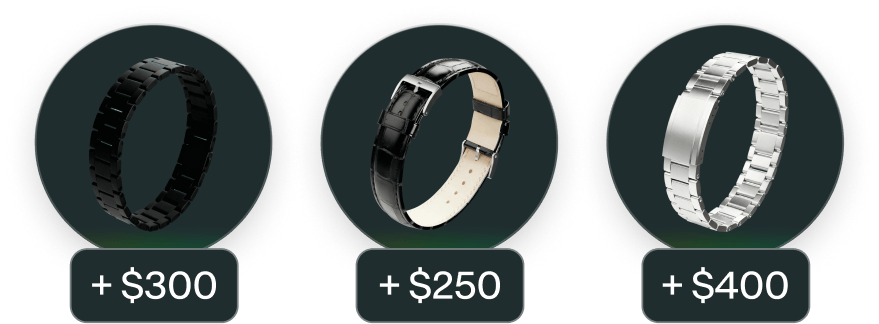
Rule-based logic is what separates a configurator from a dropdown menu. It prevents errors. Without it, customers can select combinations that are physically incompatible, aesthetically unsuitable, or impossible to manufacture: and those invalid configurations either generate customer service problems or require manual review before production can begin.
If you need to prevent impossible combinations, rule-based logic is the best way to do that. Conditional logic rules prevent incompatible combinations from being selectable in the first place. If a specific fabric can't be used with a particular hardware finish, the system hides or disables that finish when the fabric is selected. The customer never encounters the conflict; they are simply guided toward valid configurations. This is the same logic that powers CPQ software in B2B manufacturing contexts, applied to the consumer-facing e-commerce environment.
Dynamic pricing is the commercial counterpart to configuration logic. As the customer adds premium options, upgraded materials, specialized finishes, add-on accessories, the displayed price updates instantly. Transparent, real-time pricing eliminates the sticker shock that occurs when a customer reaches checkout and discovers the total is higher than they anticipated. It also makes the value of each upgrade legible at the moment of decision, which consistently improves upsell conversion. The technical implementation of these rules doesn't require custom development; modern no-code configurator platforms allow merchants to define logic and pricing conditions through visual interfaces without writing a single line of code.
Top product customization tools and software
The "build vs. buy" dilemma: Proprietary vs. SaaS solutions
Every merchant who gets serious about customization eventually confronts the same question: build a proprietary configurator or buy a SaaS solution? The framing makes it sound like a strategic choice between two equally viable paths. In practice, for the vast majority of e-commerce businesses, it isn't.
Custom product configurator development starts at $100,000 to $300,000 in initial engineering costs, and that figure doesn't include the ongoing maintenance burden, the developer cycles required for every feature update, or the months of lead time between project kickoff and first customer interaction. Enterprise retailers with dedicated engineering teams and specific requirements that no SaaS platform can meet have a legitimate case for this path. For everyone else, the cost and timeline are unreasonable.
SaaS configurator platforms invert the economics. Deployment is measured in days or weeks rather than months. Feature updates ship automatically. Platform integrations, Shopify, WooCommerce, Wix, print-on-demand providers, are pre-built. The upfront investment is a fraction of custom development, and the total cost of ownership over a three-year horizon is dramatically lower when you account for the developer time you are not spending on maintenance. For scaling DTC brands and established retailers alike, the buy decision is almost always the more strategically sound choice.
Evaluating the best product configurator software
Evaluating product configurator software requires clarity on what matters for your specific use case. Focus on the essentials. Visual quality, ease of setup, platform compatibility, pricing predictability, and the depth of back-end automation capabilities are the criteria that separate tools that look good in a demo from tools that hold up under production load.
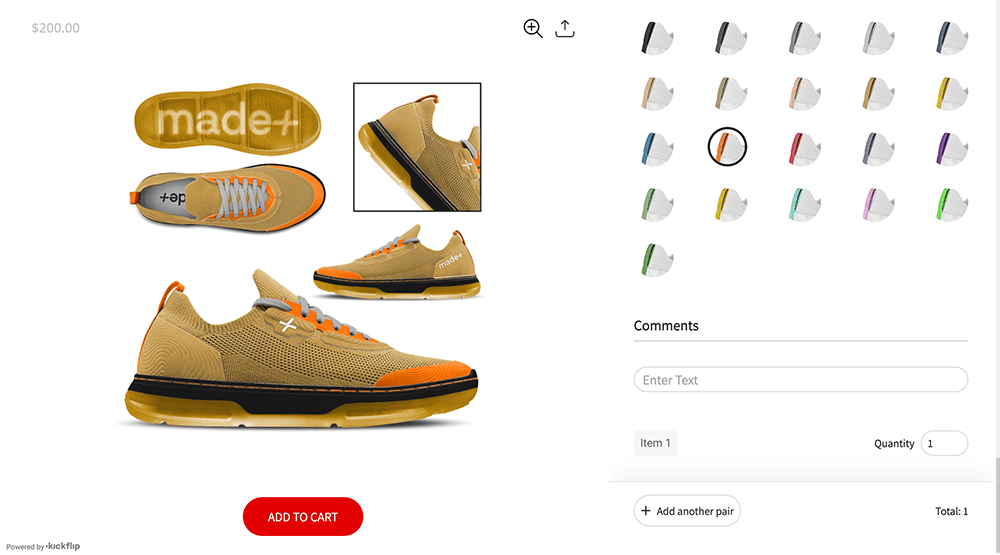 Kickflip is a no-code platform that enables merchants to launch functional configurators without engineering resources. It integrates natively with Shopify, Wix and WooCommerce, translating selections into production-ready outputs.
For Shopify merchants specifically, the Shopify product configurator implementation path through Kickflip is designed to minimize the gap between installation and first live configuration. The platform is purpose-built around high-fidelity 2D visual rendering; real-time preview, color and material changes, and layered customization, giving merchants the visual confidence that drives conversion without the load times and mobile performance trade-offs that 3D rendering can introduce. Pricing is structured on predictable subscription tiers rather than per-transaction fees, which matters significantly for high-volume merchants who need to model software costs against order volume without introducing a variable that scales against them. Kickflip is built to be the most capable customizer for Shopify brands, giving merchants a smooth, fully customizable experience that can go live in a short period of time.
Overcoming challenges in ecommerce product customization
Managing the "SKU explosion" and inventory complexity
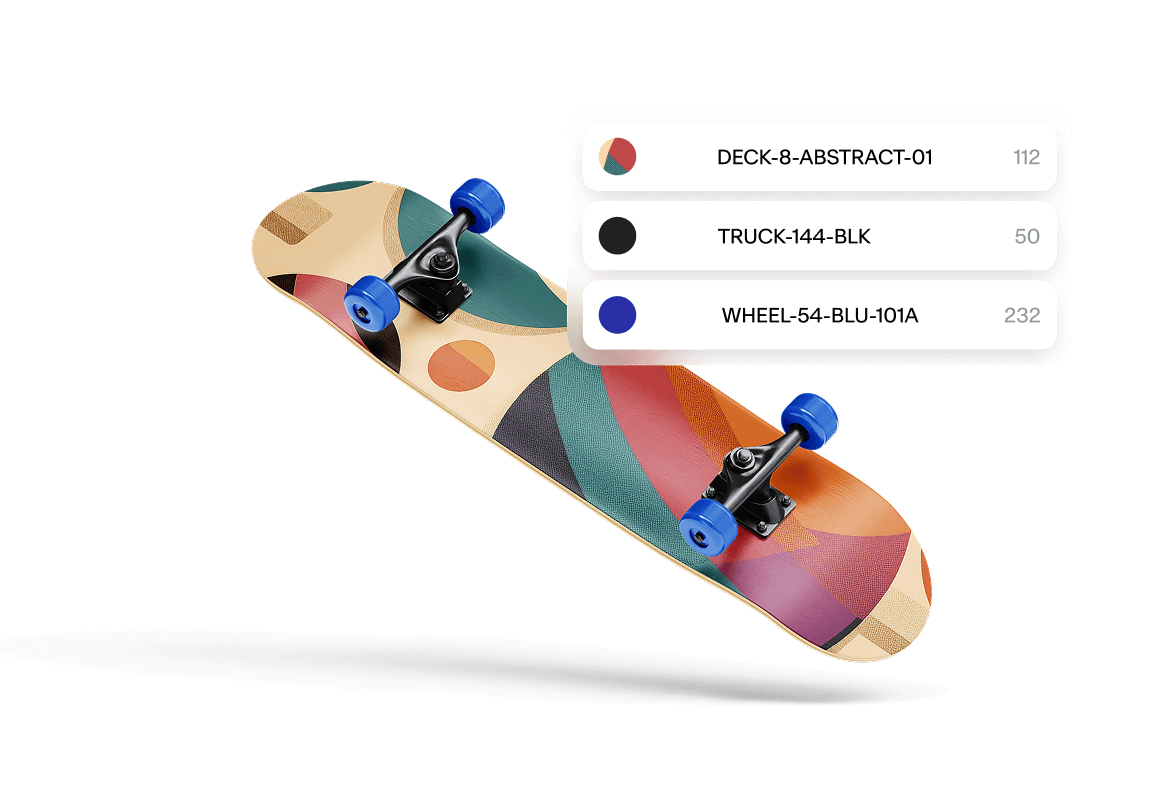 Managing thousands of potential SKU combinations requires decoupling the front-end configuration from the back-end inventory model.
Dynamic SKU generation assigns unique identifiers at the moment of order, while structured bills of materials track individual components rather than finished goods. This architecture ensures the configurator reflects real-time stock levels, preventing customers from selecting unavailable options.
Conclusion and FAQs
Summarizing the path to customization success
Here's the deal: product customization is not a feature you add to an existing e-commerce operation. It is a business model shift: one that changes how you price, how you manufacture, how you manage inventory, and how you interact with customers. The merchants who treat it as a strategic commitment rather than a conversion rate experiment are the ones gaining the full value: 27% higher AOV, 40% fewer returns, sub-1% production error rates, and conversion lifts that justify the software investment within months.
The operational complexity is real, but it is manageable with the right infrastructure. Do not let it stop you. The SKU explosion problem has a data architecture solution. The production error problem has an automation solution. The analysis paralysis problem has a UX design solution. None of these require six-figure custom development budgets or months of engineering lead time.
Kickflip was built specifically to close the gap between what merchants need and what most configurator platforms deliver. No-code setup, unlimited configuration options, native Shopify, Wix and WooCommerce integrations, automated production file output, and predictable subscription pricing: the platform is designed to let a merchant go from decision to live configurator in days, not quarters. Start with one high-margin product line, gather customer feedback on the configuration experience, and scale from there. The infrastructure is designed to grow with you.
If you are ready to move from static inventory to a co-creation model, start a free trial to see the platform in action against your actual product catalog.
Frequently asked questions (FAQs)
Q1: What is the best ecommerce personalization software? The right answer depends on whether you need data-driven experience personalization or product-level configuration. For behavioral targeting, recommendation engines, and segmentation-based personalization, platforms like Dynamic Yield, Optimizely, and Klaviyo are well-established options. For product-level customization: where the customer actively modifies the product itself: you need a dedicated configurator platform, like Kickflip.
Q2: What is the best website to sell custom products? For a branded, standalone store with full control over the customer experience, Shopify is the most practical starting point for most merchants. It is reliable. Its app ecosystem includes mature customization tools, and the platform's infrastructure handles the operational complexity of made-to-order workflows reliably. Etsy and Zazzle are viable for marketplace exposure, but they limit brand control and margin structure in ways that become limiting as order volume grows. If owning the customer relationship and the full margin stack matters to your business model, a Shopify store with a dedicated configurator is the more defensible long-term position.
Q3: What personalized items sell best? High-demand categories include custom apparel (t-shirts, hoodies, hats), personalized jewelry, engraved home goods (cutting boards, ornaments, barware), custom footwear, pet accessories, and printed phone cases. The common thread is that these are all products where the personalization element is central to the purchase motivation: the customer isn't buying a cutting board, they are buying a cutting board with their family name on it. Categories where personalization is an afterthought rather than the primary value driver tend to see weaker conversion on customization features.
Q4: How can I customize a product? At the merchant level, the practical path is to select a base product with defined customization variables, configure those variables in a product configurator platform, connect the configurator to your production workflow, and publish it to your storefront. The customer-facing experience: selecting options, seeing a live preview, completing the purchase: is handled by the configurator. The production-facing output: print-ready files, bills of materials, SKU configurations: is handled by the platform's back-end automation. The manual transcription step that used to sit between those two stages is what modern configurator platforms eliminate.
Q5: What are the four types of customization? The four generally recognized types are: collaborative (working with the customer to identify their specific needs and translate them into a product specification), adaptive (offering a standard product that the customer can modify after purchase), cosmetic (customizing the presentation or packaging of a standard product for different customer segments), and transparent (delivering personalized products based on customer data without requiring the customer to explicitly request changes). Most e-commerce configurators operate in the collaborative model, though elements of cosmetic and transparent customization often appear in the same implementation.
Q6: What is the best product customizer for Shopify? Several Shopify apps handle basic personalization well: Zepto Product Personalizer and Bold Product Options are commonly cited for text and image-based customization. For merchants who need a full visual configuration environment with real-time previews, complex rule logic, dynamic pricing, and automated production file output, Kickflip is built specifically for that use case. It integrates natively with Shopify, and offers unlimited configuration options without requiring custom development. The Shopify product configurator setup process is documented in detail, and the platform's no-code architecture means a merchant can build and launch a production-ready configurator without developer involvement.
Future reading
The 2026 Ecommerce Customization and Personalization Guide
Benefits of Personalization in eCommerce + 7 Examples in All Stages
The Best Ecommerce Platform for Custom Products in 2026
Share This article

Written by Marie Lamonde
August 28th, 2026
Marie Lamonde is a Content Marketing Manager at Kickflip with 8 years of experience writing about digital marketing, SaaS, and ecommerce. She specializes in creating clear, search-driven content that attracts, engages, and converts.


Maarten Luyckx
Osaka World
The user-friendly interface of Kickflip, combined with excellent customer service, ensured that this project was brought to a successful and beautiful conclusion.
Shopify App Store
May 20, 2021

Marie-Laetitia Rossazza
My Dust Bag
It took me a long time to find the perfect customizer app, and I’m so happy to say that I finally did! Kickflip is truly the best app on the market. The front end and back end are excellent, and the team behind it is incredibly kind and helpful!
Shopify App Store
September 1, 2023

Brad Jurga
All-Star Sporting Goods
Kickflip made everything easy, from designing the builder all the way through launch. We’re designing truly custom equipment for elite baseball players and this platform allows us to have better engagement and excitement around our brand. We’re seeing an instant return.
Shopify App Store
June 16, 2025

Kasper Taylor
CodedInk
My experience with both the product and the support team has been fantastic. The user interface and user experience are excellent. The features are powerful, and the WooCommerce integration is seamless and easy to set up.
G2.com
June 16, 2025

Saber Naceur
Vinylacy
By far, and I truly mean it, the best customizer available on Shopify. It’s easy to understand and manage, offers options for all types of products, and works extremely well. On top of that, it looks beautiful and feels premium. Highly recommended.
Shopify App Store
December 17, 2022

Jesus Guillermo de León Pérez
Dismo
Kickflip is a fantastic tool. It’s super intuitive, easy to use, and packed with capabilities. You don’t have to be an expert or have experience with other products to get started. The support team is also great and very responsive.
Shopify App Store
July 10, 2024

Frieder Urban
Era of Arc
We were looking for an uncomplicated configurator that was quick and easy to set up, offered plenty of design options, and worked reliably with fast loading times. We tested many configurators on the market, and with Kickflip, we found exactly what we needed.
Shopify App Store
October 10, 2024

John Taggart
Jack Harry and Ollie
What a great addition to our business Kickflip has been. It’s been fantastic to offer our customers the ability to personalize their orders. The support has been excellent, and we especially love that the pricing is tied to our success as customers make purchases.
Shopify App Store
May 7, 2021

TJ Garske
The Net Return
Kickflip saves our team a ton of time by eliminating the need to create custom mockups for customers. Customers can build their product themselves and place an order instantly, without any back-and-forth.
G2.com
January 26, 2026

Amin Hasani
CURVD
After extensive research into product customizer tools, we chose Kickflip for many reasons. We don’t like complicating simple tasks for customers, and Kickflip helped us simplify the process and create a seamless customer experience.
Shopify App Store
July 29, 2025