15 Custom Shoe Design Ideas That Turn Browsers Into Buyers
Written by Marie Lamonde
September 1st, 2026
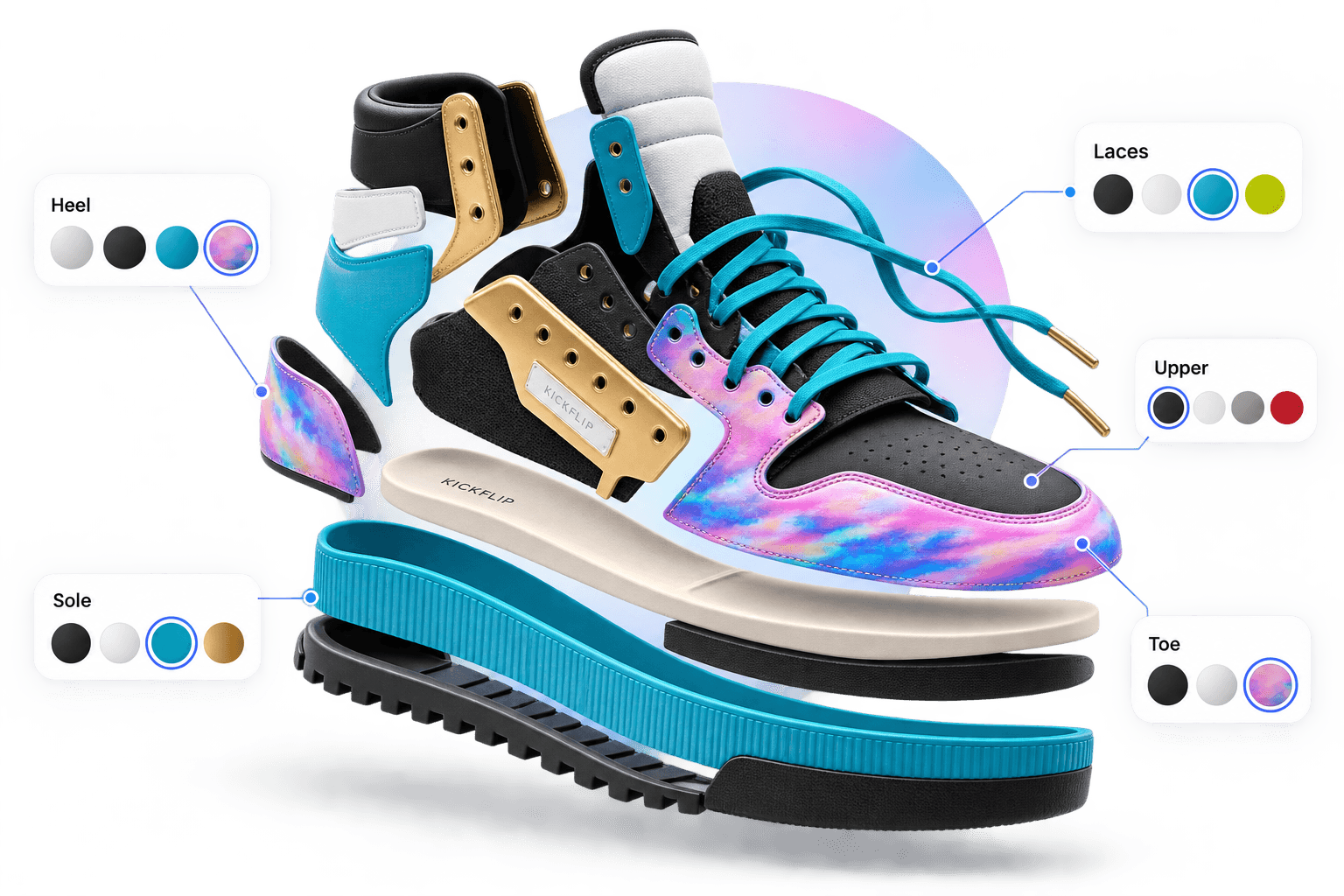
Table Of Contents
When every retailer carries near-identical shoes at identical prices, you get stuck in an ad spend race to the bottom. That does not build a durable brand.
Mass customization changes this completely. The global custom shoes market was valued at USD 2.79 billion in 2025 and is projected to reach USD 16.8 billion by 2033, growing at 12.3% annually according to Persistence Market Research.
This growth is not a fad. It is driven by a deep shift in consumer psychology.
When a customer co-designs a shoe, they own it emotionally before it even ships. Return rates drop and repeat purchases climb.
For e-commerce merchants, the math is simple. Brands offering custom options charge a 20% to 50% premium over standard retail.
They also see conversion lifts up to 30% when a real-time visual tool sits on the page. This is a direct path to a higher order value.
A modern shoe configurator is not a gimmick. It is a purchase-decision engine.
When a customer sees their exact colors, materials, and monogram rendered in high-fidelity, the emotional urge to buy spikes because they can visualize the exact product they will receive, making the purchase feel like a done deal.
The shoe is already theirs in their mind. That feeling drives the conversion lift, not just the code behind it.
What Can Be Customized on a Shoe?
Let me break down the physical canvas. A shoe is not a single surface. It is a system of discrete parts, each with its own material logic.
The Upper & Panels: The vamp, toe box, side panels, and heel cap are your primary design zones. Each can carry a different material like full-grain leather, recycled knit, organic canvas, or suede, making it where color blocking lives.
Soles & Outsoles: Do not treat the sole as an afterthought. Gum soles read vintage, while speckled eco-foam reads modern. Vibram rubber reads performance. Contrasting midsole colors, like a white midsole on a dark upper, are high-impact and easy to produce.
Hardware & Accents: Think eyelets, speed hooks, buckles, and straps. Sneakerheads notice these details instantly. Offering antique brass, gunmetal, or matte black finishes costs almost nothing operationally. It signals high-end craft.
Embellishments & Detailing: Pearls, rhinestones, contrast stitching, and embroidery. These options push a shoe into bespoke territory. They attract high-paying bridal and luxury gift buyers.
Personalization & Monogramming: Initials, names, or dates on the heel or collar. Text-based personalization is the highest-converting option across almost every product customization study.
That’s a lot of possible customization.
But here's the deal. Choice paralysis kills sales.
More options feel like more value, until they overwhelm the buyer. Presenting an infinite color wheel across twenty different panels spikes cart abandonment.
The brands winning this game, like Nike, SAS Shoes, and LUNA Sandals, use a curated model that restricts the palette to harmonious tones and limits choices to high-impact panels so customers never feel overwhelmed by too many options.
They use smart logic rules to prevent ugly or unbuildable designs. The customer gets creative freedom, and you ship a product you are proud of.
15 Custom Shoe Design Ideas Your Customers Want to Build
1. Monogrammed Heels & Collars
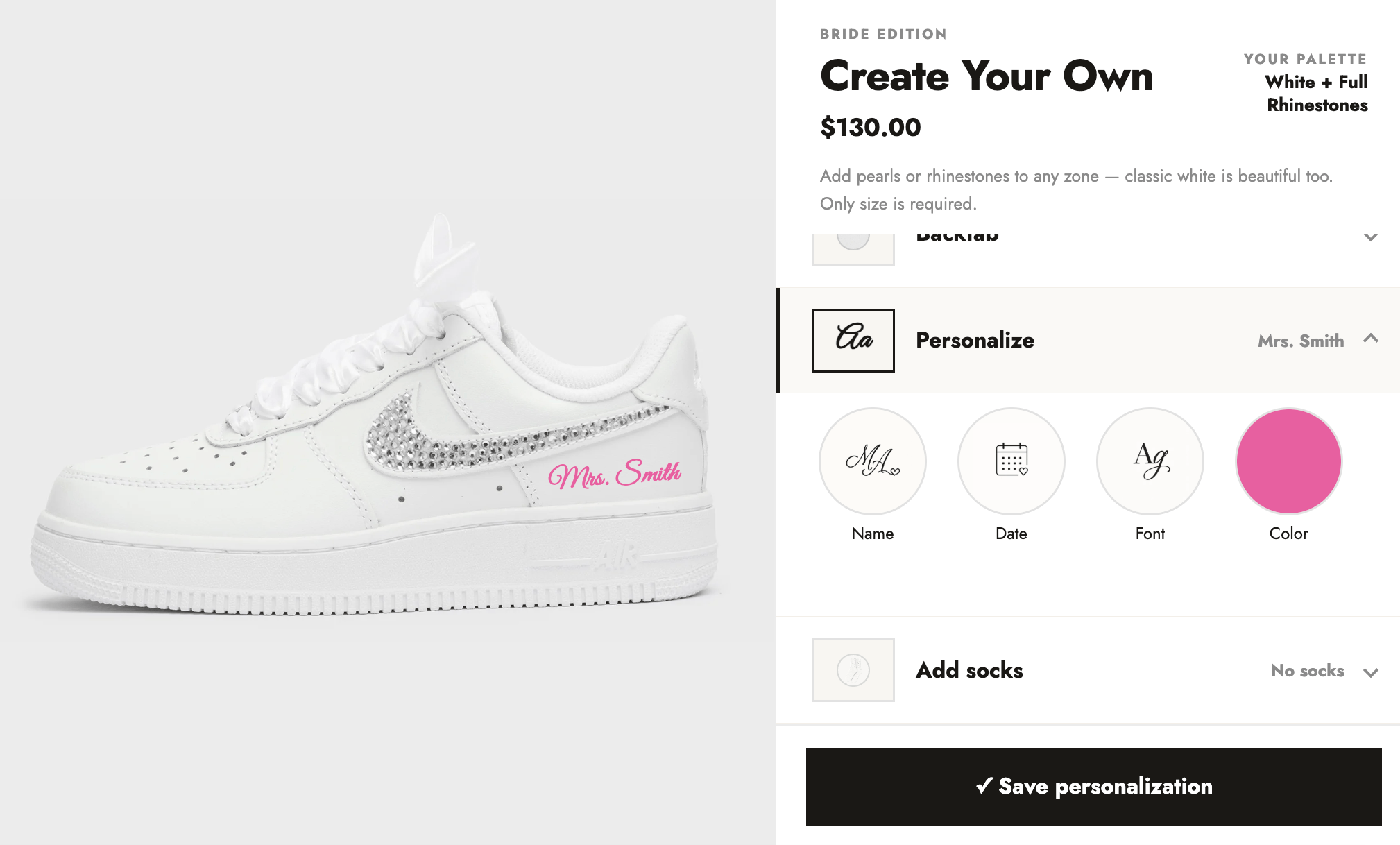
Adding initials or a wedding date to the heel is the most requested customization in footwear. It works because the personalization is permanent. The shoe becomes a keepsake, not just a product.
This extends well beyond daily wear. Wedding footwear and graduation gifts are high-margin segments.
Crazy Sneak executes this precisely. Brides and grooms configure Air Force 1s with wedding dates and custom colors, previewing everything in real time before buying, which creates a highly memorable shopping experience that translates directly into higher conversion rates and lower returns.
2. Swoosh & Panel Embellishments
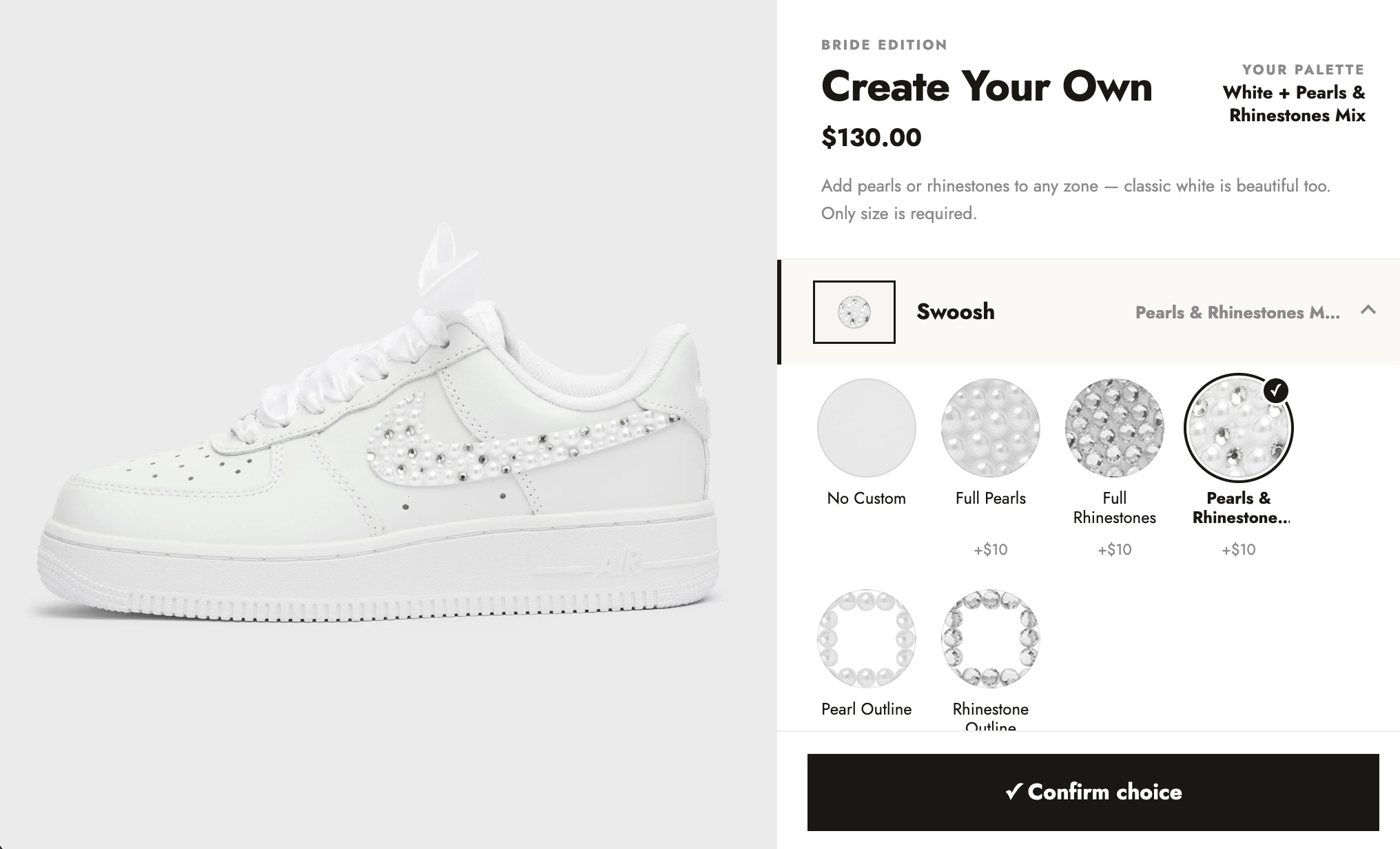
Pearl and rhinestone embellishments on specific panels transform a classic silhouette into a luxury statement. Here is the operational secret: let customers select the zone and material type, not individual bead placement. That is a manufacturing decision, not a design one.
The Crazy Sneak Pearls Air Force 1 demonstrates this model cleanly. The configurator handles the visual preview.
The production team handles the hand-placement. The customer gets a unique, high-end result without you having to manage infinite SKU variations or deal with complex inventory tracking systems that slow down your fulfillment process.
3. Interchangeable Outsoles & Soles
 For outdoor and athletic footwear, sole selection is functional. Function drives sales. Let customers choose between a Vibram outsole for technical trails, a gum sole for lifestyle wear, or a speckled eco-foam midsole so they can tailor the footwear to their exact physical environment and performance needs. Bridge the gap between performance and fashion in a single SKU.
LUNA Sandals built their USA Sandal Builder around this principle. Trail runners configure their outsole thickness based on terrain, allowing one configurator to serve two distinct customer segments with zero inventory duplication.
4. Custom Lace Lengths & Wrap Styles
Lace customization is highly underrated. Beyond color, offering different lengths and wrapping styles addresses a genuine functional need. Most brands ignore this completely.
LUNA Sandals' configurator lets users choose between a traditional multi-wrap lace for trail security and a slip-on style for casual use. The visual preview updates instantly, making a small hardware choice have a massive impact on fit confidence.
5. Mesh Panel Colorways
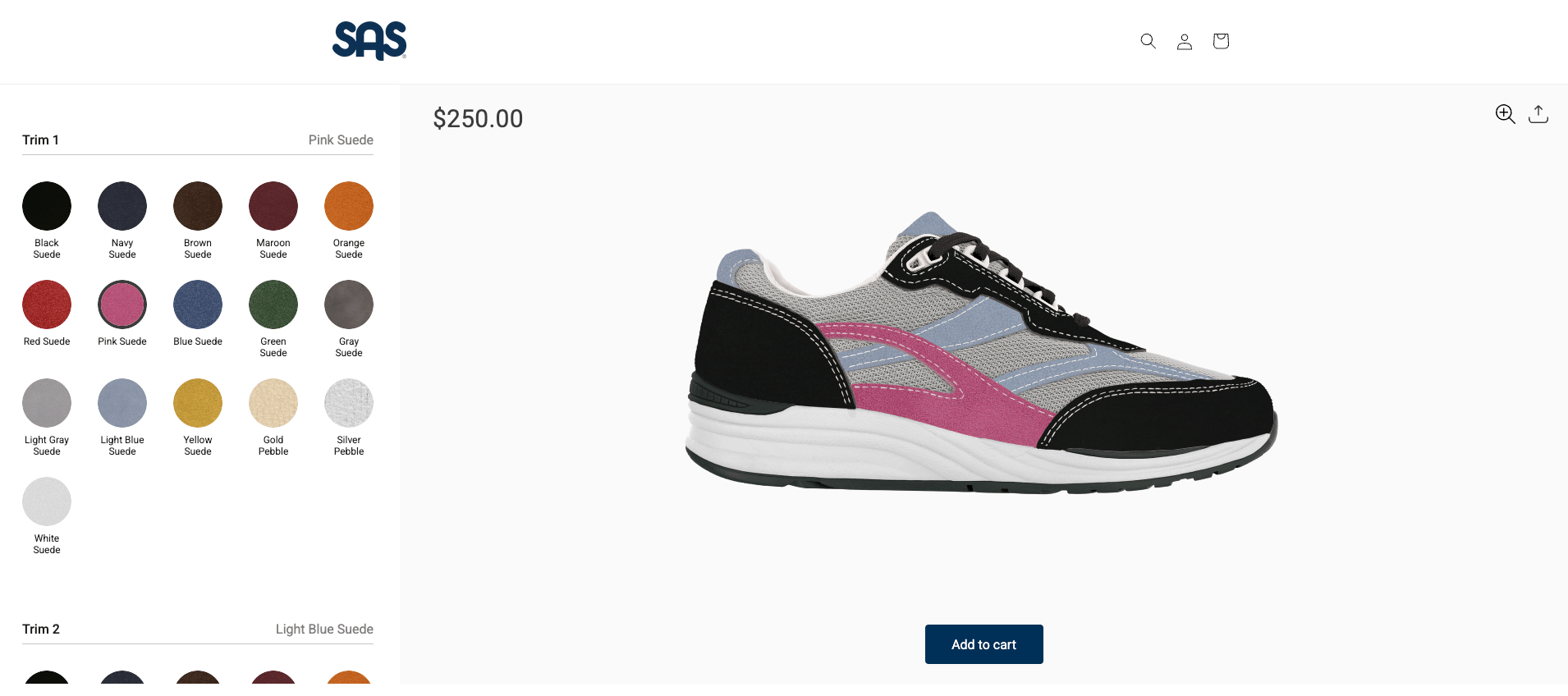 On athletic and lifestyle sneakers, mesh panels provide a distinct zone for color blocking against leather overlays. Texture matters. The material contrast: breathable mesh versus rigid leather: makes even a two-color combination look premium.
SAS Shoes uses this on their Journey Mesh model. Customers mix vibrant mesh colors against classic leather trims. The configurator renders the mesh texture in real time, which a static swatch grid cannot do, giving the customer complete confidence in how the materials will look and feel together in real life.
6. Premium Leather Accents
Material upgrades on specific panels are highly effective upsell mechanisms. Quality sells itself. Upgrading the side panels from standard canvas to full-grain leather, or the toe box to suede, changes the tactile character of the shoe and easily justifies a premium price.
Customers choose materials that match their wardrobe rather than accepting standard SKUs. For a brand focused on quality, material choice is the customization that matters most.
7. Vibrant Tech Strap Colors
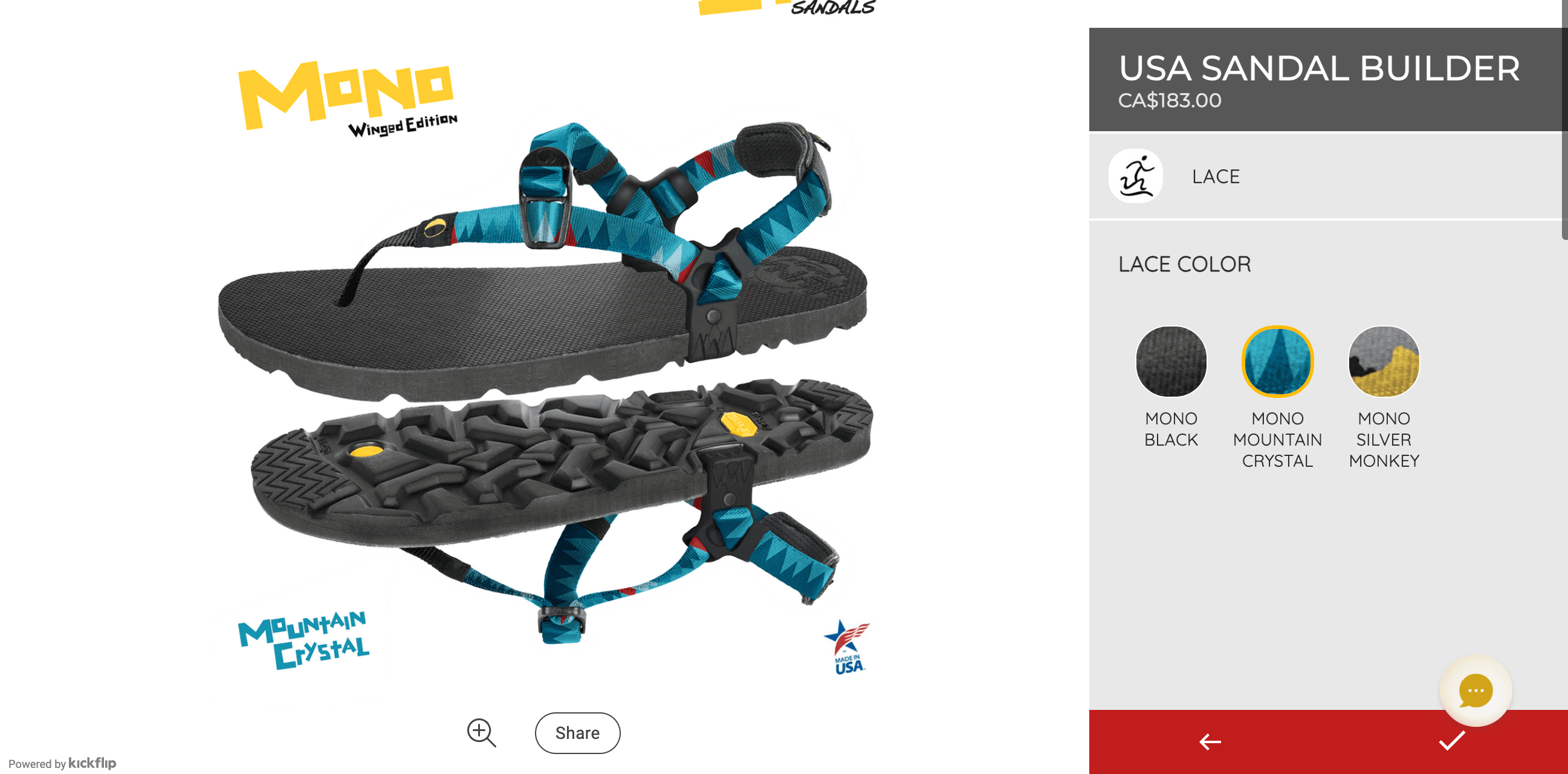 If your footwear includes straps or buckles, those components deserve their own customization layer. Utilitarian fashion has elevated technical hardware to a deliberate style choice. A burnt orange strap on a natural rubber sole looks intentional, not accidental.
LUNA Sandals offers tech straps in specific colors like Mono Desert Canyon and Moss Green. These are identity signals for outdoor athletes who think about their gear the way cyclists think about color-matching their components.
8. Sustainable Material Uppers
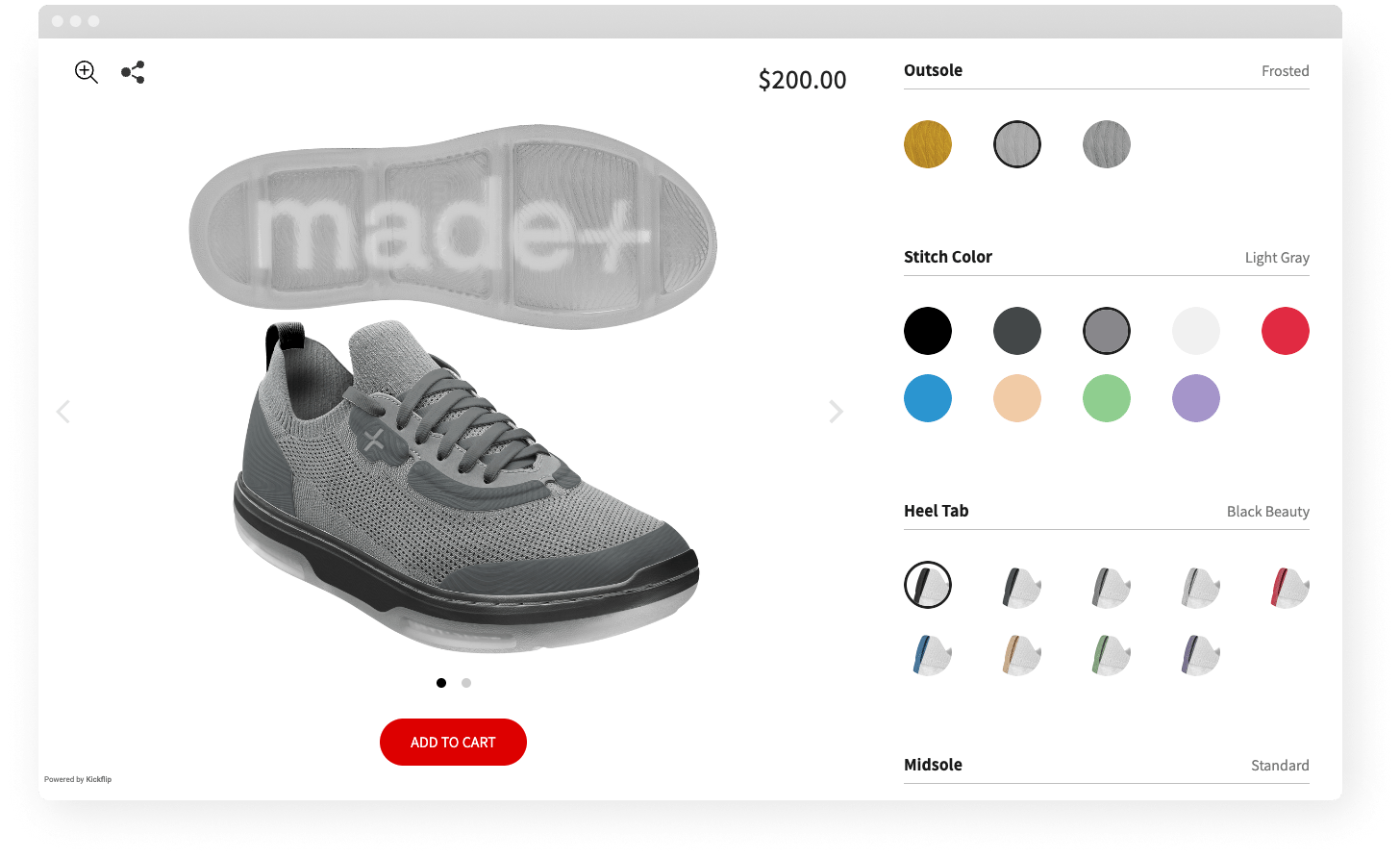 Recycled ocean plastics, organic cotton canvas, and vegan leather are no longer niche. They are table stakes for younger buyers.
Offering these as selectable materials gives eco-conscious customers a guilt-free path to a custom product. It also gives you a story that generic SKUs cannot touch.
Made Plus is built on this premise. Their shoes use high-performance, eco-conscious materials as the baseline. They layer customization on top as a design advantage, not a sustainability compromise.
9. Custom Team & Asset Color Matching
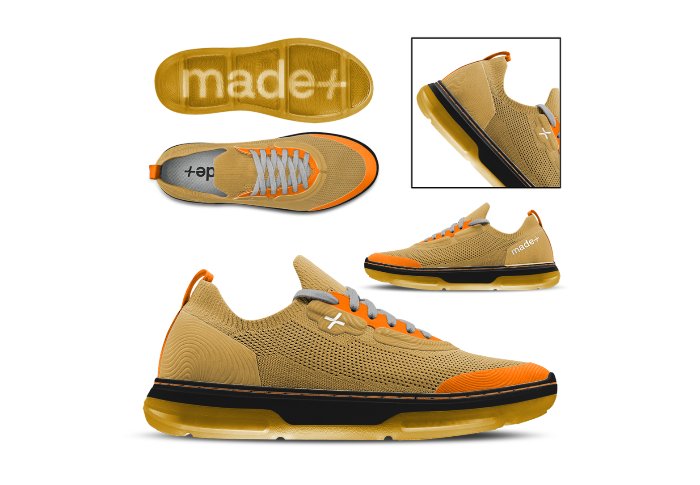 Tight-knit communities, like sailors, golfers, and cycling clubs, love to coordinate their gear. Letting customers select colors that map to their team or club taps into deep brand loyalty.
Made Plus built this use case into their Skiff configurator. A customer can match their boat shoe colorway to their vessel's hull and deck trim.
That sounds niche, but boat owners care intensely about coordination. As most of our product customizer software case studies showcase: hyper-specific options drive conversion.
10. Corporate & Partner Logo Integration
B2B customization is a massive revenue channel that most footwear brands leave untapped. Corporate gifting, team uniforms, and event merchandise mean high-margin bulk orders with low return rates.
Allowing corporate clients to upload a logo for embroidery on the heel or tongue opens this channel without a separate product line.
11. Contrast Stitching
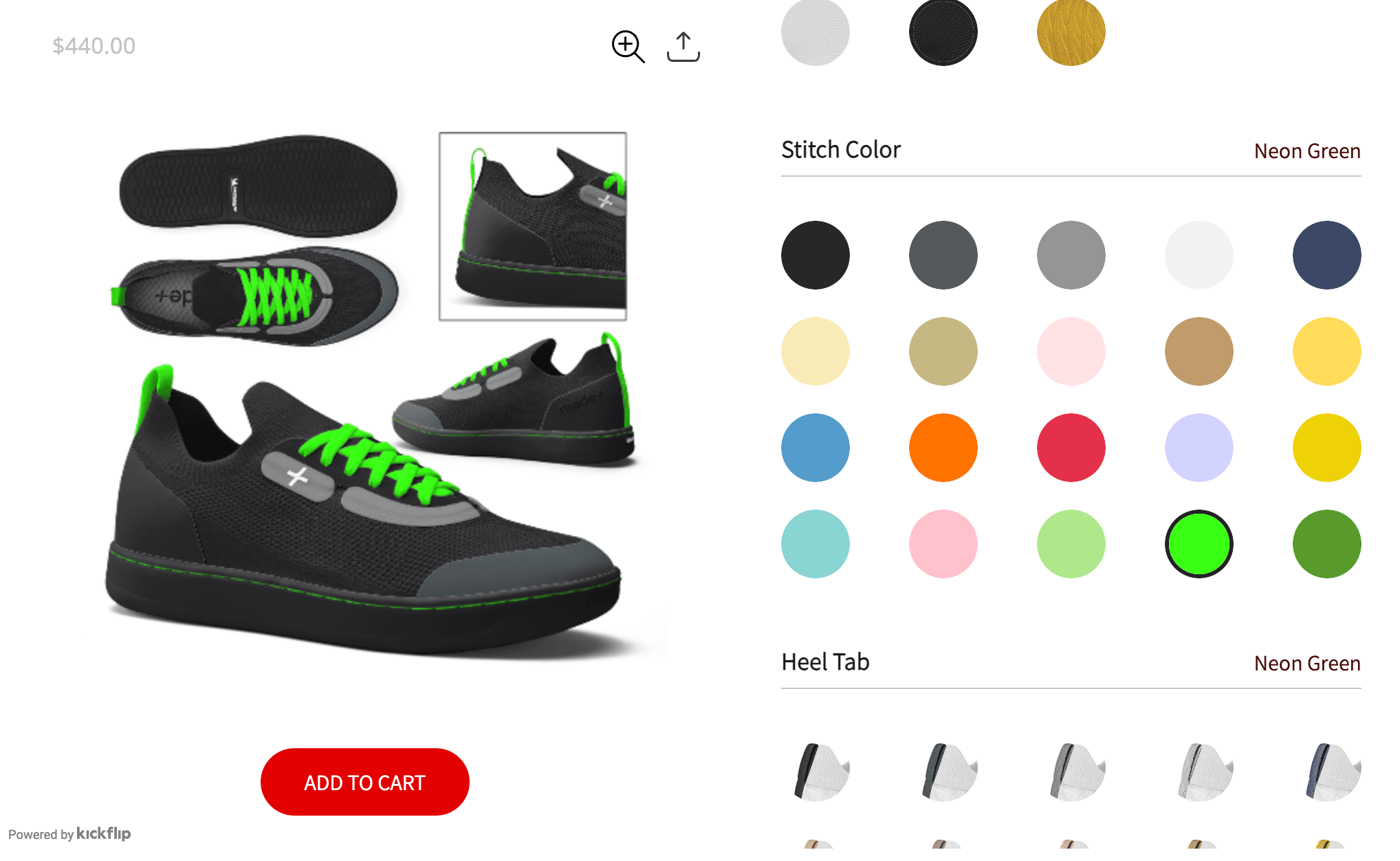 Thread color is a low-cost, high-impact customization option. Think neon green stitching on a matte black leather upper, or cream thread on chocolate suede. These details signal handcraft and intentionality.
Operationally, contrast stitching is just a manufacturing instruction that does not require new materials. The SKU complexity is minimal, but the perceived value is massive.
12. Eyelet & Grommet Finishes
Antique brass, gunmetal, matte black, or brushed silver. Eyelet finish selection lets customers match their footwear to their accessories.
A customer who wears a gold watch will notice if the eyelets on their custom sneakers match. Most brands do not offer this, but the ones that do earn serious credibility for attention to detail.
13. Gradient & Ombre Panels
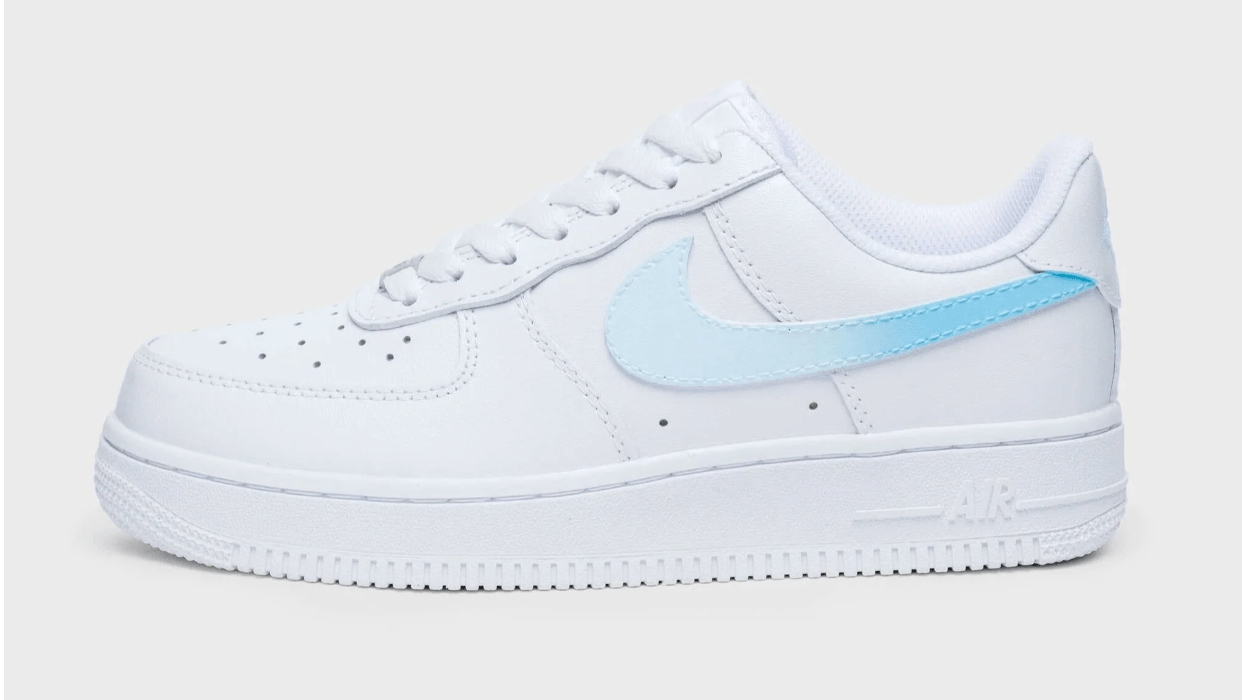 Pre-configured gradient colorways: where colors blend across a panel instead of meeting at a hard edge: are highly popular in streetwear. The operational key is curation.
You define the gradient transitions, the customer selects the color pair, and the configurator renders the blend. This avoids manufacturing headaches while delivering a premium look.
The Crazy Sneak Gradient Air Force 1 is a perfect execution. The leather panels carry a smooth color transition that is impossible to achieve with standard dye lots, and the real-time preview gives customers the confidence to click buy.
14. Custom Footbeds & Insoles
Choosing footbeds balances comfort and health. Consider cork for moisture control, full-grain leather for durability, or memory foam for cushioning. Offering these options shows you prioritize foot health over mere aesthetics.
LUNA Sandals incorporates footbed selection into its customization process. Customers select materials suited for wet conditions, dry trails, or casual wear. For outdoor adventurers, this ensures purchase confidence.
15. All-Over Print (AOP) Patterns
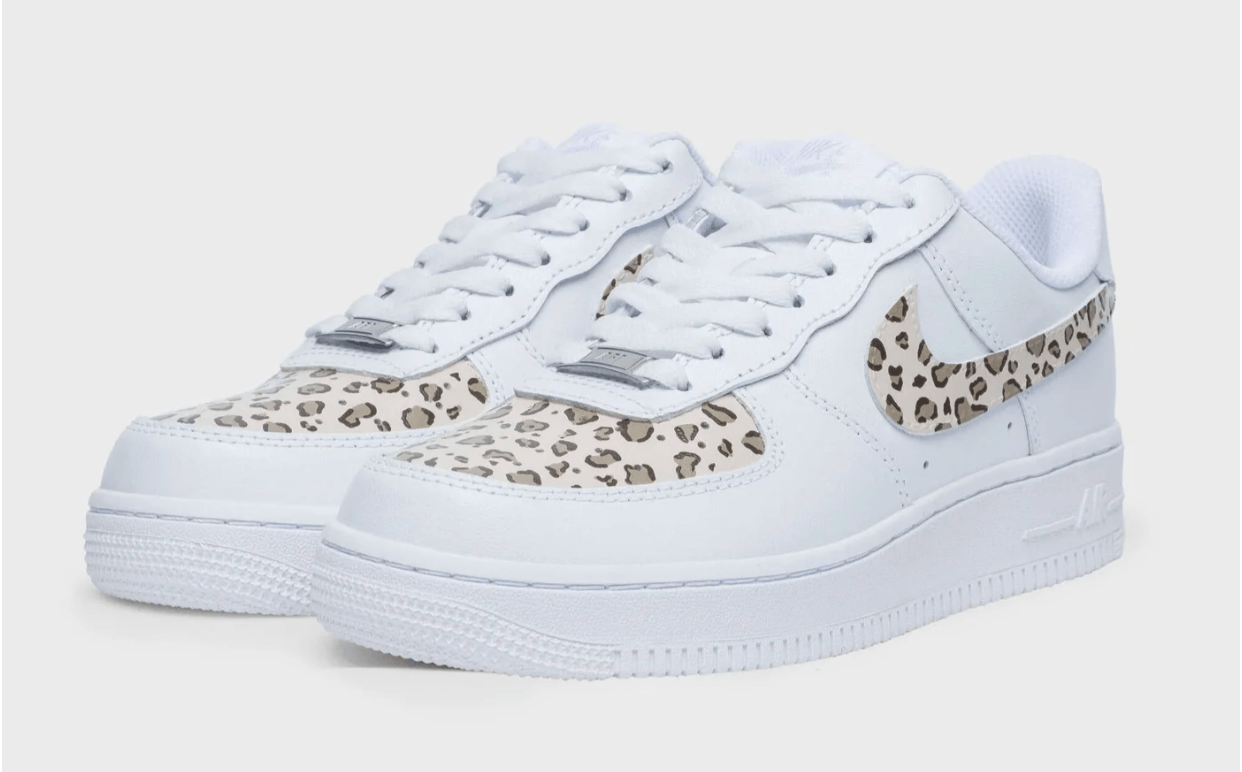
All-over print is the ultimate self-expression option. Camouflage, botanical prints, or geometric patterns transform the shoe into a statement piece.
The best operational model is curated: you provide 10 pre-designed patterns, and the customer selects one. This avoids the quality control nightmare of open-ended uploads.
For brands targeting the festival or streetwear markets, your product personalizer software must handle complex pattern mapping across curved surfaces. This is what separates a serious configurator from a basic color-swap tool.
How to Implement a Shoe Configurator on Your Store
Overcoming the Technical and Operational Hurdles
You might think setting this up is too complicated. In reality, the old technical barriers are gone.
The real operational challenges are specific. You must manage SKU logic so customers cannot order unbuildable combinations.
You need automated, print-ready files so fulfillment is painless. Finally, you need a high-fidelity visual preview so buyers trust what they see.
These are solved problems. They are exactly what a dedicated product customizer software is built to handle, ensuring that your backend operations remain smooth while your customers enjoy a premium frontend design experience.
Key Kickflip Features for Footwear Brands
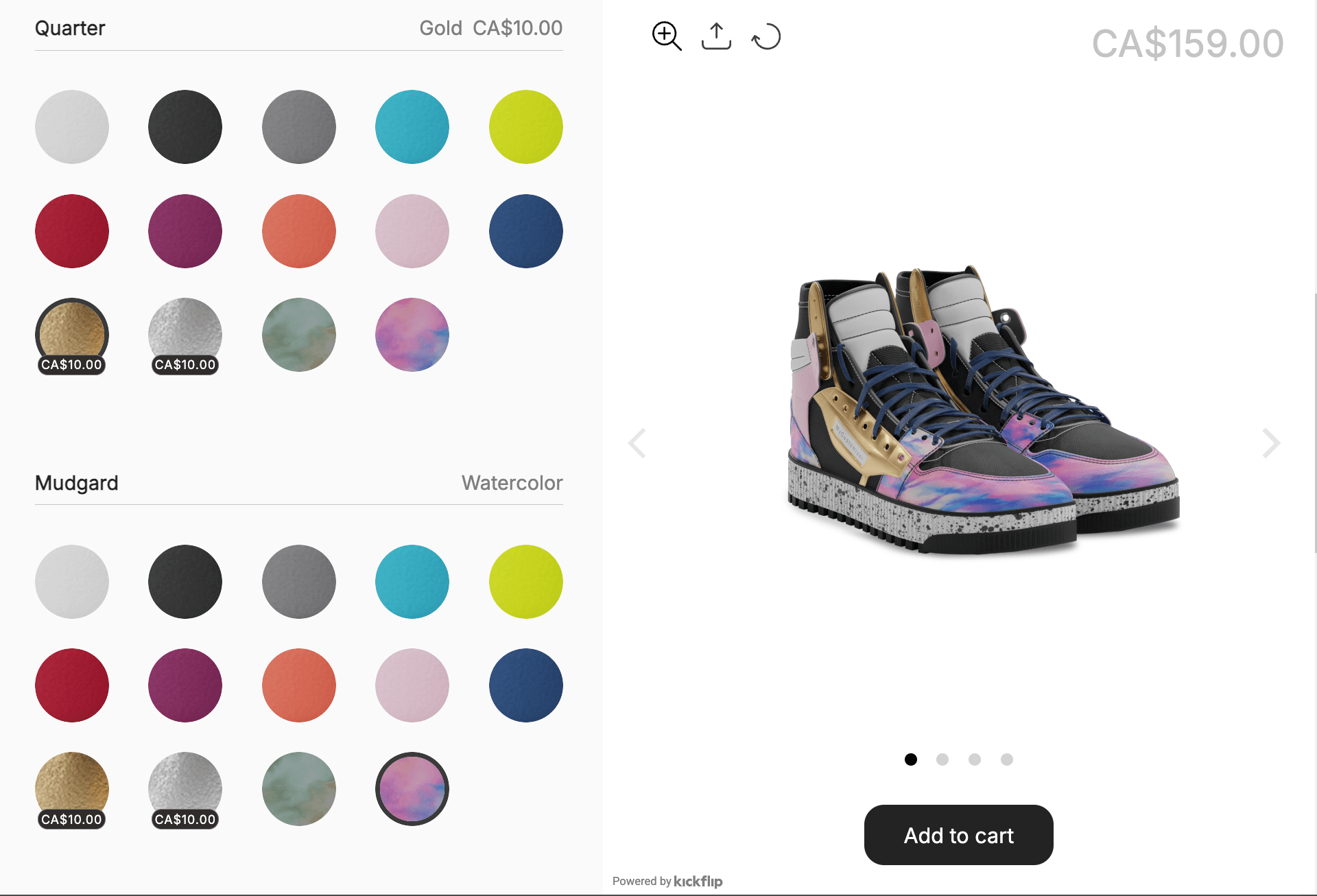
I will show you how we handle this. Setup is instant. Kickflip connects directly to Shopify with no developers needed, so you get a quick setup time and can go live in under 30 minutes.
Our platform handles the entire stack. You get real-time multi-angle previews, dynamic pricing for premium upgrades, and logic rules to block incompatible designs while generating automated production files to keep fulfillment simple.
If you want a premium experience for your customers without high development costs, this is the route. You can build and test a fully customizable shoe, offering a frictionless experience that keeps customers engaged from the first click to the final checkout screen without any technical friction. Start with a free trial and see how easily it integrates.
To see how other industries use this, check out our product customization examples guide for more ideas, or test one of our demo shoe configurator.
Conclusion
These 15 ideas are not theoretical. They are live, driving higher value, and serving customers who want a premium experience. The market data is clear: the custom shoes market is projected to grow steadily toward USD 16.8 billion by 2033.
The question is not whether customization works. The question is whether your tool can handle the design logic and order volume.
My recommendation: start a free trial with Kickflip. Build your first configurator, connect it to your store, and watch the conversion data prove the value.
Frequently Asked Questions
Q1: How do I make my own shoe design? Head to websites providing custom shoe options, such as Luna sandals, Madeplus, SAS Shoes or Crazy Sneak.
Q2: Can I design my own shoes online for free? Yes, many brands put design tools right on their product pages. You can customize colors and materials for free, paying only when you order the finished shoe.
Q3: What are some creative ideas for designing shoes? Try unexpected material pairings: think recycled plastic uppers with rugged Vibram outsoles, or organic canvas mixed with full-grain leather. You can also offer modular soles, bold color blocking, and custom pattern overlays.
Q4: How much does it cost to get custom shoes made? Custom sneakers from major brands run $100 to $200, while fully bespoke footwear from a professional cobbler ranges from $500 to several thousand dollars. DTC brands using a configurator land in the middle, charging a 20% to 50% premium over standard pricing.
Q5: Is it hard to create shoes? Designing a shoe digitally is simple, but physical manufacturing is the hard part. It requires lasting, specialized adhesives, and heavy machinery, which is why most DTC brands separate the design layer from physical assembly.
Q6: Where can I get custom shoes online? Nike and Vans handle mass-market options. For unique designs, niche DTC brands: like the Kickflip-powered stores in this article: offer deeper customization with better material choices.
Future reading
The Ultimate Guide to E-commerce Product Customization: Drive Conversions, Reduce Returns, and Scale Operations
Product Configurator Software : How LUNA Is Innovating With Kickflip
The Best Ecommerce Platform for Custom Products in 2026
Share This article

Written by Marie Lamonde
September 1st, 2026
Marie Lamonde is a Content Marketing Manager at Kickflip with 8 years of experience writing about digital marketing, SaaS, and ecommerce. She specializes in creating clear, search-driven content that attracts, engages, and converts.


Maarten Luyckx
Osaka World
The user-friendly interface of Kickflip, combined with excellent customer service, ensured that this project was brought to a successful and beautiful conclusion.
Shopify App Store
May 20, 2021

Marie-Laetitia Rossazza
My Dust Bag
It took me a long time to find the perfect customizer app, and I’m so happy to say that I finally did! Kickflip is truly the best app on the market. The front end and back end are excellent, and the team behind it is incredibly kind and helpful!
Shopify App Store
September 1, 2023

Brad Jurga
All-Star Sporting Goods
Kickflip made everything easy, from designing the builder all the way through launch. We’re designing truly custom equipment for elite baseball players and this platform allows us to have better engagement and excitement around our brand. We’re seeing an instant return.
Shopify App Store
June 16, 2025

Kasper Taylor
CodedInk
My experience with both the product and the support team has been fantastic. The user interface and user experience are excellent. The features are powerful, and the WooCommerce integration is seamless and easy to set up.
G2.com
June 16, 2025

Saber Naceur
Vinylacy
By far, and I truly mean it, the best customizer available on Shopify. It’s easy to understand and manage, offers options for all types of products, and works extremely well. On top of that, it looks beautiful and feels premium. Highly recommended.
Shopify App Store
December 17, 2022

Jesus Guillermo de León Pérez
Dismo
Kickflip is a fantastic tool. It’s super intuitive, easy to use, and packed with capabilities. You don’t have to be an expert or have experience with other products to get started. The support team is also great and very responsive.
Shopify App Store
July 10, 2024

Frieder Urban
Era of Arc
We were looking for an uncomplicated configurator that was quick and easy to set up, offered plenty of design options, and worked reliably with fast loading times. We tested many configurators on the market, and with Kickflip, we found exactly what we needed.
Shopify App Store
October 10, 2024

John Taggart
Jack Harry and Ollie
What a great addition to our business Kickflip has been. It’s been fantastic to offer our customers the ability to personalize their orders. The support has been excellent, and we especially love that the pricing is tied to our success as customers make purchases.
Shopify App Store
May 7, 2021

TJ Garske
The Net Return
Kickflip saves our team a ton of time by eliminating the need to create custom mockups for customers. Customers can build their product themselves and place an order instantly, without any back-and-forth.
G2.com
January 26, 2026

Amin Hasani
CURVD
After extensive research into product customizer tools, we chose Kickflip for many reasons. We don’t like complicating simple tasks for customers, and Kickflip helped us simplify the process and create a seamless customer experience.
Shopify App Store
July 29, 2025